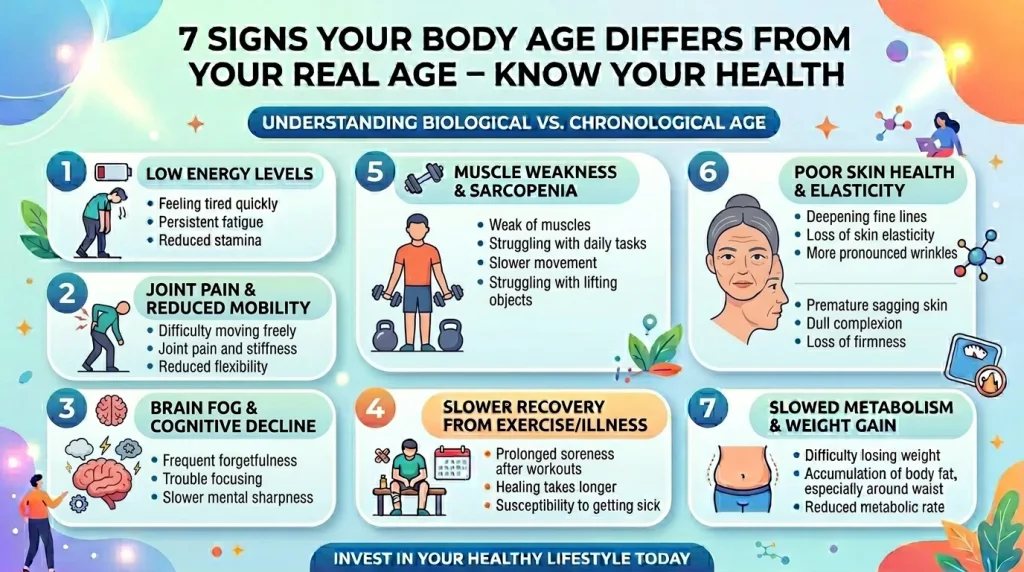
7 Signs Your Body Age Differs from Real Age – Know Your Health
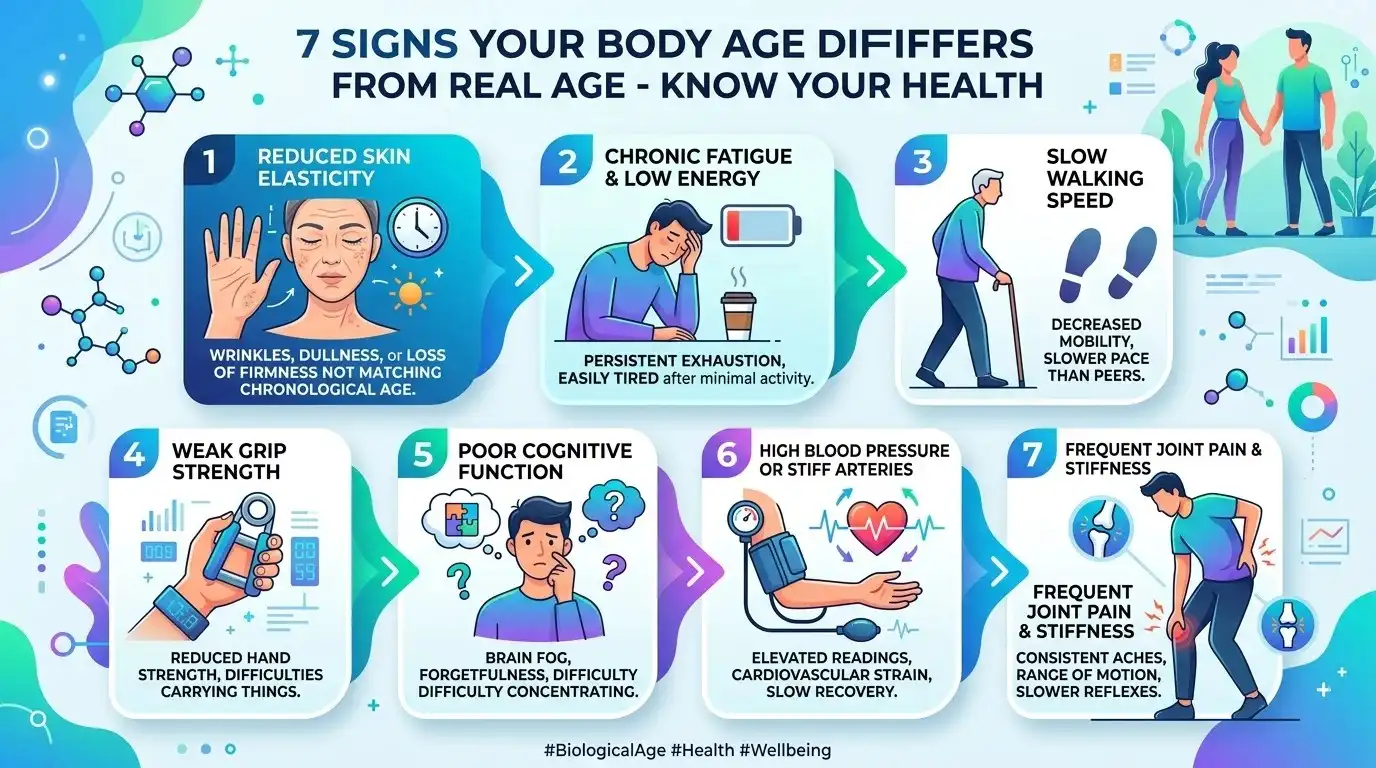
Table of Contents
Body age versus real age—it’s a concept that has captivated scientists and health enthusiasts alike, offering a more profound understanding of our health beyond simply counting birthdays. While chronological age measures the number of years you’ve been alive, your biological age, or body age, reveals the true state of your health at a cellular and physiological level. It’s a dynamic measure that reflects the accumulation of cellular damage over time, and it can vary significantly from your birth certificate age. Understanding your biological age is an essential step in assessing how well your body is aging internally and can provide valuable insights into your overall wellness, longevity, and risk of chronic diseases.
Understanding Chronological vs. Biological Age
Our lives are often structured around our chronological age, from celebrating birthdays to marking life milestones. This age is a straightforward measure of how many years have passed since our birth. However, this numerical value often fails to capture the intricate tapestry of our health and vitality. You’ve likely met individuals who, despite being chronologically similar, possess vastly different levels of energy, physical ability, and cognitive sharpness. This disparity highlights the critical difference between chronological age and biological age.
Biological age, also known as physiological or functional age, is a measurement of your age based on various biomarkers, reflecting the health and function of your cells and organs. It’s a more accurate predictor of health and potential longevity because it quantifies the wear and tear on your body that accumulates over time due to a myriad of factors, including genetics, lifestyle choices, and environmental influences. While chronological age is fixed, your biological age is remarkably fluid and can be influenced, and even potentially reversed, through conscious choices. A lower biological age indicates better health, reduced disease risk, and potentially a longer healthspan—the period of life lived in good health, free from aging-related diseases. Conversely, accelerated aging, where your biological age is greater than your chronological age, is an underlying risk factor for almost every chronic disease, including cancer, heart disease, diabetes, and dementia.
What Influences Your Body’s True Age?
The intricate dance between our genes, environment, and daily habits profoundly shapes our biological age. While genetics play a significant role, accounting for approximately 15% to 25% of aging, it’s increasingly clear that lifestyle factors hold substantial power in determining how quickly or slowly our bodies age. This means that while we can’t change our inherited predispositions, we have considerable agency in influencing our biological age through our choices.
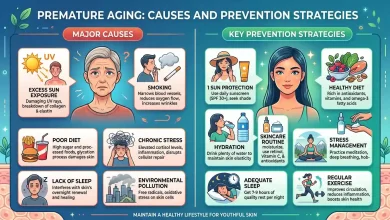
Key factors that collectively influence your biological age include:
- Genetics: Our genes determine the efficiency of DNA repair, cellular regeneration, and immune function, influencing our susceptibility to age-related diseases and the overall rate of aging. Some individuals inherit stronger repair and stress-response systems, providing a natural advantage.
- Diet and Nutrition: The quality of our diet is paramount. Balanced nutrition, rich in antioxidants and healthy fats, can slow aging, while diets high in processed foods, sugar, and unhealthy fats can accelerate cellular damage and inflammation.
- Physical Activity: Regular physical activity is a powerful geroprotector, preserving cellular health, telomere length, and influencing the epigenome to slow or even reverse epigenetic aging. Both resistance training and endurance exercises contribute to a younger biological age.
- Stress Management: Chronic stress wreaks havoc on the body, accelerating aging through hormonal imbalances and increased inflammation. Effective stress management techniques, such as mindfulness, meditation, and yoga, are crucial for cellular repair and reducing inflammation.
- Sleep Quality: Prioritizing sleep is vital for cellular repair and reducing inflammation. Poor sleep can significantly contribute to an older biological age, with studies linking it to increased mortality risk. Aiming for seven to nine hours of quality sleep each night is recommended.
- Environmental Factors: Exposure to toxins, pollutants, and UV radiation can accelerate cellular damage and contribute to the aging process. Recent studies also highlight how environmental stressors like extreme heat exposure can speed up biological aging.
- Socioeconomic Factors: Research suggests that socioeconomic status and living conditions have a significant influence on mortality and biological aging, often outweighing genetic predispositions. Higher levels of education, for instance, have been associated with slower biological aging.
- Smoking and Alcohol Consumption: Smoking is well-known to take years off one’s life and is associated with numerous diseases and accelerated biological aging. Excessive alcohol consumption also negatively impacts cellular health and accelerates aging.
- Chronic Medical Conditions: Conditions such as diabetes, heart disease, and autoimmune disorders can accelerate biological aging. Effective management of these conditions is essential for maintaining a healthier body age.
Scientific Methods for Assessing Biological Age
Measuring biological age is a complex scientific endeavor, relying on the analysis of various biomarkers that reflect the health of our organs, tissues, and cells. Unlike a simple calculation, it involves sophisticated techniques that delve into the molecular and physiological underpinnings of aging. Over the years, researchers have developed and refined several methods to provide insights into our true biological age.
The most common and scientifically recognized methods include:
- DNA Methylation (Epigenetic Clocks): Considered among the most accurate scientific methods, DNA methylation tests analyze patterns of chemical modifications on our DNA that change predictably with age. These “epigenetic clocks,” like the Horvath and Hannum clocks, provide a highly precise estimate of biological age. Methylation doesn’t alter the DNA sequence but can disrupt cell functions related to aging and age-related diseases. Blood-based clocks are highly accurate, though tissue-specific clocks can offer even greater precision across different organs.
- Telomere Length: Telomeres are protective caps at the ends of chromosomes that shorten with each cell division, acting like a biological timer for our cells. Shorter telomeres are linked to accelerated aging and increased disease risk, while longer telomeres suggest healthier aging. Lifestyle habits, including exercise and a nutrient-rich diet, can help preserve telomere length.
- Blood-Based Biomarkers (Phenotypic Age Calculators): These methods use results from standard blood tests and other clinical measurements, combining them with complex algorithms to estimate biological age. Biomarkers assessed include:
- Inflammatory Markers: Such as C-reactive protein (CRP) and Interleukin-6 (IL-6), where high levels signal chronic inflammation, a known accelerator of aging.
- Metabolic Health Indicators: Blood sugar (glucose) levels, insulin sensitivity, and cholesterol levels (LDL, HDL) are crucial. Elevated glucose or cholesterol indicates higher aging risks, while optimal levels suggest a lower biological age.
- Organ Function Markers: Tests assessing liver, kidney, and other organ functions provide a comprehensive picture of overall physiological health.
- Hormonal Health: Levels of hormones like cortisol, testosterone, and estrogen can influence biological age.
- Cardiovascular Health: Blood pressure and heart rate are integrated into these assessments.
- Functional Age: This approach assesses an individual’s physical and cognitive performance, including measures like grip strength, walking speed, balance, and cognitive tests. While not as molecularly precise as epigenetic clocks, it offers practical insights into a person’s functional capacity relative to their chronological age.
It’s important to note that while these tests are invaluable in aging research, they are not yet part of routine medical care. Commercial tests are available online, often requiring blood or saliva samples, but their reliability can vary. Experts advise caution and emphasize that results should be interpreted in context with a healthcare professional for a comprehensive health evaluation.
Why Your Body Age Matters for Longevity and Quality of Life
While our chronological age serves as a simple temporal marker, our biological age offers a profound and actionable insight into the trajectory of our health and future well-being. Understanding why your body age matters goes beyond mere curiosity; it provides a roadmap for proactive health management and a potentially longer, healthier life.
Here’s why focusing on your biological age is crucial:
- Predicting Disease Risk: Your biological age is a more accurate predictor of your risk for chronic diseases than your chronological age. An older biological age is strongly linked to an earlier development of conditions such as cancer, heart disease, diabetes, and dementia. By identifying accelerated aging early, individuals can take preventive measures to mitigate these risks.
- Informing Longevity and Healthspan: Biological age is a direct reflection of your potential longevity and, more importantly, your healthspan—the number of years you live in good health, free from disease. A lower biological age suggests a longer period of vitality and independence, enabling you to enjoy life to its fullest for longer.
- Motivating Healthier Lifestyle Choices: Knowing your biological age can be a powerful motivator. When you see how lifestyle factors like diet, exercise, and stress management directly impact your cellular aging, it encourages you to adopt healthier habits. Seeing measurable changes in biological age can reinforce positive behaviors and foster accountability.
- Personalized Health Insights: Biological age testing offers personalized insights into your body’s unique aging process. It reveals how your specific choices and environment are affecting you, allowing for targeted interventions rather than generic health advice.
- Guiding Interventions and Treatments: In the future, as biological age assessments become more integrated into medical practice, they could help healthcare providers identify patients who might benefit from specific medications or interventions to delay the onset of age-related diseases. It could also inform decisions regarding surgical candidates, where a younger biological age might indicate better resilience.
- Measuring the Effectiveness of Anti-Aging Strategies: For researchers and individuals alike, biological age serves as a quantifiable outcome measure to track the effectiveness of anti-aging interventions, whether they are dietary changes, new exercise regimens, or supplements. It allows for real-time assessment of what is working to slow or reverse the aging process at a cellular level.
By shifting our focus from merely the years lived to how well our bodies are actually functioning, we gain a deeper understanding of health and unlock the potential to make informed choices that can truly improve our quality of life and extend our vibrant years.
Practical Strategies to Rejuvenate Your Body and Reduce Its Age
The exciting news about biological age is its inherent plasticity. Unlike chronological age, which is a one-way street, biological age can be influenced, slowed, and in some cases, even reversed. Adopting a holistic approach that integrates various healthy lifestyle modifications can significantly impact your cellular health and potentially turn back your body’s clock.
| Lifestyle Factor | Impact on Biological Age | Actionable Strategies |
|---|---|---|
| Diet & Nutrition | Reduces inflammation, provides antioxidants, supports DNA repair, improves metabolic health. | Embrace a plant-forward diet rich in fruits, vegetables, nuts, seeds, and whole grains. Incorporate healthy fats (Omega-3s). Limit ultra-processed foods, added sugars, and unhealthy saturated fats. Consider anti-inflammatory and fasting-mimicking diets. |
| Physical Activity | Preserves cellular health, telomere length, boosts growth hormone, reduces visceral fat, improves cardiovascular health, influences epigenome for age reversal. | Combine resistance training (2-3 sessions/week focusing on compound movements like squats, deadlifts) with endurance/aerobic exercise (150 minutes moderate or 75 minutes vigorous activity/week like brisk walking, cycling, swimming). Include HIIT (1-2 sessions/week) and balance/mobility exercises. |
| Stress Management | Reduces chronic inflammation, enhances cellular repair, balances hormones. | Practice mindfulness, meditation, yoga, or deep breathing exercises. Prioritize leisure activities and social connections. Seek professional help if chronic stress is overwhelming. |
| Quality Sleep | Enhances cellular repair, reduces inflammation, improves cognitive function. | Aim for 7-9 hours of uninterrupted sleep per night. Establish a consistent sleep schedule. Optimize your sleep environment (dark, cool, quiet). Avoid screens before bed. |
| Avoiding Toxins | Minimizes cellular damage and accelerated aging. | Quit smoking entirely. Limit alcohol consumption. Reduce exposure to environmental pollutants and harmful chemicals whenever possible. |
| Social Connection | Positive impact on mental and emotional well-being, which indirectly supports physical health and resilience to stress. | Actively maintain and nurture relationships with friends and family. Engage in community activities or volunteer work. |
The Role of Diet and Nutrition in Age Reversal
Among the various modifiable lifestyle factors, diet and nutrition stand out as having a profound and direct impact on our biological age. What we consume literally fuels our cells, influencing everything from DNA repair to inflammation levels. A well-chosen diet can act as a powerful anti-aging intervention, promoting cellular health and potentially reversing markers of biological aging.
Recent research underscores the significance of dietary patterns:
- Plant-Based Diets: Studies, including those involving identical twins, have shown that adopting a plant-based (vegan or semi-vegetarian) diet can significantly decrease biological age markers. The benefits are attributed to the high content of antioxidants, fiber, and anti-inflammatory compounds found in fruits, vegetables, nuts, and seeds. These foods combat oxidative stress, a major contributor to aging, and improve insulin sensitivity and support DNA repair.
- Anti-Inflammatory Foods: Chronic, low-grade inflammation accelerates aging. Diets focused on anti-inflammatory foods like fatty fish (rich in Omega-3s), leafy greens, berries, turmeric, and ginger can reduce age-related inflammatory markers and improve biological aging outcomes. Omega-3 fatty acids, specifically, are known to reduce inflammation, support brain and heart health, and improve cell membrane integrity.
- Reduced Fat and Balanced Carbohydrates: A University of Sydney study found that older adults who reduced fat intake or shifted toward more plant-based protein showed improvements in key health biomarkers tied to aging. The most significant reductions in biological age were observed in those following an omnivorous diet that was higher in carbohydrates and lower in fat (around 14% protein, 29% fat, and 53% carbohydrates).
- Minimizing Ultra-Processed Foods and Added Sugars: These dietary components contribute to inflammation, metabolic dysfunction, and cellular damage, all of which accelerate biological aging. A methylation diet and lifestyle study found that less added sugar intake was associated with reduced biological age.
- Fasting-Mimicking Diets and Intermittent Fasting: Some research suggests that these approaches can promote cellular repair and metabolic health, contributing to a reduction in biological age markers.
The key takeaway is that a diet rich in whole, unprocessed foods, particularly those derived from plants, provides the necessary nutrients, antioxidants, and anti-inflammatory compounds to support cellular health and slow the aging process. It’s about making conscious choices that align with nourishing your body at a molecular level, as highlighted in reports from reputable sources like Wikipedia’s entry on Nutrition and Aging.
Exercise: A Powerful Tool Against Biological Aging
Beyond maintaining a healthy weight and improving physical fitness, exercise has emerged as one of the most potent interventions for slowing, and even reversing, the biological aging process. Its effects are far-reaching, impacting our cells, organs, and overall physiological function in ways that defy chronological time.
The mechanisms through which exercise acts as a powerful geroprotector are diverse:
- Epigenetic Rejuvenation: Regular workouts influence our epigenome, the chemical modifications on DNA that determine which genes are active. Emerging evidence suggests that physical activity, exercise, and physical fitness can delay or reverse epigenetic aging. Structured exercise training has been shown to induce epigenomic rejuvenation, particularly in blood and skeletal muscle.
- Telomere Preservation: Regular physical activity helps preserve telomere length, the protective caps on our chromosomes that shorten with cell division, indicating cellular aging. Longer telomeres are associated with healthier aging.
- Mitochondrial Function Enhancement: Exercise strengthens mitochondria, the powerhouses of our cells. It converts reactive oxygen species (which can accelerate aging) into beneficial signals that protect cells and refresh the epigenome. Improved mitochondrial efficiency ensures cells produce energy more effectively as we age.
- Muscle Mass Retention: Resistance training is crucial for preventing sarcopenia, the age-related loss of muscle mass that accelerates cellular aging and increases mortality risk. Compound movements like squats and deadlifts boost growth hormone, help retain bone-building calcium, and increase fat-burning muscle. Studies confirm that people who lift weights have less visceral fat, which is linked to age-related problems like heart disease and diabetes.
- Cardiovascular and Metabolic Health: Endurance training and high-intensity interval training (HIIT) significantly improve cardiovascular fitness (VO2max), cholesterol levels, and blood pressure, all of which are critical for a younger biological age. HIIT, in particular, is highly effective in turning back the biological clock due to its impact on metabolism and cardiorespiratory fitness.
- Reduced Inflammation and Oxidative Stress: Exercise triggers biological reactions that help remove free radicals and reduce oxidative stress, both of which contribute to cellular damage and accelerated aging. It also helps reduce cellular senescence, where old, dysfunctional cells accumulate and promote aging.
For optimal anti-aging benefits, a well-rounded exercise program is recommended. This includes a combination of resistance training (2-3 sessions per week), aerobic activity (at least 150 minutes of moderate-intensity or 75 minutes of vigorous activity per week), and high-intensity interval training (1-2 sessions per week). Even moderate exercise has profound benefits; a study by Brigham Young University found that 40 minutes of exercise five days a week could cut biological age by nine years. The key is consistency and finding activities that you can sustain over time.
Conclusion
The distinction between chronological and biological age is a fundamental shift in how we understand health and longevity. While our birth year remains a constant, our body’s true age is a dynamic reflection of cellular health, significantly influenced by our daily choices and environment. It’s a powerful metric that offers far more than just a number; it provides actionable insights into our disease risk, healthspan, and overall vitality. By embracing a holistic approach to wellness—one that prioritizes balanced nutrition, consistent physical activity, effective stress management, and quality sleep—we can actively work towards reducing our biological age. The science is increasingly clear: lifestyle factors often outweigh genetic predispositions in shaping how quickly or slowly we age. Understanding and actively managing our biological age empowers us to make informed decisions, not just to live longer, but to live healthier, more vibrant lives, ensuring that our body’s age aligns more closely with our desire for sustained well-being.