7 Senolytic Drugs Research Findings: Can These Medicines Slow Aging?
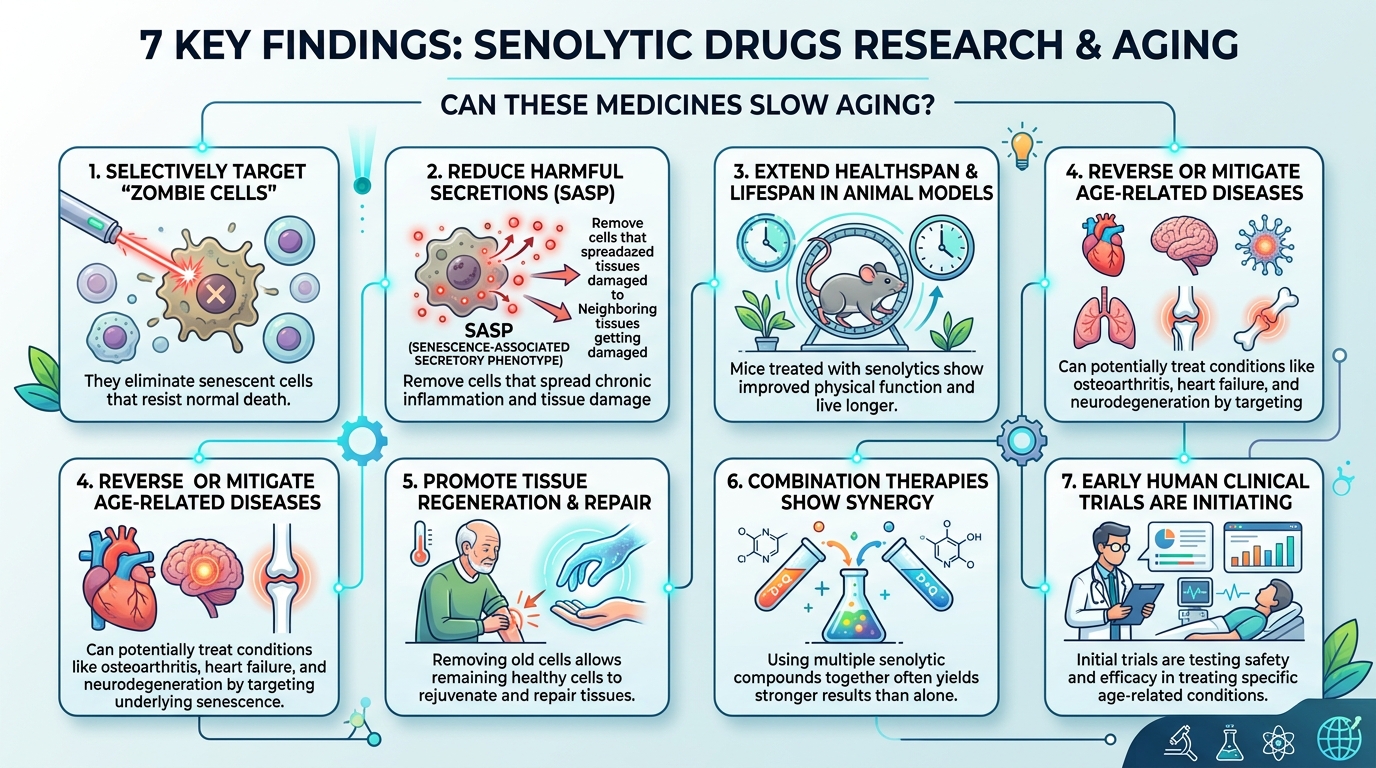
Table of Contents
- The Quest to Slow Aging: An Introduction to Senolytic Drugs
- Understanding Senescent Cells: The “Zombie Cells” of Aging
- Mechanisms of Action: How Senolytics Target and Eliminate Senescent Cells
- Key Senolytic Compounds Under Investigation
- Clinical Trials and Human Studies: Early Promises and Current Realities
- Challenges, Limitations, and Future Directions
- Potential Risks and Side Effects of Senolytic Therapies
- Ethical and Societal Considerations
- Conclusion: The Future of Senolytics in Anti-Aging Medicine
Senolytic drugs research represents a burgeoning field within geroscience, holding the promise of fundamentally altering the trajectory of human aging and age-related diseases. For decades, the concept of “anti-aging” remained largely confined to science fiction, but advancements in understanding the molecular and cellular mechanisms of aging have brought this aspiration closer to reality. At the heart of senolytic therapy is the targeted elimination of senescent cells, often dubbed “zombie cells,” which accumulate in tissues with age and contribute significantly to various age-related pathologies. These dysfunctional cells, instead of undergoing programmed cell death (apoptosis) when damaged, persist, releasing harmful molecules that foster chronic inflammation and tissue degradation. This article will delve into the current state of senolytic drug research, exploring their mechanisms, the compounds under investigation, the progress of human clinical trials, and the significant challenges and ethical considerations that lie ahead.
Understanding Senescent Cells: The “Zombie Cells” of Aging
Cellular senescence is a state of stable cell cycle arrest where proliferating cells stop dividing, typically in response to DNA damage or other stressors. While this state initially serves as a protective mechanism, for instance, by preventing damaged cells from becoming cancerous, the persistent accumulation of senescent cells over time becomes detrimental. These “zombie cells” are distinct from quiescent cells (which can re-enter the cell cycle) and terminally differentiated cells. They remain metabolically active and adopt a pro-inflammatory phenotype known as the Senescence-Associated Secretory Phenotype (SASP).
The SASP is a cocktail of bioactive molecules including pro-inflammatory cytokines (such as IL-6, IL-8, and TNF-alpha), chemokines, growth factors, and proteases. These secreted factors contribute to chronic inflammation, often referred to as “inflammaging,” and can negatively impact neighboring healthy cells, creating a microenvironment conducive to tissue dysfunction and various age-related diseases. The accumulation of senescent cells has been implicated in a wide array of conditions, including cardiovascular disease, osteoarthritis, diabetes, chronic obstructive pulmonary disease, fibrosis, neurodegenerative disorders like Alzheimer’s disease, and even some forms of cancer. In young organisms, the immune system efficiently clears senescent cells, but as we age, immune surveillance declines, allowing these cells to persist and amplify their harmful effects.
Mechanisms of Action: How Senolytics Target and Eliminate Senescent Cells
Senolytic drugs are specifically designed to exploit the vulnerabilities of senescent cells, selectively inducing apoptosis (programmed cell death) in them while sparing healthy cells. Senescent cells are often resistant to normal apoptosis due to upregulated anti-apoptotic pathways, which senolytics aim to disable. This targeted approach is crucial to avoid harm to functional cells. The mechanisms by which senolytics achieve this selective elimination are diverse and often involve disrupting specific pro-survival pathways that senescent cells rely on. These pathways include the BCL-2 family of proteins, the PI3K/AKT pathway, tyrosine kinases, HSP90, and the FOXO4-p53 interaction.
- Inhibition of Anti-Apoptotic Pathways: Senescent cells frequently exhibit increased expression of anti-apoptotic (pro-survival) proteins such as BCL-2, BCL-XL, and BCL-W. These proteins prevent the activation of caspases, which are essential for apoptosis. Senolytic compounds like navitoclax (ABT-263) and venetoclax act by inhibiting these proteins, thereby promoting cell death specifically in senescent cells.
- Disruption of FOXO4-p53 Interaction: In some senescent cells, the protein FOXO4 binds to p53, thereby blocking p53’s ability to initiate apoptosis. Certain senolytic compounds are designed to disrupt this bond, allowing p53 to activate the apoptotic process and clear the senescent cells.
- Targeting Tyrosine Kinases and Other Survival Pathways: Other senolytics, such as dasatinib, target multiple tyrosine kinases, which are involved in various cellular functions, including survival. Quercetin, a naturally occurring flavonoid, targets multiple survival-associated pathways, including BCL-2, PI3K/AKT, and HIF-1α. The combination of dasatinib and quercetin (D+Q) has been shown to be effective in inducing apoptosis in different types of senescent cells.
The effectiveness of senolytics also stems from their ability to be administered intermittently. Since senescent cells do not divide, they cannot acquire advantageous mutations that lead to drug resistance, and brief disruptions of their pro-survival pathways are sufficient to trigger their elimination. This “hit-and-run” strategy can reduce the risk of side effects associated with continuous drug exposure.
Key Senolytic Compounds Under Investigation
The field of senolytic drug discovery is rapidly expanding, with over 40 compounds identified to date that demonstrate senolytic properties in preclinical studies. These compounds range from repurposed cancer drugs to natural products. Some of the most prominent senolytic agents currently under investigation include:
- Dasatinib and Quercetin (D+Q): This combination is arguably the most well-known senolytic cocktail and was among the first to be discovered. Dasatinib, a tyrosine kinase inhibitor used in cancer therapy, is effective against senescent preadipocytes, while quercetin, a flavonoid, targets senescent endothelial cells. The D+Q combination has shown significant promise in preclinical models, improving physical function, reducing senescent cell burden, and extending healthspan and lifespan in aged mice. A recent study even suggested that D+Q may delay early intervertebral disc degeneration.
- Fisetin: A natural flavonoid found in fruits and vegetables like strawberries, apples, and onions, fisetin has been identified as another potent senolytic. Preclinical studies have shown that fisetin can eliminate senescent cells, improve metabolic health, and extend the lifespan of old mice by nearly 10%.
- Navitoclax (ABT-263) and Venetoclax: These are BCL-2 family inhibitors, initially developed as anti-cancer drugs, that disrupt pro-survival signaling in senescent cells. While effective in clearing senescent cells in preclinical models, navitoclax has shown dose-limiting thrombocytopenia in clinical settings due to its inhibition of BCL-xL, which is crucial for platelet survival.
- Rhodiola rosea: A recent study identified this plant root extract as a natural senolytic. It demonstrated improvements in metabolic health, physical capacity, and reduced signs of aging like hair loss and graying in mice. Its senolytic activity is attributed to compounds like EGCG (epigallocatechin gallate) and related short chains, which induce a specific type of cell death in senescent cells.
- Other Emerging Compounds: Researchers are also exploring other compounds and strategies, including HSP90 inhibitors, BET inhibitors, FOXO4-DRI peptides, and novel senolytic prodrugs that are preferentially activated by enzymes specific to senescent cells.
Clinical Trials and Human Studies: Early Promises and Current Realities
While the preclinical results in animal models have been highly encouraging, the translation of senolytic therapies to humans is still in its early stages. The first clinical trials of senolytic agents in humans were reported in 2019, marking a significant milestone in the field. These initial studies have primarily focused on safety and feasibility, as well as assessing whether senolytic drugs can indeed reduce the burden of senescent cells in humans. These early investigations have provided crucial insights into the potential of senolytics to impact human health.
| Senolytic Compound/Combination | Primary Mechanism of Action | Key Preclinical Findings | Status in Human Trials |
|---|---|---|---|
| Dasatinib + Quercetin (D+Q) | Inhibits multiple tyrosine kinases (Dasatinib); Targets BCL-2, PI3K/AKT, HIF-1α (Quercetin) | Improved physical function, extended health/lifespan in aged mice, reduced senescent cell burden, delayed disc degeneration | Phase 1/2 trials for Idiopathic Pulmonary Fibrosis, Diabetic Kidney Disease, Alzheimer’s, bone health; shown to reduce senescent cells in humans |
| Fisetin | Flavonoid with broad anti-apoptotic and anti-inflammatory effects | Eliminated senescent cells, improved metabolic health, extended lifespan in aged mice | Limited human trials, primarily as a supplement; Research ongoing to validate senolytic effects |
| Navitoclax (ABT-263) | BCL-2, BCL-XL, BCL-W inhibitor | Potent senolytic activity in various tissues in preclinical models | Clinical translation limited by dose-dependent thrombocytopenia |
| Rhodiola rosea Extract | Contains EGCG and related compounds that induce paraptosis in senescent cells | Improved metabolic health, physical capacity, reduced hair loss/graying, skin decline in aged mice | Early stage; preclinical studies in mice only |
One notable trial, involving patients with diabetic kidney disease, demonstrated that a three-day oral course of dasatinib and quercetin significantly decreased senescent cell burden in human adipose tissue and skin, with effects lasting at least 11 days after the drugs cleared the body. This “hit-and-run” dosing strategy is particularly promising as it may reduce the risks associated with continuous drug exposure. Another early pilot study in patients with idiopathic pulmonary fibrosis (IPF), a fatal age-related disease, showed that D+Q improved physical function. This study was significant as it was the first to publish results on treating a deadly age-related disease in human patients with senolytics. In a study investigating senolytic therapy for Alzheimer’s disease (SToMP-AD), the drugs dasatinib and quercetin were found to penetrate the central nervous system, showing promise for neurodegenerative conditions. However, a more recent Phase 2 clinical trial investigating the D+Q combination for bone health in older women found only subtle benefits compared to a control group, indicating that the effects in humans may be more nuanced than in mouse models. Overall, while promising, the human experience with senolytics is still limited, with fewer than 150 subjects treated in clinical trials so far. More extensive and varied clinical trials are needed to confirm these preliminary findings and explore the efficacy and safety across different age-related diseases and with various senolytic compounds. The development of new clinical trial paradigms is crucial given the long-term endpoints associated with aging Research.
Challenges, Limitations, and Future Directions
Despite the exciting potential, the development and widespread adoption of senolytic drugs face several significant challenges. One primary concern is the heterogeneity of senescent cells. Not all senescent cells are the same; they can vary in their characteristics, pro-survival pathways, and contribution to disease depending on the tissue, the trigger for senescence, and the duration of their presence. This means that a “one-size-fits-all” senolytic drug is unlikely to be effective for all age-related conditions. Future strategies will likely need to adopt more organ-specific or cell-type-specific targeting approaches, possibly involving targeted delivery vectors or prodrug strategies activated by tissue-enriched enzymes.
Another key challenge lies in ensuring the specificity and safety of senolytic agents. While the goal is to selectively eliminate senescent cells, many current compounds can exhibit off-target effects, potentially harming non-senescent cells or vital immune populations. For instance, some BCL-2 family inhibitors, while effective, can cause dose-limiting thrombocytopenia because platelets also rely on BCL-xL for survival. This highlights the need for more precise senolytics with improved efficacy and safety profiles. The intermittent dosing strategy employed in some trials helps mitigate some risks, but long-term safety data in humans are still largely unknown.
The field also needs better biomarkers to identify senescent cells accurately in living humans and to monitor the effectiveness of senolytic therapies. While markers like p16INK4A and p21CIP1, and senescence-associated β-galactosidase activity are used in biopsies and some circulating SASP factors in blood, fully sensitive and specific markers are still being sought.
Future directions in senolytic Research include:
- Combination Therapies: Combining senolytics with “senomorphics” (drugs that suppress the pro-inflammatory SASP without necessarily killing senescent cells) could offer complementary benefits, both clearing senescent cells and ameliorating their harmful secretions.
- Natural Product Discovery: Continued research into natural compounds like fisetin and Rhodiola rosea offers the potential for safer, more accessible senolytic options.
- Precision Medicine: Developing senolytics tailored to specific senescent cell types or disease contexts will be crucial for maximizing efficacy and minimizing side effects.
The scientific community recognizes these challenges and is actively working towards overcoming them to unlock the full potential of senolytic drugs. The progress in preclinical and early clinical studies, as documented in comprehensive reviews like “Unlocking the Potential of Senolytic Compounds: Advancements, Opportunities, and Challenges in Ageing-Related Research” by Mayo Clinic researchers, underscores the commitment to this field. Further details on this can be found through this PubMed Central review.
Potential Risks and Side Effects of Senolytic Therapies
While the prospect of slowing aging is exciting, it’s crucial to acknowledge the potential risks and side effects associated with senolytic drugs. As a new class of therapeutics, the long-term side effects in humans are still largely unknown. Even highly specific drugs might inadvertently affect some healthy cells, though the aim is to minimize this. Some hypothesized harms revolve around the idea that certain senescent cells might be structurally useful or hard to replace, and their removal could potentially be detrimental. For instance, senescent cells play roles in embryonic development, wound healing, and even childbirth. Removing them indiscriminately, or at inappropriate times, could interfere with these vital processes.
Reported potential side effects from early human trials and preclinical observations include:
- Severe allergic reactions (anaphylaxis).
- Hematologic toxicity (e.g., low blood cell counts), particularly with BCL-2 inhibitors like navitoclax due to off-target effects on platelets.
- Liver toxicity.
- Potential cardiovascular issues.
- Increased risk of infections.
- Increased inflammation or blood pressure fluctuations.
- Gastrointestinal discomfort or heartburn.
Concerns about senolytics negatively impacting wound healing, given that senescent cells play a role in this process, have been raised. However, mouse studies generally do not support these concerns, with senolytic-treated old mice showing maintained or restored muscle fiber sizes and improved strength, rather than muscle loss. It is also important to note that many senolytic compounds were initially developed as anti-cancer drugs, which often have significant side effects. The hope is that lower, intermittent doses for senolytic purposes might reduce toxicity. Nevertheless, ongoing research is focused on improving the specificity of senolytics to reduce these adverse effects and ensure patient safety.
Ethical and Societal Considerations
The advent of senolytic drugs and other age-reversing technologies raises profound ethical and societal questions. If these medicines prove effective in significantly extending healthy human lifespan, their implications will be far-reaching. Key ethical considerations include:
- Equitable Access: Will these potentially life-extending therapies be accessible to everyone, or will they exacerbate existing health disparities, becoming a luxury only for the wealthy? The high cost of novel therapies is a significant barrier to equitable access.
- Societal Impact: What would a significantly extended average human lifespan mean for global populations, social structures, retirement ages, healthcare systems, and resource allocation? Overpopulation, changes in family dynamics, and prolonged working lives are all potential consequences that require careful thought and planning.
- Defining “Aging” and “Disease”: If aging itself becomes a treatable condition, how do we define it? Does it become a disease to be cured, or a natural process to be managed? This shift in perspective has implications for insurance, healthcare coverage, and research funding.
- Unforeseen Consequences: While research aims to be thorough, there could be unforeseen biological or ecological consequences of widespread senolytic use that are not immediately apparent in controlled trials.
- Informed Consent: As these therapies are complex and rapidly evolving, ensuring clear and thorough communication about risks and benefits to participants in clinical trials, and eventually to the public, is paramount.
Addressing these ethical and economic considerations proactively through interdisciplinary collaboration, robust regulatory frameworks, and public discourse will be essential as senolytic research progresses towards clinical implementation.
Conclusion: The Future of Senolytics in Anti-Aging Medicine
Senolytic drugs research stands at the forefront of a scientific revolution, offering a tangible pathway to intervene in the aging process itself rather than just treating age-related diseases one by one. The foundational understanding of senescent cells as key drivers of aging, coupled with promising preclinical results showing enhanced healthspan and lifespan in animal models, has paved the way for human clinical trials. Early human studies, particularly with the dasatinib and quercetin combination, have demonstrated the feasibility of reducing senescent cell burden in humans and shown preliminary improvements in physical function in certain age-related conditions.
However, the journey from laboratory discovery to widespread clinical application is long and complex. Significant challenges remain, including the heterogeneity of senescent cell populations, the need for improved specificity and safety of senolytic agents, and the development of reliable human biomarkers. Ongoing research is actively addressing these issues, exploring novel compounds, combination therapies, and precision targeting strategies to maximize the benefits while minimizing potential risks. The ethical and societal implications of extending healthy human lifespan are also critical considerations that demand proactive engagement and careful planning. While senolytic drugs are not yet a panacea for aging, the research suggests a future where these medicines could play a pivotal role in extending healthy, independent years of life, transforming healthcare from a disease-management paradigm to one focused on proactive health preservation.