7 Inspiring Supercentenarian Stories – Secrets of Living Beyond 110

Table of Contents
Supercentenarian Stories, tales of individuals who have defied typical human lifespans to live beyond 110 years, captivate our imagination and offer profound insights into the mysteries of aging. While centenarians (those living to 100 or older) are becoming increasingly common, supercentenarians remain an exceptionally rare demographic, a select group whose existence pushes the boundaries of what we understand about human vitality and resilience. These extraordinary individuals are not merely old; they represent a pinnacle of human endurance, often maintaining remarkable physical and cognitive faculties until very late in life. Studying their lives, habits, and genetic makeup provides invaluable clues for researchers striving to unlock the secrets to extended health and longevity for the broader population.
What Defines a Supercentenarian?
A supercentenarian is precisely defined as a person who has reached the age of 110 years or older. This benchmark distinguishes them from centenarians, who are individuals aged 100 or more. The rarity of reaching this advanced age is striking; only about one in 1,000 centenarians achieves supercentenarian status. This demographic is often studied intensely by gerontologists and demographers, who employ rigorous age validation processes involving birth records, census data, and historical documents to ensure accuracy.
The term “supercentenarian” itself has been in use since at least 1832, though it gained popularity more recently as an accepted cutoff for demographers and researchers. The journey to 110 and beyond is not merely a matter of living a long time, but often involves a remarkable delay or even escape from major age-related diseases that typically affect older populations, such as stroke, cardiovascular disease, dementia, and cancer, until the very end of life.
The World’s Oldest: Remarkable Lives and Enduring Spirits
Throughout history, a handful of supercentenarians have captured global attention with their astonishing longevity and compelling life stories. The most famous among them is undoubtedly Jeanne Calment of France, who holds the record for the oldest verified person ever, living to an incredible 122 years and 164 days (1875-1997). Calment’s life spanned significant historical events, and her vibrant personality, even in extreme old age, was well-documented. She reportedly attributed her longevity to olive oil, which she used both in her food and on her skin, as well as enjoying chocolate and Port wine. She remained physically active, cycling until the age of 100, and even made a brief appearance in a film at 114.
Another prominent figure in supercentenarian history was Jiroemon Kimura of Japan, the oldest verified man ever, who lived to 116 years and 54 days (1897-2013). His daily routine included light exercise and a diet based on the Japanese concept of “hara hachi bunme,” meaning eating until 80% full. More recently, Kane Tanaka, also from Japan, lived to be 119 years and 107 days (1903-2022). She enjoyed board games, studying math, and had a fondness for chocolate and carbonated drinks.
These stories highlight that while there isn’t a single universal “secret,” a combination of genetic fortune, lifestyle choices, and sometimes a surprising indulgence can contribute to reaching such an advanced age. Currently, as of June 2026, Ethel Caterham of the United Kingdom is recognized as the world’s oldest living person, having been born in August 1909 and celebrating her 116th birthday. Her story, like those before her, continues to inspire and challenge our understanding of human potential.
Common Threads: What Can We Learn from Supercentenarians?
While the lives of supercentenarians are diverse, researchers have identified several common themes and traits that often appear in their remarkable journeys. These include a blend of lifestyle factors, social engagement, and often an underlying genetic predisposition. It’s not uncommon to find that supercentenarians often report a general lack of worry, a positive outlook, and a strong sense of resilience when facing life’s challenges. The ability to adapt and maintain a cheerful disposition, even in the face of adversity, appears to be a consistent psychological characteristic.
Social connections also play a significant role. Many supercentenarians have robust social networks, valuing relationships with family and friends, which contributes to their emotional well-being and can help preserve cognitive function. Active social engagement provides support and a sense of belonging, both crucial for healthy aging. Furthermore, physical activity, even if it’s moderate and integrated into daily life like gardening or walking, is a common denominator.
When it comes to diet, the picture is less uniform, but certain patterns emerge. Many supercentenarians consume a diet rich in unprocessed foods, often plant-based, with high intake of vegetables, fruits, whole grains, and beans. Portion control, such as stopping eating when 80% full, is also a frequent practice, particularly in regions known for longevity like Okinawa, Japan. However, there are also anecdotal accounts of supercentenarians who indulged in foods typically considered unhealthy, like fried chicken, bacon, or chocolate, suggesting that extreme longevity can sometimes transcend conventional dietary wisdom, possibly due to unique genetic protective factors.
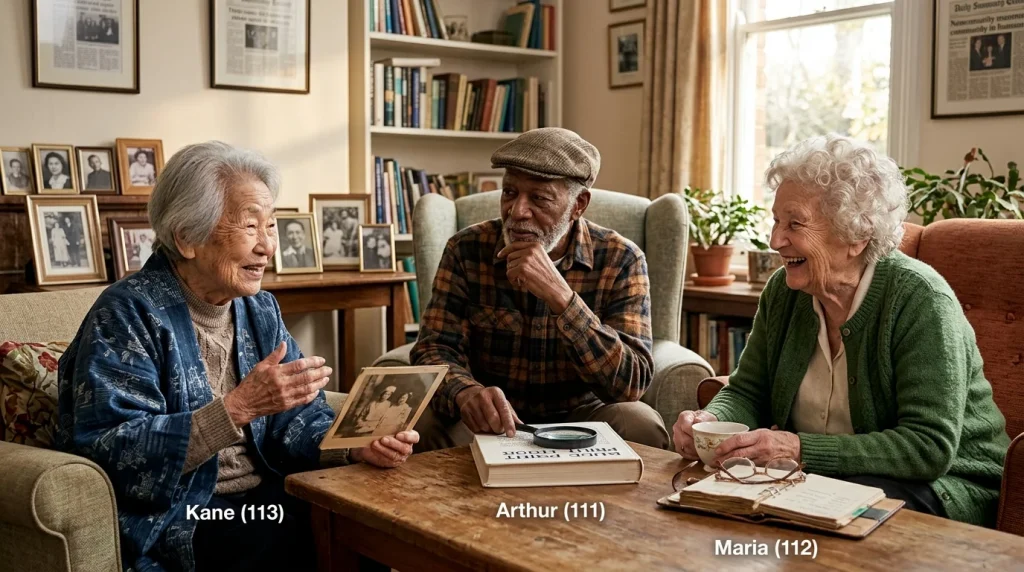
| Name | Lifespan (Years, Days) | Nationality | Noteworthy Habits/Traits |
|---|---|---|---|
| Jeanne Calment | 122 years, 164 days | French | Olive oil in food and on skin, chocolate, Port wine, physically active (cycling until 100), positive attitude. |
| Jiroemon Kimura | 116 years, 54 days | Japanese | Light exercise, “hara hachi bunme” (80% full rule). |
| Kane Tanaka | 119 years, 107 days | Japanese | Enjoyed board games, studying math, chocolate, carbonated drinks. |
| Maria Branyas Morera | 117 years, 168 days | Spanish (born USA) | Order, tranquility, good connection with family and friends, contact with nature, emotional stability, no worries, lots of positivity. |
| Edna Parker | 115 years | American | Enjoyed meat and starchy vegetables, particularly eggs, sausage, bacon, fried chicken. |
The Science of Extreme Longevity: Genes and Environment
The scientific community is intensely focused on understanding the biological underpinnings of extreme longevity. While lifestyle and environment contribute significantly, especially after age 60, genetics are estimated to account for 20-40% of human lifespan variation, with this influence becoming more pronounced in the oldest old. Researchers are delving into the genomes of supercentenarians, searching for unique genetic variants that might protect them from age-related diseases. Studies indicate that the offspring of centenarians often exhibit a lower prevalence of age-related diseases and more “youthful” metabolic profiles.
Several genetic pathways are under investigation. For instance, variants that slightly reduce insulin or insulin-like growth factor 1 (IGF-1) signaling have been associated with increased lifespan across various species, including humans. These individuals often show remarkable resistance to age-related diseases like cancer, diabetes, and cardiovascular disease. Additionally, genes involved in cellular repair, inflammation control, and DNA maintenance are believed to play crucial roles. Supercentenarians often possess a combination of anti-inflammatory genetic variants that help maintain tissue health despite advanced age.
Research also suggests that supercentenarians delay or escape the clinical expression of vascular diseases, heart disease, and stroke much later in life than the general population. This resilience implies protective genetic factors that enable them to withstand environmental influences that typically contribute to age-related illnesses. Ongoing studies, such as the New England Supercentenarian Study, aim to identify these genetic and environmental factors through extensive recruitment and molecular genetic analyses. Recent breakthroughs have even explored how “longevity genes” found in supercentenarians could offer hope for diseases that cause rapid aging in children, like Progeria, by helping protect the heart and blood vessels from damage. For more detailed information on genetic research into longevity, one can refer to specialized resources like Wikipedia’s article on the Genetics of Longevity.
Daily Life and Challenges at 110+
Life beyond 110 years, while extraordinary, also comes with its unique set of challenges. Despite their exceptional health, supercentenarians eventually experience a decline in organ reserve, leading to the end of life. Common health issues can include osteoporosis and cataracts, which are prevalent even among this resilient group. Mobility and independence can also be affected; a study on supercentenarians found that while a surprisingly substantial proportion remained functionally independent or required minimal assistance, many still entered a phase of partial to total dependency in daily activities.
Support systems, primarily family, become crucial in managing daily life for supercentenarians. The ability to maintain a good quality of life often hinges on the care and support provided by loved ones. Despite potential physical limitations, many supercentenarians exhibit remarkable mental acuity. Researchers have observed that they often have distinctive brain characteristics, including thicker cortices and resistance to age-related atrophy, suggesting a slower rate of brain aging. This cognitive resilience allows many to engage in mentally stimulating activities, maintaining their sharp minds and contributing to their overall well-being. However, coping with the loss of multiple generations of family and friends is an inevitable part of living for so long, requiring immense emotional strength.
The Psychological Landscape of Supercentenarians
Beyond the physical and genetic aspects, the psychological profile of supercentenarians offers compelling insights into extreme longevity. A striking commonality among these individuals is a resilient and positive attitude towards life. They tend to exhibit lower levels of neuroticism, demonstrating an ability to not dwell on negative events and to move past adversity. This psychological resilience enables them to cope with significant life changes and losses, which are abundant over such an extended lifespan.
Furthermore, supercentenarians often possess a strong sense of purpose and can find joy in everyday activities, even in their twilight years. Their ability to maintain satisfactory, warm, and trusting relationships is also a key factor contributing to their psychological well-being and potentially their cognitive health. Spirituality, or believing in something greater than oneself, has also been noted as a common trait among supercentenarians, potentially offering social support and boosting optimism. This focus on emotional well-being, stress management, and maintaining meaningful social connections appears to be a consistent theme across many supercentenarian stories, suggesting that mental and emotional health are as critical as physical health in reaching such advanced ages.
The Future of Extreme Longevity
The study of supercentenarians is continually evolving, with ongoing research pushing the boundaries of our understanding of human longevity. As healthcare advances and record-keeping improves, the number of verified supercentenarians is slowly increasing. Scientists are using advanced genomic and molecular studies to pinpoint the precise genetic and biological mechanisms that confer such extraordinary protection against aging.
The insights gained from these studies hold immense promise for the future, not just for extending maximum human lifespan, but more importantly, for improving healthspan – the duration of life spent in good health. By identifying the factors that allow supercentenarians to delay or escape age-related diseases, researchers hope to develop therapeutic interventions and lifestyle recommendations that can benefit the wider population, potentially enabling more people to live longer, healthier, and more fulfilling lives well into their later years. The ultimate goal is not merely to add years to life, but life to years, ensuring that increased longevity is accompanied by sustained vitality and quality of existence.
Conclusion
Supercentenarian Stories provide a fascinating glimpse into the outer limits of human longevity. These individuals, who have lived beyond 110 years, are living testaments to the complex interplay of genetic good fortune, resilient psychological traits, and often, particular lifestyle choices. While there is no single magical elixir, common themes emerge: strong social connections, a positive and adaptable mindset, and often a diet rich in unprocessed foods. Scientific investigations into their unique biology continue to reveal genetic protective factors that shield them from age-related diseases, offering hope for future advancements in healthy aging. As we continue to unravel the mysteries of these exceptional lives, supercentenarians serve as powerful inspirations, reminding us of the remarkable capacity for endurance and vitality inherent in the human spirit, and guiding us toward a future where a longer, healthier life might become a reality for many more.