6 Challenges and Opportunities of an Aging Society – Modern Life Insights
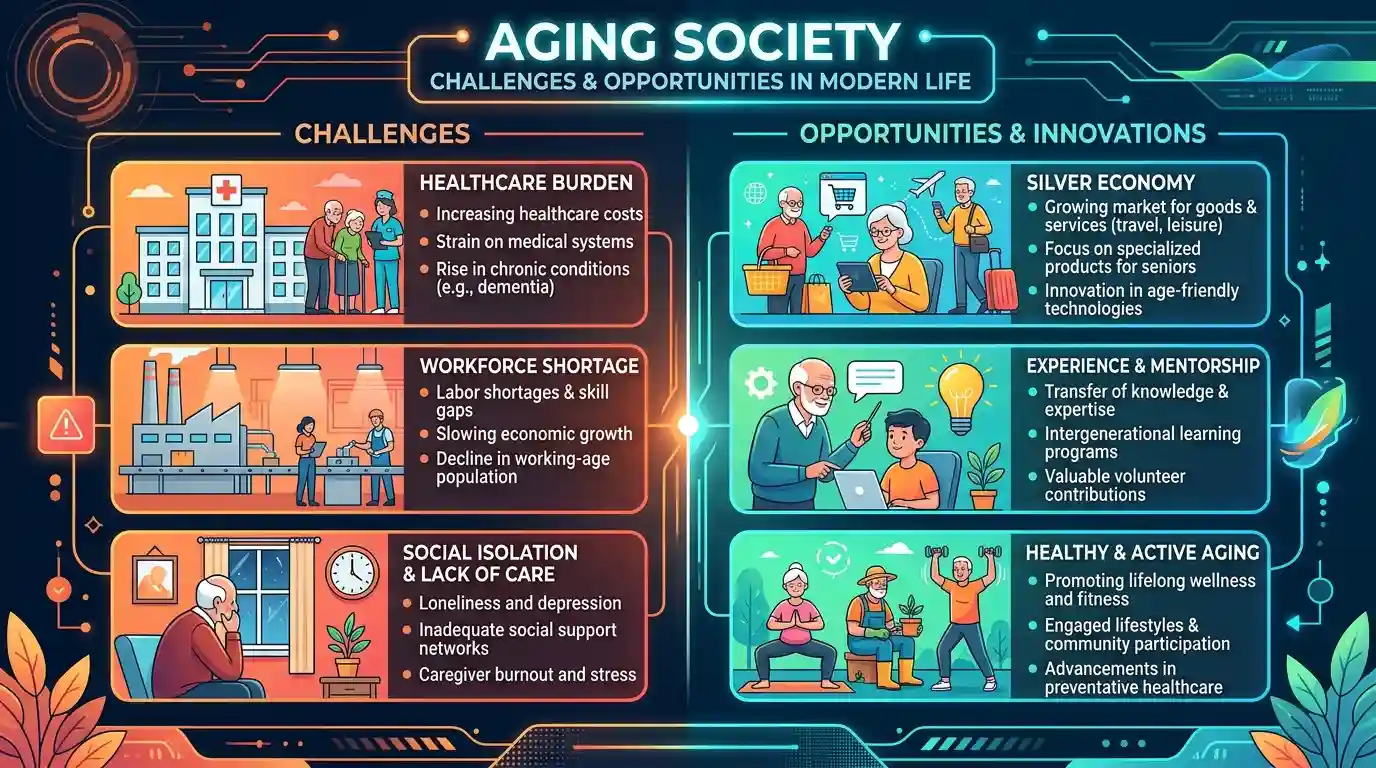
Table of Contents
Aging society presents one of the most significant demographic transformations of the 21st century, reshaping the fabric of modern life across the globe. This profound shift, characterized by increasing life expectancies and declining birth rates, brings forth a complex interplay of challenges and opportunities that demand thoughtful consideration and innovative solutions. Understanding this phenomenon is crucial for governments, businesses, and individuals alike as we navigate an era where the proportion of older adults is steadily rising. The implications span economic stability, social cohesion, healthcare systems, and technological advancement, pushing societies to adapt and redefine what it means to age in the contemporary world. This article delves into the multifaceted aspects of an aging global population, exploring the hurdles it creates and the promising avenues it opens for progress and human development.
The Global Demographic Shift: Understanding the Phenomenon
The global population is experiencing an unprecedented demographic shift, with the number of people aged 60 and over growing faster than all younger age groups. This phenomenon, often referred to as population aging, is primarily driven by two key factors: increased life expectancy and decreased fertility rates. Advances in medicine, nutrition, sanitation, and public health have allowed more people to live longer, healthier lives than ever before. Simultaneously, birth rates have fallen in many regions, leading to a smaller proportion of younger individuals entering the workforce and supporting the older generation. Projections indicate that by 2050, one in six people worldwide will be over age 60, and the number of people aged 80 or older is expected to triple between 2020 and 2050, reaching 426 million. The number of people aged 65 and older, currently estimated at 857 million, is expected to nearly double over the next two and a half decades, reaching 1.58 billion in 2050. In 2020, for the first time in history, the number of people aged 60 years and older surpassed the number of children under five years of age, underscoring the rapid pace of this demographic change. This shift is not confined to developed nations; many developing countries are also experiencing rapid population aging, often without the robust social and economic infrastructures to support it effectively. By 2050, 80% of older people are projected to be living in low- and middle-income countries. The speed and scale of this demographic change necessitate a proactive approach to policymaking and societal adaptation.
Economic Challenges: Strain on Pensions, Healthcare, and Productivity
An aging society brings considerable economic challenges, primarily impacting pension systems, healthcare expenditures, and overall economic productivity. As the proportion of retirees grows relative to the working-age population, many pay-as-you-go pension systems face immense pressure, potentially leading to reduced benefits or increased contributions for younger workers. The fiscal support ratio, which measures the tax revenues needed to balance public expenditures for an aging population, is projected to drop significantly, indicating a substantial increase in costs for pensions, health, and long-term care unless taxes are raised or benefits reduced. The financial sustainability of these systems becomes a critical concern for governments worldwide. Similarly, healthcare costs tend to rise significantly with an aging population, as older adults generally require more medical care, specialized services, and long-term care facilities. Chronic diseases, which are more prevalent in older age groups, contribute substantially to these rising expenses, putting a strain on national budgets and individual savings. Furthermore, a shrinking working-age population can lead to labor shortages, reduced innovation, and slower economic growth, as fewer people can contribute to the economy. Businesses may struggle to find skilled workers, impacting productivity and competitiveness. Addressing these economic hurdles requires innovative fiscal policies, reforms in retirement schemes, and strategic investments in health promotion and preventive care to maintain economic vitality. Substantial improvements in productivity, strategic investment in education and professional training, and the full incorporation of women, older people, and migrants into the workforce are crucial mitigation strategies.
Social and Cultural Impact: Intergenerational Dynamics and Changing Lifestyles
Beyond economics, an aging society profoundly influences social and cultural landscapes, reshaping intergenerational dynamics and lifestyles. The increasing number of older adults can lead to a shift in societal values and priorities, potentially creating new forms of intergenerational tension if resources are perceived to be disproportionately allocated. Family structures are also evolving, with more families caring for multiple generations simultaneously, often referred to as the “sandwich generation” who care for both their children and their aging parents. This can place significant emotional and financial burdens on middle-aged adults, as younger generations often take on caregiver responsibilities for aging parents or grandparents. Social isolation and loneliness among older adults are also growing concerns, particularly in urban environments where traditional community ties may have weakened. Without strong support networks, older adults may struggle with loneliness, mobility issues, and emotional distress. However, this demographic shift also presents opportunities for enriching intergenerational interactions, where older adults can serve as valuable mentors, caregivers, and volunteers, contributing their wisdom and experience to younger generations. Research indicates that strong intergenerational ties can mitigate stress, enhance psychological well-being, and promote purpose in life for seniors, while youth gain mentorship and life skills. Cultural norms around aging are also changing, with a greater emphasis on active aging, lifelong learning, and maintaining a high quality of life into old age. Societies are challenged to foster inclusive environments that celebrate the contributions of all age groups and mitigate potential social fragmentation. Fostering community wellbeing through intergenerational programs can play a vital role in integrating older adults into the social fabric and combating loneliness.
| Aspect of Aging Society | Key Challenges | Emerging Opportunities |
|---|---|---|
| Economy & Labor | Pension system strain, labor shortages, reduced productivity growth, increased fiscal burden. | New markets for elder care (silver economy), experienced workforce retention, remote work flexibility, automation. |
| Healthcare & Wellness | Rising healthcare costs, prevalence of chronic diseases, demand for long-term care. | Telemedicine, preventative health, personalized medicine, age-friendly medical tech, wellness industry growth, AI-driven diagnostics. |
| Social & Cultural | Social isolation, intergenerational tension, burden on caregivers, evolving family structures. | Intergenerational programs, active aging models, volunteerism, redefined family roles, lifelong learning, mentorship. |
| Technology & Innovation | Digital divide for some seniors, privacy concerns. | AI for assistance, robotics for care, smart home solutions, accessible digital platforms, health tech, remote monitoring. |
| Urban Planning & Infrastructure | Inaccessible public spaces, housing shortages for seniors, transportation issues. | Age-friendly cities, universal design, specialized housing, improved public transport, community hubs. |
Opportunities in Healthcare and Wellness: Advancements for Longevity
While an aging population poses significant healthcare challenges, it also spurs remarkable opportunities for innovation in health and wellness. The demand for improved geriatric care, preventative medicine, and solutions for age-related conditions is driving research and development in pharmaceuticals, medical devices, and personalized healthcare. Telemedicine and virtual care platforms are becoming increasingly vital, allowing older adults to receive care from the comfort of their homes, reducing hospital visits, and improving accessibility, especially for those in remote or underserved areas. These platforms often feature user-friendly interfaces, larger text, and integrated voice commands to ensure ease of use for seniors. Remote patient monitoring (RPM) and wearable devices, such as smartwatches and health patches, track vital signs like heart rate, blood pressure, oxygen levels, and sleep patterns in real-time, enabling proactive health management and early detection of issues. The focus is shifting from merely treating illnesses to promoting healthy aging, encompassing physical activity, mental well-being, and social engagement. Wellness programs, nutrition guidance, and rehabilitation services are gaining prominence, helping seniors maintain independence and quality of life for longer. AI-powered diagnostic tools analyze health data to predict potential medical issues before they occur, aiding in early diagnosis and personalized care plans, such as predicting falls or cognitive decline. The burgeoning market for age-friendly products and services, from specialized mobility aids to smart home solutions, represents a significant economic opportunity, often referred to as the “silver economy”. The rapid advancements in healthcare technology are reshaping senior care, offering innovative solutions to meet the evolving needs of an aging population.

Technological Solutions: AI, Robotics, and Smart Living for Seniors
Technology offers a wealth of solutions to mitigate the challenges and amplify the opportunities presented by an aging society. Artificial intelligence (AI) and robotics are at the forefront, revolutionizing elder care and independent living. AI-powered virtual assistants can help older adults manage medication schedules, connect with family, and provide cognitive stimulation, reducing feelings of loneliness. Robotic companions, like the robotic seal Paro, are being developed to offer social interaction and assistance with daily tasks, and some can even recognize faces and read human emotions, providing therapeutic benefits to dementia patients. Robotic exoskeletons are designed to augment wearers’ abilities, helping aging people perform everyday tasks, get in and out of bed, and aid mobility and rehabilitation. Smart home technologies are also transforming living environments, with motion sensors that detect falls, smart appliances that simplify daily routines, and automated systems that enhance security and comfort. These systems can send emergency alerts to caregivers if a fall or unusual inactivity is detected. Wearable health trackers provide continuous monitoring of vital signs and activity levels, enabling proactive health management and alerting caregivers to potential issues. Furthermore, digital platforms are facilitating easier access to information, social networks, and online learning opportunities, helping older adults stay connected and engaged. The key lies in designing user-friendly and accessible technologies that cater to the diverse needs and abilities of the older population, ensuring that the digital revolution benefits everyone, regardless of age. Initiatives to bridge the digital divide for seniors are crucial for equitable access to these advancements, ensuring that federal efforts include a focus on digital inclusion programs. These technological innovations can significantly improve the quality of life for seniors while alleviating the workload on human caregivers.
Reimagining the Workforce: Experience, Innovation, and Flexible Models
The aging workforce presents both a challenge in terms of labor supply and a significant opportunity for retaining invaluable experience and expertise. Instead of viewing older workers as a burden, societies are increasingly recognizing their potential as a stable, knowledgeable, and reliable segment of the labor force. Companies are exploring flexible work arrangements, such as part-time roles, remote work options, and flexible hours, to encourage older adults to remain economically active for longer. These arrangements significantly boost job satisfaction among older employees by supporting a better work-life balance, addressing health, caregiving, and personal needs. This not only helps maintain pension system solvency but also prevents a brain drain of institutional knowledge. The transfer of skills and mentorship from experienced older workers to younger generations is a critical benefit, fostering a culture of continuous learning and development within organizations. Furthermore, entrepreneurship among older adults is on the rise, with many leveraging their extensive experience and networks to start new businesses, contributing to economic dynamism and innovation. Policymakers and businesses must collaborate to create age-inclusive workplaces that value diversity, offer opportunities for reskilling and upskilling, and adapt to the evolving needs of an older workforce. This shift requires a paradigm change in how we perceive age and productivity, moving towards a model where experience is celebrated and utilized effectively. The World Health Organization (WHO) provides extensive resources and policy recommendations on healthy aging and workforce participation, emphasizing the importance of creating environments that support active and productive lives for older people. The WHO’s factsheet on aging and health offers further insights into global strategies for healthy aging.
Policy Innovation and Social Support Systems
Addressing the challenges and harnessing the opportunities of an aging society necessitates robust policy innovation and the strengthening of social support systems. Governments worldwide are developing comprehensive national strategies for healthy aging, focusing on areas such as healthcare reform, pension system sustainability, age-friendly urban planning, and lifelong learning initiatives. For instance, California’s Master Plan for Aging outlines five goals and 23 strategies to build an “age-friendly” state by 2030, covering housing, health, inclusion, caregiving, and affordability. Similarly, Texas developed an “Aging Texas Well” plan to guide state government readiness and promote community preparedness. Policies promoting active aging encourage older adults to remain physically, socially, and mentally engaged, contributing to their well-being and reducing healthcare burdens. Investment in long-term care infrastructure, including home-based care and assisted living facilities, is crucial to meet the growing demand. Furthermore, social policies aimed at reducing ageism and promoting intergenerational solidarity are essential for fostering inclusive communities. This includes public awareness campaigns, educational programs, and initiatives that bring different age groups together, fostering mutual learning and respect. Local communities play a vital role in building support networks, offering volunteer opportunities, and creating accessible public spaces that cater to the needs of older residents. The UN Decade of Healthy Ageing (2021–2030) is a global initiative to catalyze actions that meaningfully improve the lives of older people through a whole-of-government, whole-of-society approach. Collaborative efforts between government, civil society, the private sector, and academia are key to designing and implementing effective policies that ensure a dignified, healthy, and productive life for all citizens, regardless of age. Effective policy development is crucial for navigating this demographic transformation.
Conclusion: A Balanced Future
The rise of an aging society presents a complex yet ultimately manageable set of challenges and opportunities for modern life. While concerns about economic strain on pension and healthcare systems, potential labor shortages, and social integration are valid, they are equally matched by the potential for innovation in technology, advancements in medicine, and the invaluable contributions of an experienced older workforce. The demographic shift is not merely a problem to be solved but a catalyst for reimagining our social structures, economic models, and technological capabilities. By proactively investing in age-friendly infrastructure, promoting healthy aging, fostering intergenerational solidarity, and leveraging technological advancements, societies can transform the perception of aging from a burden into a celebrated phase of life filled with purpose and contribution. The path forward demands foresight, collaboration, and a commitment to creating inclusive societies where everyone, regardless of age, can thrive. Embracing the aging society means embracing a more balanced, experienced, and potentially richer future for all.