6 Key Differences Between Biological Age and Chronological Age
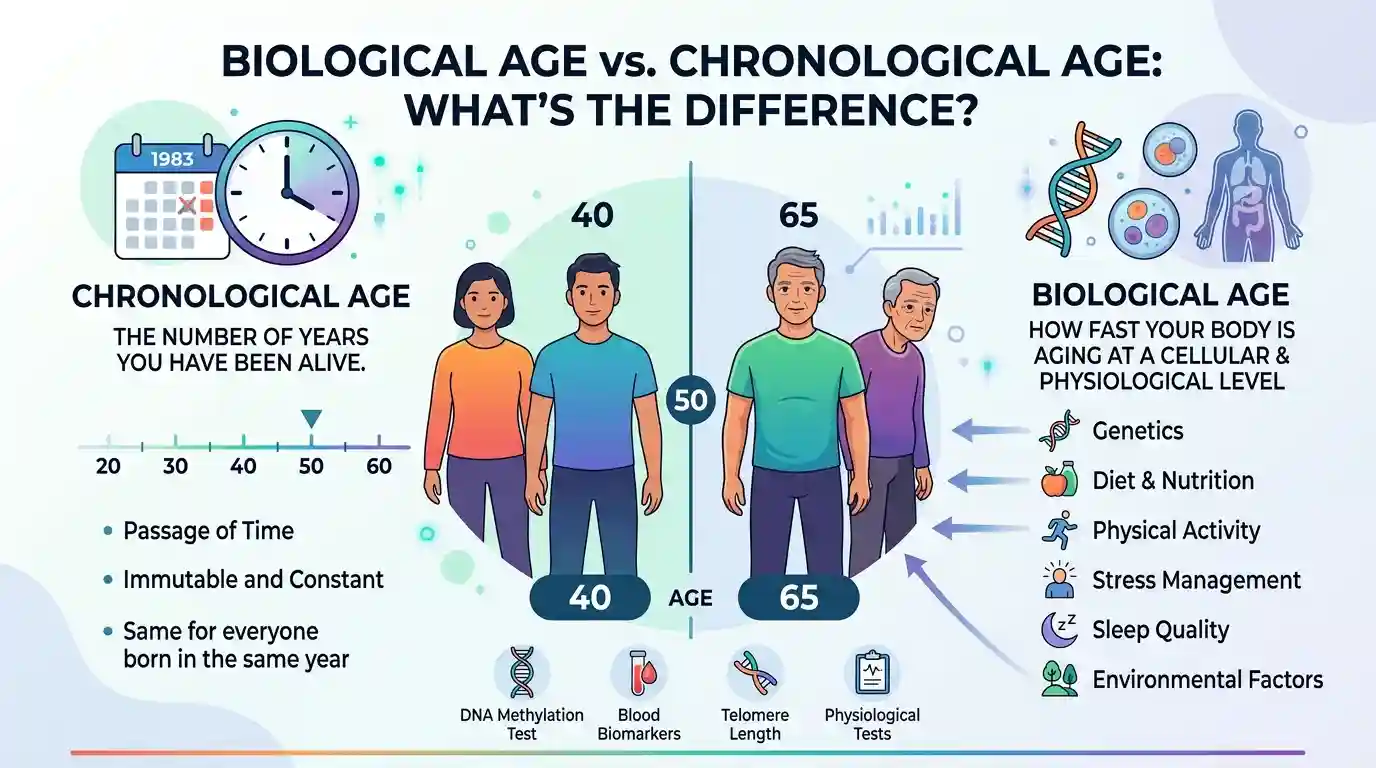
Table of Contents
Biological age and chronological age represent two distinct yet interconnected ways of understanding the aging process. While chronological age is a straightforward measure of time passed since birth, biological age delves into the physiological and molecular state of an individual’s body, reflecting how well cells and organ systems are functioning. This fundamental difference is gaining increasing recognition as scientific research uncovers its profound implications for health, disease prevention, and overall longevity. It’s a topic that moves beyond simply counting birthdays, inviting us to consider a more dynamic and personalized view of how we age.
Understanding the Core Concepts of Aging
Aging is a universal experience, yet its manifestation varies dramatically among individuals. One person might remain active and mentally sharp well into their later years, while another may face significant health declines decades earlier. This disparity highlights the limitations of chronological age as the sole indicator of an individual’s health status and risk for age-related conditions. The emerging field of geroscience is dedicated to exploring the underlying processes of aging with the goal of preventing multiple chronic diseases simultaneously, rather than tackling them one by one. This shift in perspective underscores the importance of distinguishing between how long someone has lived and how well their body has aged.
Chronological Age: The Simple Measurement
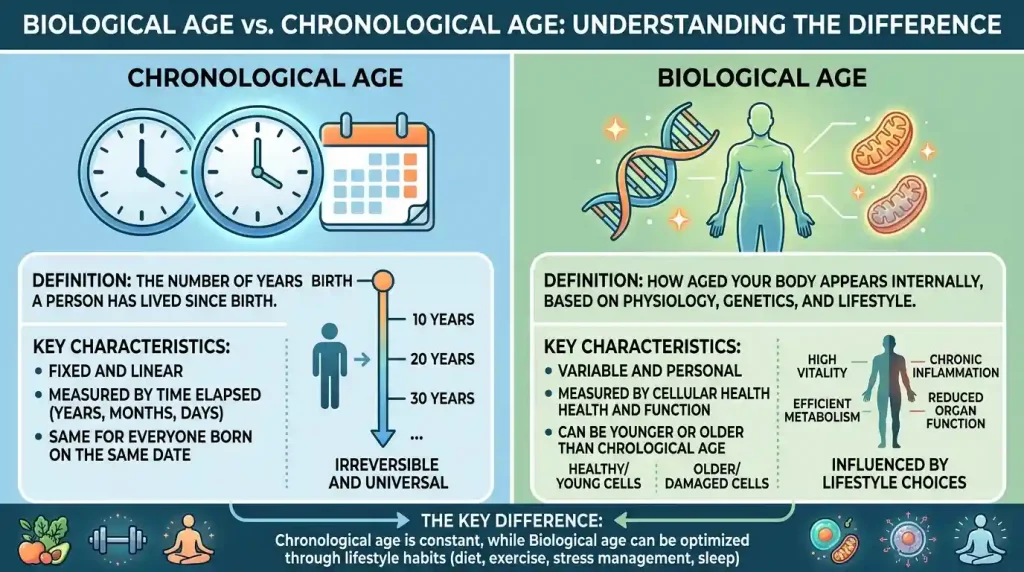
Chronological age is the most common and universally understood measure of age. It simply refers to the number of years that have elapsed since an individual’s birth. This measure is fixed, linear, and increases sequentially for everyone, regardless of their health, lifestyle, or genetic predispositions. We use chronological age for everything from celebrating birthdays to legal identification and medical records. It provides a convenient, objective, and immutable timeline of a person’s life journey.
- It’s the age used on official documents.
- It progresses uniformly for everyone, day by day, year by year.
- It offers a consistent benchmark for population statistics and societal structures.
Biological Age: The Deeper Story of Your Health
In contrast to chronological age, biological age, also known as physiological or functional age, assesses the true “age” of your cells, tissues, and organ systems. It reflects the accumulation of cellular damage over time and how efficiently your body is able to repair, rebuild, and function. Unlike chronological age, biological age is not fixed; it is a dynamic measure influenced by a complex interplay of genetics, lifestyle choices, environmental exposures, and health conditions. This means two individuals of the same chronological age can have vastly different biological ages. For instance, a 60-year-old chronologically might possess the biology of a 40-year-old, while another 60-year-old might exhibit biological markers more typical of someone in their 70s.
Scientists define biological age as “an accumulation of cellular damage over time”. This damage impacts a cell’s ability to repair, rebuild, and function. It’s a reflection of overall health and potential longevity, often predicting health risks more accurately than chronological age alone.
The core concept here is that while your birth certificate remains the same, your body’s internal clock can tick at a different pace. A “younger” biological age suggests slower aging and better health, while an “older” biological age indicates accelerated aging, often influenced by factors such as lifestyle, environment, and disease.
Why the Difference Between Ages is Crucial for Health and Longevity
The distinction between biological and chronological age is not merely an academic curiosity; it holds significant implications for understanding individual health, predicting disease risk, and developing personalized interventions for healthier aging.
Biological age serves as a superior predictor of healthspan (the period of life spent in good health) and disease susceptibility compared to chronological age. A higher biological age, particularly when it significantly exceeds chronological age (often referred to as an “age gap”), is consistently linked to an increased risk of developing various chronic conditions and premature mortality. These conditions include:
- Cardiovascular disease
- Cancer
- Type 2 Diabetes
- Dementia and Alzheimer’s disease
- Kidney disease
- Neurodegenerative disorders
- Frailty and impaired physical function
- Increased susceptibility to infections and slower recovery from illness or injury
Understanding this age gap allows healthcare professionals to identify individuals at higher risk for these conditions earlier, even before overt symptoms appear. This proactive approach can lead to more targeted preventive strategies and personalized medical guidance. For instance, a study found that participants who improved their biological age gap experienced a 23% lower risk of stroke during a follow-up period and also showed a lower volume of white matter hyperintensities in the brain, which are linked to memory problems and cognitive decline.
Moreover, biological age provides a more accurate way to assess the effectiveness of interventions aimed at promoting healthy aging. While chronological age continues to advance regardless of lifestyle changes, improvements in diet, exercise, and stress management can lead to measurable reductions in biological age, signaling genuine improvements in cellular and physiological health. This makes biological age a powerful tool for both research and personal health management, offering tangible feedback on efforts to enhance longevity and quality of life.
Key Factors Influencing Your Biological Age
Your biological age is a dynamic reflection of your body’s cumulative experiences and its capacity for repair and regeneration. Numerous factors contribute to whether your biological clock ticks faster or slower than your chronological one. These can broadly be categorized into genetics, lifestyle, environmental exposures, and existing health conditions.
Genetics: While recent research indicates that genetic factors account for only 15% to 25% of aging, they still play a foundational role. Some individuals inherit genes that provide stronger repair mechanisms, more efficient stress-response systems, or a greater resistance to age-related diseases. This genetic blueprint can influence the efficiency of DNA repair, cellular regeneration, and immune function.
Lifestyle Choices: These are arguably the most influential and modifiable factors. The choices we make daily have a profound impact on our cellular health and the pace of biological aging.
- Diet and Nutrition: A diet rich in whole foods, adequate protein, and fiber, and low in refined sugars, starches, and ultra-processed foods, can support cellular health and reduce inflammation. Polyphenol-rich foods, for example, have been shown to influence DNA methylation patterns favorably, potentially reducing biological age.
- Physical Activity and Exercise: Regular movement, encompassing both strength training and aerobic exercise, is consistently linked to lower biological age markers. Exercise improves insulin sensitivity, reduces inflammation, enhances cardiovascular function, and slows muscle loss.
- Sleep Quality and Duration: Consistent, restorative sleep is crucial for cellular repair and hormone regulation. Poor sleep can elevate cortisol levels, increase inflammation, and hinder cellular repair processes, thereby accelerating aging. Aiming for seven to nine hours of quality sleep each night is recommended.
- Stress Management: Chronic stress is a significant accelerator of biological aging. It wreaks havoc on the body by affecting hormones and inflammation, damaging cells, and disrupting key repair processes. Techniques like mindfulness, meditation, yoga, and social connection can help mitigate its effects.
- Smoking and Alcohol Use: Avoiding tobacco is paramount, as smoking significantly accelerates biological aging and takes years off one’s life. While moderate alcohol consumption might have nuanced effects, excessive intake is detrimental.
Environmental Exposures: The world around us also plays a role in our biological age.
- Toxins and Pollutants: Exposure to environmental toxins, air pollution, and UV radiation can accelerate cellular damage and inflammation.
- Heat Exposure: Research suggests that extreme heat may speed up biological aging, particularly for older adults.
Medical Conditions and Health History: Existing health issues can significantly impact biological age.
- Chronic Diseases: Conditions such as diabetes, heart disease, autoimmune disorders, and obesity can accelerate biological aging. Managing these conditions effectively with appropriate medical guidance is crucial.
- Inflammation: Chronic low-grade inflammation is a key driver of faster aging.
| Factor Category | Examples | Impact on Biological Age |
|---|---|---|
| Genetics | Inherited repair mechanisms, stress response efficiency | Foundational influence, accounts for 15-25% of aging variation |
| Lifestyle: Diet | Whole foods, adequate protein, low processed foods, polyphenols | Can slow biological aging; nutrient-rich diets lower epigenetic age |
| Lifestyle: Exercise | Regular aerobic & strength training | Consistently linked to lower biological age markers, improves cellular function |
| Lifestyle: Sleep | 7-9 hours of quality sleep | Poor sleep accelerates aging by increasing cortisol and inflammation |
| Lifestyle: Stress | Chronic stress, poor coping mechanisms | Significantly accelerates biological aging by damaging cells |
| Lifestyle: Habits | Smoking, excessive alcohol use | Accelerates biological aging and increases disease risk |
| Environmental | Pollutants, toxins, extreme heat | Can accelerate cellular damage and aging processes |
| Health Conditions | Diabetes, heart disease, obesity, inflammation | Chronic conditions can accelerate biological aging |
How Biological Age is Measured Today
For decades, researchers have sought reliable “aging clocks” to quantify biological age more accurately than chronological age. Significant advancements in molecular biology and computational modeling have led to the development of several methods, with DNA methylation analysis currently considered the gold standard.
The most accurate and validated method for measuring biological age is through **DNA methylation analysis**, which is used to construct “epigenetic clocks”. DNA methylation refers to the addition of methyl groups to specific sites on DNA, called CpG sites, which regulate gene expression without altering the underlying DNA sequence. These methylation patterns change predictably as we age. Epigenetic clocks are mathematical models or algorithms that analyze these patterns to estimate biological age with remarkable accuracy.
- Epigenetic Clocks: Pioneered by researchers like Steve Horvath, these clocks are built on a collection of CpG sites whose methylation levels correlate strongly with chronological age. They can provide predictive insights into mortality and age-related disease risks. Samples for these tests typically involve blood or saliva, where DNA is extracted and methylation is measured across hundreds of thousands of CpG sites. While powerful, the accuracy can vary depending on the tissue type used (e.g., blood vs. oral tissue), and most clocks are primarily trained on European populations.
Beyond epigenetic clocks, other biomarkers are also used, sometimes in combination, to provide a composite picture of biological age. These include:
- Telomere Length: Telomeres are protective caps at the ends of chromosomes that shorten with each cell division. Shorter telomere length has been associated with biological aging, although its decrease is not universal across all populations, and some individuals may show stable or even increasing telomere lengths.
- Inflammation Markers: Chronic low-grade inflammation is a known contributor to accelerated aging. Markers like C-reactive protein (CRP) can indicate systemic inflammation.
- Metabolic Health Indicators: Blood sugar control, insulin sensitivity, lipid levels (cholesterol), and blood pressure are key components of metabolic health that factor into biological age assessments.
- Proteomic Clocks: These are based on measurements of protein levels in body fluids, which also change with age.
- Physical Performance Metrics: Measures such as grip strength, walking speed, balance, and lung capacity can reflect the functional age of various bodily systems.
- Cognitive Tests: These evaluate aspects like memory, attention, and processing speed, offering insights into brain aging.
It’s important to note that while biological age estimates are widely used in aging research, they are not yet part of routine medical care. Commercial biological age tests are available online, often involving a blood or saliva sample, but their clinical utility and comprehensive validation are still evolving. Researchers continue to explore and refine these methods, sometimes using AI and machine learning to combine various molecular signatures and physiological data for more comprehensive predictions. However, some experts caution that certain types of epigenetic changes may produce misleading results if not properly differentiated.
Can You Change Your Biological Age? Interventions and Strategies
One of the most exciting aspects of biological age research is the growing evidence that, unlike chronological age, biological age is modifiable. This means that through conscious efforts and lifestyle interventions, it is possible to slow down, and in some cases even modestly reverse, the aging process at a cellular and molecular level. This doesn’t promise immortality or dramatic transformations, but rather focuses on improving healthspan and reducing the risk of age-related diseases.
Research consistently points to a set of key lifestyle changes that can positively influence biological age markers:
- Optimized Nutrition: A nutrient-rich diet forms the foundation of cellular health. Emphasizing whole, unprocessed foods, ample fruits and vegetables, lean proteins, and healthy fats can significantly impact biological age. Diets like the Mediterranean diet have been linked to slower aging clocks. Specific compounds, such as polyphenols found in leafy greens and cruciferous vegetables, appear to favorably influence DNA methylation, potentially reducing biological age. Caloric restriction has also shown potential in slowing the pace of aging.
- Regular Physical Activity: Exercise is perhaps the closest thing we have to a “fountain of youth”. Both aerobic and strength training contribute to improved insulin sensitivity, reduced inflammation, better cardiovascular function, and preservation of muscle mass, all of which are crucial for maintaining a youthful biological age. Studies have shown that physically active individuals can have a significantly younger proteomic age.
- Consistent, High-Quality Sleep: Prioritizing sleep is not a luxury but a biological necessity. Poor sleep can accelerate aging by increasing cortisol levels, inflammation, and impairing cellular repair mechanisms. Aiming for 7-9 hours of restorative sleep per night is essential for cellular rejuvenation and maintaining a younger biological age.
- Effective Stress Management: Chronic stress is a significant driver of accelerated biological aging. Incorporating stress-reducing practices such as mindfulness, meditation, yoga, spending time in nature, and fostering strong social connections can help mitigate the damaging effects of stress on a cellular level.
- Avoiding Harmful Exposures: Quitting smoking is one of the most impactful steps one can take to slow down accelerated aging. Reducing exposure to environmental toxins, pollutants, and excessive alcohol consumption also plays a vital role in protecting cellular health.
- Managing Chronic Health Conditions: Proactive management of existing medical conditions like diabetes, hypertension, and autoimmune disorders, with appropriate medical guidance, can prevent them from accelerating biological aging.
Emerging research from human trials has reported that comprehensive lifestyle changes, including a plant-based diet, exercise, and certain drug regimes (like metformin and vitamin D3 supplementation), are capable of slowing down or reversing an aging clock. One notable study demonstrated an average reduction of 4.7 years in biological age after just eight weeks on a polyphenol-rich diet. Another clinical trial even showed a 3-year reversal in biological age markers within an eight-week period through targeted interventions focusing on VO2 max, insulin sensitivity, and mitochondrial health.
While the idea of “reverse aging” might sound like science fiction, the scientific community emphasizes that this refers to influencing biological age to improve health span and reduce disease risk, rather than achieving immortality. The most effective strategies are not extreme or mysterious, but rather consistent habits that promote overall well-being. For individuals, understanding their biological age through advanced testing can provide motivation and a measurable benchmark for the success of these health-promoting interventions, enabling a more empowered and holistic approach to health. The Wikipedia page on aging provides further insights into the complex biological processes involved.
Conclusion: Embracing a Holistic View of Aging
The journey through life is marked by two distinct yet intertwined measures of age: chronological and biological. While chronological age simply counts the years since birth, offering a fixed and linear progression, biological age provides a profound and dynamic insight into the actual physiological state of our bodies, reflecting the true wear and tear on our cells and organ systems. This distinction is far from trivial, as a person’s biological age is a far more accurate predictor of their health trajectory, disease risk, and overall longevity than their birth date alone.
The advancements in measuring biological age, particularly through sophisticated DNA methylation-based epigenetic clocks, have revolutionized our understanding of aging, allowing us to quantify its pace with remarkable precision. More importantly, this research has illuminated the powerful truth that our biological age is not predetermined. It is a malleable metric, profoundly influenced by our daily choices and environment. Factors such as diet, exercise, sleep, stress management, and exposure to toxins all contribute to how quickly or slowly our biological clock ticks.
By embracing a holistic and proactive approach to health, focusing on consistent, positive lifestyle interventions, individuals have the remarkable capacity to reduce their biological age, thereby lowering their risk for chronic diseases and extending their years of healthy, vibrant living. As scientific understanding continues to grow, the insights gleaned from biological age research empower us all to take a more informed and active role in shaping our own aging process, moving towards a future where living longer also means living better.