8 Powerful Facts About Senolytics – The Future of Anti-Aging Science
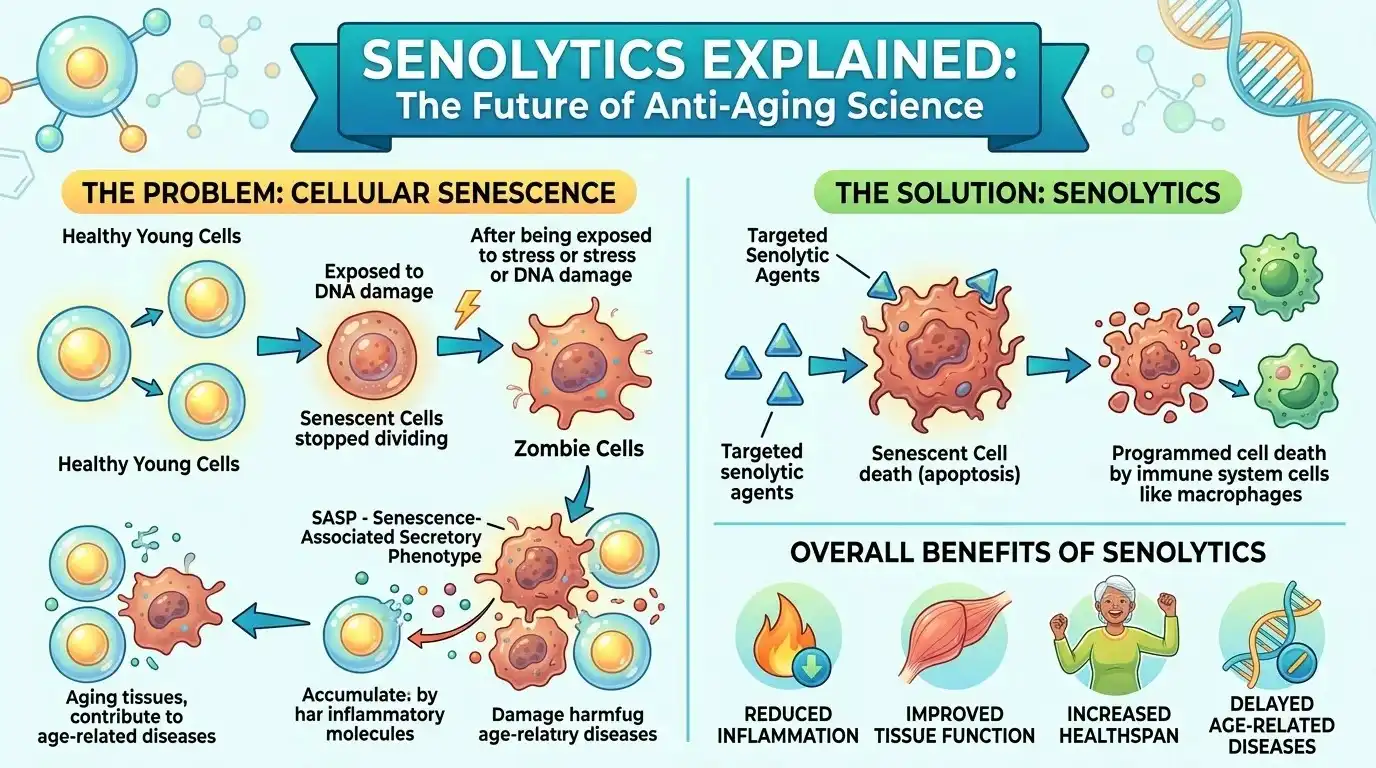
Table of Contents
Senolytics represent a revolutionary frontier in the realm of anti-aging science, offering the potential to not only mitigate the effects of aging but perhaps even reverse some aspects of it at a cellular level. These novel compounds are designed to selectively eliminate senescent cells—often referred to as “zombie cells”—which accumulate in the body as we age and contribute significantly to various age-related diseases and overall physiological decline. By understanding the intricate mechanisms through which these cells wreak havoc and how senolytics precisely target them, we can begin to grasp the profound implications this burgeoning field holds for extending human healthspan and transforming our approach to age-related health.
Senolytics: Understanding the Core Concept
Senolytics are a class of drugs or compounds engineered to induce the selective death (apoptosis) of senescent cells, while leaving healthy, functional cells unharmed. The term itself is derived from “senescence” (meaning to grow old) and “-lytic” (meaning to dissolve or destroy), encapsulating their primary function. These cells are a natural part of biological processes, initially playing roles in development, wound healing, and tumor suppression by halting cell division in response to damage. However, as individuals age and the immune system becomes less efficient, senescent cells increasingly evade natural clearance mechanisms and accumulate in tissues and organs throughout the body. This accumulation is strongly linked to chronic inflammation, tissue degradation, and the onset of numerous age-related diseases..
The unique characteristic of senolytics lies in their targeted approach. Unlike broad-spectrum therapies, senolytics exploit specific vulnerabilities that senescent cells develop to resist programmed cell death, thereby triggering their elimination. This selective destruction aims to reduce the burden of these harmful cells, thereby mitigating their detrimental effects on surrounding healthy tissue and systemic physiological function. The promise of senolytics extends beyond merely slowing down aging; it envisions a future where the underlying causes of age-related decline are directly addressed, paving the way for a more robust and longer “healthspan”—the period of life spent in good health.
The Science Behind Senescence: Why Cells Go Rogue
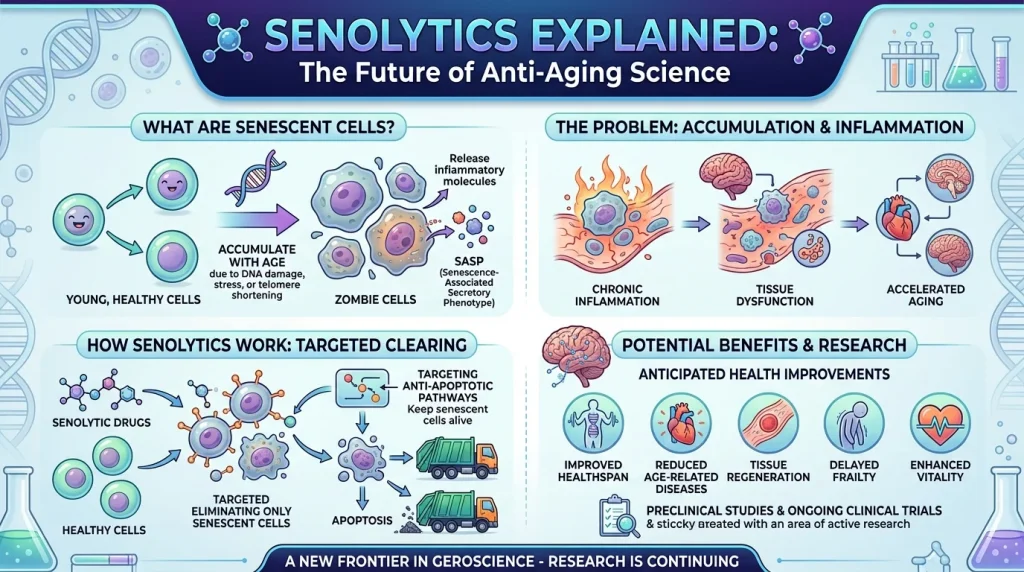
Cellular senescence is a state of irreversible cell cycle arrest where cells stop dividing but remain metabolically active. This state is typically triggered by various forms of stress, including DNA damage, telomere shortening, oncogene activation, and oxidative stress. While beneficial in early life for processes like preventing cancer by halting the proliferation of potentially cancerous cells and aiding in wound healing, the persistent presence of senescent cells in aged tissues becomes detrimental.
A critical aspect of senescent cells is their notorious “senescence-associated secretory phenotype” (SASP). The SASP is a complex cocktail of molecules secreted by senescent cells, comprising pro-inflammatory cytokines, chemokines, growth factors, and extracellular matrix-degrading proteases. These secreted factors do not just sit idly; they actively disrupt the microenvironment, causing chronic inflammation, damaging neighboring healthy cells, and even inducing senescence in previously healthy cells—a phenomenon known as “bystander senescence”. This cascading effect accelerates tissue dysfunction, impairs tissue repair, and is a key driver in the progression of many age-related pathologies.
The accumulation of these “zombie cells” is particularly problematic because the immune system, which normally clears them, becomes less efficient with age. This imbalance between the generation of senescent cells and their clearance leads to their insidious build-up, exacerbating age-related decline in organ function, increasing systemic inflammation, and raising the risk of conditions like cardiovascular disease, diabetes, neurodegenerative disorders, and various cancers.
How Senolytics Target and Eliminate Senescent Cells
The fundamental principle behind senolytics is their ability to selectively induce apoptosis (programmed cell death) in senescent cells without harming healthy cells. Senescent cells, despite being dysfunctional, possess robust “pro-survival” pathways that allow them to resist apoptosis, a characteristic known as Senescent Cell Anti-Apoptotic Pathways (SCAPs). Senolytics work by disrupting these very survival mechanisms, effectively making senescent cells vulnerable to their own internal death signals.
Mechanisms of Action: A Closer Look
Different senolytic agents achieve this selective elimination through various molecular mechanisms. Some of the most important include:
- Inhibition of Anti-Apoptotic Proteins (BCL-2 Family): Senescent cells often upregulate anti-apoptotic proteins like BCL-2, BCL-xL, and BCL-W, which act as a shield against cell death. Many senolytics, such as navitoclax, target these proteins, thereby allowing senescent cells to undergo apoptosis.
- Modulation of the PI3K/AKT Pathway: This pathway is crucial for cell survival and proliferation. Senescent cells exhibit alterations in this pathway, and certain senolytics interfere with it, leading to their demise.
- Influence on Tyrosine Kinases: Tyrosine kinase inhibitors, such as dasatinib, disrupt signaling pathways essential for senescent cell survival. Dasatinib, for instance, inhibits Src kinase, which otherwise generates an anti-apoptotic signal in these cells.
- Disruption of FOXO4-p53 Interaction: In senescent cells, FOXO4 can bind to p53, preventing p53 from initiating apoptosis. Some senolytic compounds are designed to disrupt this interaction, freeing p53 to trigger the apoptotic process in senescent cells.
- Induction of Mitochondrial Stress: Senescent cells often have altered mitochondrial function. Certain senolytics exploit these metabolic vulnerabilities, inducing stress that tips the balance towards apoptosis.
This selective targeting is a significant advantage, as it minimizes harm to healthy, non-senescent cells, which do not rely on these specific pro-survival pathways to the same extent. The “hit-and-run” approach, where senolytics are administered intermittently, is feasible because senescent cells take weeks to reaccumulate after being cleared, allowing for periodic treatment without continuous drug exposure.
Key Senolytic Compounds and Their Research Status
The field of senolytics has seen the identification of several promising compounds, both synthetic and naturally occurring, that exhibit senolytic activity. These compounds are at various stages of research and development, from preclinical studies to early-stage human clinical trials.
- Dasatinib and Quercetin (D+Q): This combination is one of the most well-known and extensively studied senolytic cocktails. Dasatinib, a tyrosine kinase inhibitor initially used as a cancer drug, works synergistically with quercetin, a natural flavonoid found in many fruits and vegetables. This combination has shown broad efficacy in clearing various types of senescent cells in preclinical models and has been at the forefront of human clinical trials for conditions like idiopathic pulmonary fibrosis and diabetic kidney disease.
- Fisetin: Another naturally occurring flavonoid, fisetin, found in strawberries and other plants, has garnered significant attention for its potent senolytic effects. Studies suggest that fisetin not only aids in clearing senescent cells but also reduces levels of the SASP. It is currently being tested in several human trials for its potential to alleviate age-associated dysfunction.
- Navitoclax (ABT-263): This is a synthetic BCL-2 family inhibitor, initially developed as an anti-cancer drug. It is effective in inducing apoptosis in certain types of senescent cells but has been associated with dose-limiting thrombocytopenia due to BCL-xL inhibition in platelets, highlighting challenges in achieving high specificity and minimizing off-target effects.
- Piperlongumine: This natural compound is also under investigation for its senolytic properties.
- HSP90 Inhibitors: Research at Mayo Clinic and The Scripps Research Institute identified HSP90 inhibitors as a new category of senolytic drugs, showing promise in targeting senescent cells.
Beyond these, researchers are continually screening for new senolytic agents, including other natural compounds like curcumin, and developing more advanced strategies such as biologics (e.g., peptide vaccinations, monoclonal antibodies) and AI-driven drug discovery to accelerate the identification of highly specific and effective compounds. The market for senolytic drugs is projected to grow, with significant investment driven by the increasing global focus on healthy aging and the potential to treat chronic diseases.
The following table summarizes some key senolytic compounds and their general mechanisms:
| Senolytic Compound | Type | Primary Mechanism of Action | Current Status (General) |
|---|---|---|---|
| Dasatinib (D) | Synthetic Drug | Tyrosine Kinase Inhibitor, disrupts pro-survival pathways. | In preclinical and early human clinical trials (often with Quercetin) for various age-related conditions. |
| Quercetin (Q) | Natural Flavonoid | Antioxidant, anti-inflammatory, inhibits anti-apoptotic protein Bcl-xL. | In preclinical and early human clinical trials (often with Dasatinib). Available as a supplement. |
| Fisetin | Natural Flavonoid | Potent senolytic, inhibits anti-apoptotic protein Bcl-xL, reduces SASP. | Undergoing human trials for age-associated dysfunction. Available as a supplement. |
| Navitoclax (ABT-263) | Synthetic Drug | BCL-2 family inhibitor (BCL-2, BCL-xL, BCL-W). | Preclinical and early clinical research, but with concerns about off-target toxicity (thrombocytopenia). |
| HSP90 Inhibitors | Synthetic Drugs | Targets heat shock protein 90, which is involved in senescent cell survival pathways. | Early research, identified as a new category of senolytics. |
Promising Research and Clinical Trials: Hope for Healthy Aging
The transition of senolytics from promising laboratory findings to human clinical trials marks a pivotal moment in anti-aging science. Preclinical studies, particularly in animal models, have consistently demonstrated that the removal of senescent cells with senolytics can delay, prevent, or alleviate a wide array of age-related conditions. These benefits include improvements in cardiovascular health, decreased frailty, enhanced physical function, improved insulin sensitivity, reduced vessel calcification, and even extended healthspan and longevity. For example, studies on aged mice treated with dasatinib and quercetin (D+Q) have shown significant improvements in physical function and a notable extension of lifespan.
The first human clinical trials for senolytic agents were reported as early as January 2019. An initial pilot study in 14 patients with idiopathic pulmonary fibrosis (IPF), a deadly age-related lung disease, evaluated the feasibility and preliminary effects of D+Q. This study, led by researchers at UT Health San Antonio and Mayo Clinic, showed encouraging results, with participants experiencing improvements in mobility and physical function, such as the six-minute walk distance and timed sitting-to-standing repetitions. This represented a major paradigm shift in treatment strategy by targeting a fundamental biological hallmark of aging implicated in IPF.
Further clinical investigations have demonstrated that D+Q can decrease senescent cell burden in humans, as shown in a Phase-1 clinical trial involving patients with diabetic kidney disease. This was the first peer-reviewed study to directly demonstrate that senolytics decrease senescent cells in humans, lending significant credence to the “Geroscience Hypothesis” – the idea that targeting fundamental aging processes can ameliorate age-related diseases.
Ongoing and planned clinical trials are exploring the potential of senolytics for an impressive range of conditions, including Alzheimer’s disease, osteoarthritis, diabetes, cardiovascular diseases, osteoporosis, eye diseases, and even complications related to COVID-119 and cancer treatment survivors. These trials aim to assess not only the safety and efficacy of these compounds but also to determine optimal dosing regimens and identify specific patient populations that may benefit most. The results from these studies are critical for determining the broader clinical applicability of senolytics and their potential to revolutionize geriatric medicine.
While animal studies have shown dramatic effects, the translation to humans is proving to be more nuanced. A recent NIA-funded clinical trial investigating senolytics for bone health in older women found only limited benefits compared to a control group, suggesting that the impact in humans might be subtler than in mouse models. This highlights the need for continued, rigorous research to fully understand the effects of senolytics in diverse human populations.
Potential Benefits and Future Prospects of Senolytics
The potential benefits of senolytic therapy are vast and transformative, extending far beyond the treatment of individual diseases to a holistic improvement in healthspan. By clearing senescent cells, senolytics aim to address a root cause of aging, rather than just managing its symptoms.
Key potential benefits include:
- Reduced Chronic Inflammation: The SASP produced by senescent cells is a major driver of chronic, low-grade inflammation, which is a hallmark of aging and implicated in almost every age-related disease. Eliminating these cells can significantly dampen this systemic inflammation.
- Enhanced Tissue Repair and Regeneration: Senescent cells impair the regenerative capacity of tissues and organs. Their removal can restore proper tissue function, promote stem cell differentiation, and improve the body’s ability to repair itself. This has implications for conditions like idiopathic pulmonary fibrosis, where lung scarring is reduced.
- Prevention and Alleviation of Age-Related Diseases: Preclinical models suggest senolytics can delay or alleviate over 40 age-related conditions, including cardiovascular diseases (e.g., atherosclerosis, vascular aging), metabolic disorders (e.g., type 2 diabetes, insulin resistance), neurodegenerative diseases (e.g., Alzheimer’s, anxiety), osteoarthritis, osteoporosis, and certain cancers.
- Improved Physical Function and Quality of Life: Clinical trials have shown improvements in physical function, mobility, and overall quality of life in patients receiving senolytic treatments. This could lead to greater independence and well-being in older age.
- Extended Healthspan and Longevity: While lifespan extension is difficult to test directly in humans, animal studies have demonstrated that senolytics can extend both median and maximum lifespan. The ultimate goal is to extend the period of healthy, active life, enabling individuals to live more vigorously for longer.
The future prospects of senolytics are incredibly exciting. Researchers are exploring personalized medicine approaches, where treatments might be tailored based on an individual’s senescent cell burden and specific biomarkers. The development of second-generation senolytics with enhanced potency and specificity is underway, as are strategies combining senolytics with senomorphics (which suppress SASP without killing cells) or other regenerative interventions to maximize benefits. Advances in AI-driven drug discovery and targeted delivery systems (e.g., nanoparticles, antibody-drug conjugates) promise to overcome current limitations and lead to more effective and safer therapies.
Challenges, Risks, and Ethical Considerations
Despite their immense promise, the development and widespread adoption of senolytics face several significant challenges and considerations. The field is still relatively new, and robust long-term human data are largely absent.
- Specificity and Off-Target Effects: A primary challenge is ensuring that senolytics selectively eliminate senescent cells without harming healthy, non-senescent cells. Many current compounds, especially those targeting fundamental cell survival pathways (like BCL-2 inhibitors such as navitoclax), can have off-target effects in high-turnover tissues or essential immune cells, leading to side effects like thrombocytopenia (low platelet count).
- Heterogeneity of Senescent Cells: Senescence is not a uniform process. Senescent cells are highly heterogeneous, varying significantly in their molecular characteristics, survival pathways, and SASP composition depending on their cell type, tissue context, and the initial trigger for senescence. This heterogeneity makes it challenging to develop a single senolytic that effectively targets all types of harmful senescent cells across different tissues without adverse effects.
- Identifying Beneficial Senescent Cells: Not all senescent cells are harmful; some play essential roles in wound healing, embryonic development, and tumor suppression. Indiscriminate removal could potentially interfere with these beneficial physiological processes. Researchers are working to differentiate between “good” and “bad” senescent cells, but this remains a complex task.
- Biomarkers and Dosing: Reliable biomarkers for measuring senescent cell burden in specific tissues are still under development. This makes it difficult to precisely identify which patients would benefit most, determine optimal dosing regimens (e.g., intermittent vs. continuous), and monitor the effectiveness and safety of treatments.
- Long-Term Safety and Efficacy: The long-term effects of chronic or intermittent senolytic treatment in humans are not yet fully understood. While preclinical studies show encouraging safety profiles in animals, more extensive human trials are needed to assess potential side effects and the durability of benefits over many years. Some initial human trials have shown subtle effects compared to dramatic animal results, underscoring the need for cautious interpretation.
- Ethical and Societal Implications: The prospect of significantly extending healthspan or even lifespan raises profound ethical and societal questions. These include equitable access to such therapies, potential impacts on population dynamics, and the broader definition of aging and human existence.
Researchers emphasize that senolytics should currently only be used within the context of carefully controlled clinical trials due to these unknowns. The industry is moving cautiously, and regulatory approval for widespread use is likely still years away.
The Road Ahead: Senolytics in the Anti-Aging Landscape
The journey of senolytics from laboratory discovery to widespread clinical application is a testament to the accelerating pace of geroscience. As research progresses, the understanding of cellular senescence continues to deepen, revealing its complex roles in both health and disease. The development of senolytics represents a paradigm shift, moving beyond symptomatic treatment to directly address one of the fundamental mechanisms of aging.
Future directions in senolytics research will undoubtedly focus on enhancing specificity, minimizing off-target effects, and developing more potent compounds. This will involve:
- Targeted Delivery Systems: Exploring novel methods such as nanoparticles or antibody-drug conjugates to deliver senolytics precisely to senescent cells in specific tissues, thereby reducing systemic exposure and potential side effects.
- Combination Therapies: Investigating the synergistic effects of combining different senolytics, or senolytics with senomorphics (which modulate senescent cell behavior without killing them), to achieve more comprehensive and effective outcomes.
- Personalized Medicine: Developing advanced diagnostic tools and biomarkers to identify individuals with high senescent cell burdens in particular organs, allowing for tailored treatments.
- Expanding Therapeutic Targets: Identifying new vulnerabilities in senescent cells to develop novel classes of senolytics that can address the heterogeneity of senescent cells more effectively.
The implications of successful senolytic therapies for public health are enormous. Imagine a future where age-related diseases are not merely managed but significantly delayed or even prevented, leading to a population that remains healthier and more vibrant well into advanced age. This could alleviate immense pressure on healthcare systems and dramatically improve the quality of life for millions globally. While challenges remain, the groundbreaking work in senolytics offers a tangible and exciting vision for the future of anti-aging science.
For more comprehensive information on the broad impact of aging research and related health initiatives, one can refer to authoritative sources such as the National Institute on Aging (NIA), which funds extensive studies into the mechanisms of aging and age-related diseases.
Conclusion
Senolytics stand at the forefront of a scientific revolution, offering a profound new approach to combating the ravages of time. By selectively eliminating senescent “zombie” cells that accumulate with age and drive chronic inflammation and tissue dysfunction, these compounds hold the promise of not just extending human lifespan, but crucially, extending healthspan. While the journey from promising preclinical results to widespread clinical application is complex, marked by challenges in specificity, safety, and understanding cellular heterogeneity, the early successes in human trials for conditions like idiopathic pulmonary fibrosis and diabetic kidney disease are incredibly encouraging. The continuous advancements in targeted delivery, combination therapies, and personalized medicine approaches suggest that senolytics will play an increasingly vital role in shaping the future of healthy aging. As research continues to unravel the intricate biology of senescence, we move closer to a future where aging is not merely endured, but actively managed, allowing individuals to live longer, healthier, and more fulfilling lives.