6 Groundbreaking Aging Cell Research Discoveries – Impact on Human Longevity
Table of Contents
Aging cell research stands at the forefront of a scientific revolution, promising to redefine human longevity and the very experience of growing older. For centuries, aging has been perceived as an unalterable, inevitable decline, a natural progression towards frailty and disease. However, groundbreaking discoveries in cellular biology, genetics, and molecular medicine are challenging this long-held belief, revealing that the aging process is not immutable and can, in fact, be targeted and potentially modified. Researchers are no longer merely managing the symptoms of aging but are delving into the fundamental causes of cellular deterioration, aiming to extend not just lifespan, but crucially, healthspan – the period of life spent in good health and free from debilitating diseases. This comprehensive article explores the intricate world of aging cell research, from understanding the mechanisms of cellular senescence to the development of cutting-edge interventions, and examines its profound potential to reshape the future of human health and longevity.
The Dawn of a New Era in Longevity Science
The field of longevity science has undergone a dramatic transformation in recent decades, moving from speculative theories to evidence-based research with tangible therapeutic potential. This shift is largely driven by an enhanced understanding of the molecular and cellular mechanisms that underpin aging. Scientists are increasingly viewing aging not as a singular phenomenon but as a complex interplay of various biological processes, many of which are amenable to intervention. This new era is characterized by a multidisciplinary approach, integrating insights from genetics, epigenetics, metabolism, and cell biology to unravel the mysteries of why and how we age. The ultimate goal is to translate these scientific breakthroughs into effective strategies that can delay, prevent, or even reverse age-related declines, thereby extending the period of life spent in robust health.
Understanding Cellular Senescence: The Foundation of Aging
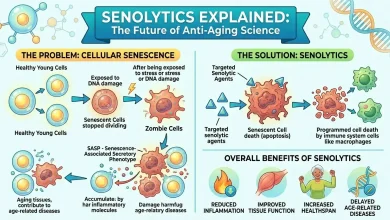
Central to aging cell research is the concept of cellular senescence. Cellular senescence refers to a state where cells permanently stop dividing but remain metabolically active, refusing to die off as they normally would. This phenomenon, often called the “Hayflick limit” when induced by telomere shortening, serves as a crucial anti-tumor mechanism in early life, preventing damaged cells from replicating and potentially leading to cancer. However, as we age, senescent cells accumulate in various tissues and organs, transitioning from a beneficial role to a detrimental one. This accumulation is a significant contributor to chronic inflammation, tissue dysfunction, and a multitude of age-related diseases.
Senescent cells are characterized by a unique “senescence-associated secretory phenotype” (SASP). The SASP involves the secretion of a cocktail of pro-inflammatory cytokines, chemokines, growth factors, and proteases. These secreted molecules are not benign; they can negatively impact neighboring healthy cells, creating a microenvironment that promotes chronic inflammation (often termed “inflammaging”), impairs tissue regeneration, and accelerates biological aging. The presence of senescent cells has been linked to conditions such as cardiovascular disease, arthritis, neurodegenerative disorders, diabetes, osteoporosis, and even declines in eyesight, mobility, and cognitive function. Research has shown that even a small number of senescent cells can persist and spread inflammation, damaging nearby cells.
Key Hallmarks of Cellular Aging
Beyond cellular senescence, scientists have identified several other interconnected “hallmarks of aging” at the molecular and cellular levels that contribute to the overall aging process and increased vulnerability to disease. These include:
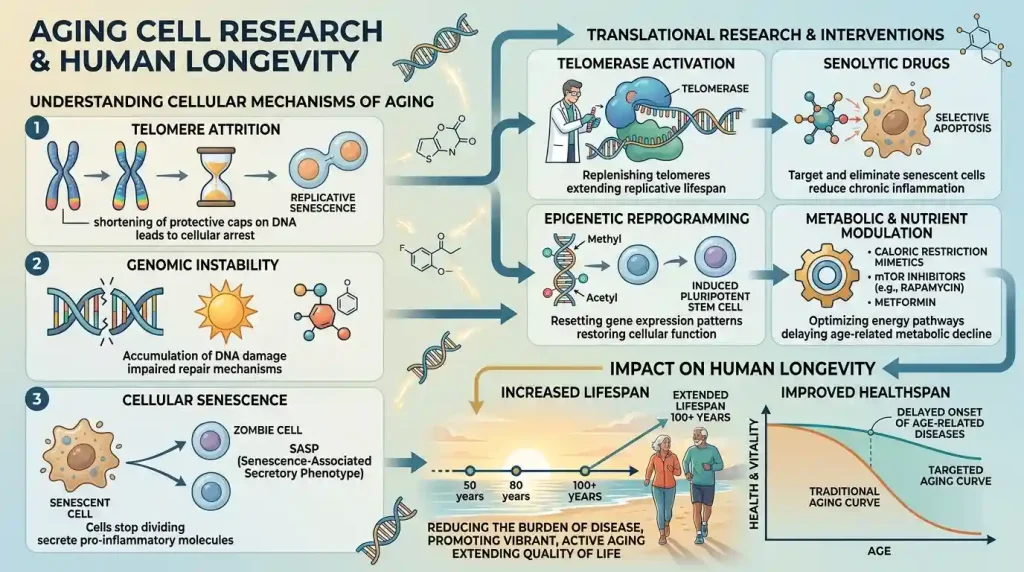
- Genomic Instability: Our DNA is constantly under attack from both internal and external factors, leading to DNA damage. While cells possess robust repair mechanisms, the accumulation of unrepaired DNA damage with age can lead to genomic instability, a major driver of age-related epigenetic changes and cellular dysfunction.
- Telomere Attrition: Telomeres are protective caps at the ends of chromosomes that shorten with each cell division, acting as a biological clock. Once telomeres reach a critically short length, they trigger cellular senescence or apoptosis. While telomere shortening is a natural part of aging, excessive attrition is linked to increased disease susceptibility and decreased longevity. Interestingly, new research suggests that ultra-lengthy telomeres may also pose risks, potentially allowing cells with age-related mutations to be more durable and contributing to increased risk for certain tumors and blood conditions.
- Epigenetic Alterations: These are changes in gene expression that do not involve alterations to the underlying DNA sequence but can significantly impact cellular function. Age-related epigenetic changes can lead to persistent chromatin changes and epigenetic heterogeneity among cells.
- Loss of Proteostasis: Proteostasis refers to the maintenance of protein homeostasis, ensuring proteins are correctly folded, assembled, and degraded. With aging, there is an imbalance in proteostasis, leading to the accumulation of misfolded or aggregated proteins, which can impair cellular function and contribute to diseases like neurodegeneration.
- Deregulated Nutrient Sensing: Pathways that sense nutrient availability, such as mTOR and IGF-1, play a critical role in regulating cellular metabolism and aging. Dysregulation of these pathways with age can accelerate aging processes.
- Mitochondrial Dysfunction: Mitochondria, often called the “powerhouses of the cell,” are crucial for energy production, oxidative balance, and calcium regulation. With age, mitochondria undergo functional and morphological changes, including decreased respiratory capacity and increased production of reactive oxygen species (ROS). This mitochondrial dysfunction contributes to oxidative stress, DNA damage, and chronic inflammation, all of which accelerate cellular aging and age-related diseases. Autophagy, particularly mitophagy (the selective degradation of damaged mitochondria), plays an essential role in maintaining mitochondrial health, and its decline with age contributes to mitochondrial dysfunction.
- Stem Cell Exhaustion: Stem cells are vital for tissue repair and regeneration. With age, the number and function of stem cells decline, leading to impaired regenerative capacity and tissue homeostasis.
- Altered Intercellular Communication: Changes in communication between cells and between cells and their environment contribute to tissue dysfunction and systemic aging. The SASP of senescent cells is a prime example of altered intercellular communication contributing to aging.
Cutting-Edge Research Frontiers in Aging Cells
The in-depth understanding of these hallmarks has paved the way for exciting research frontiers aimed at directly targeting the aging process at a cellular level. Scientists are exploring a diverse range of interventions, from pharmacological compounds to regenerative medicine, each with the potential to influence human longevity and healthspan.
Senolytics and Senomorphics: Targeting Senescent Cells
One of the most promising avenues in aging research involves targeting senescent cells directly. Two main strategies have emerged:
- Senolytics: These are drugs designed to selectively induce the death of senescent cells. By clearing out these “zombie cells,” senolytics aim to reduce inflammation, improve tissue function, and alleviate age-related conditions. Examples of senolytic compounds include a combination of the leukemia drug dasatinib and the natural plant pigment quercetin, which have shown promising results in animal studies by extending both lifespan and healthspan. Fisetin, another natural senolytic found in fruits and vegetables, has also demonstrated anti-aging effects in animal models.
- Senomorphics: Unlike senolytics, senomorphics do not kill senescent cells but instead modulate their properties, primarily by suppressing the harmful SASP without eliminating the cells. Drugs like rapamycin and metformin, already used for other conditions, have shown senomorphic properties, reducing inflammatory factors secreted by senescent cells. The strategic combination of senolytics with senomorphics represents an emerging frontier, offering complementary mechanisms that may yield superior outcomes by both clearing senescent cells and quieting their inflammatory secretions.
Clinical trials are underway for various senolytic compounds, investigating their effects on conditions such as Alzheimer’s disease, chronic kidney disease, frailty, and osteoarthritis.
| Intervention Strategy | Mechanism of Action | Key Targets/Pathways | Potential Impact on Longevity/Healthspan | Current Status/Examples |
|---|---|---|---|---|
| Senolytics | Selectively induces apoptosis (programmed cell death) of senescent cells. | Targets anti-apoptotic pathways in senescent cells (e.g., BCL-2 family proteins). | Reduces chronic inflammation, improves tissue function, delays onset of age-related diseases, potential lifespan extension. | Dasatinib + Quercetin (D+Q), Fisetin. In clinical trials for frailty, osteoarthritis, Alzheimer’s. |
| Senomorphics | Modulates the senescent cell phenotype (SASP) without killing the cells. | Suppresses inflammatory secretions (SASP); targets NF-κB, mTOR, IL-1α pathways. | Reduces harmful effects of senescent cells, mitigates inflammation and tissue dysfunction. | Rapamycin, Metformin, JAK inhibitors. |
| NAD+ Boosters | Increases cellular levels of Nicotinamide Adenine Dinucleotide (NAD+). | Supports mitochondrial function, DNA repair, sirtuin activity, metabolic efficiency. | Improves cellular energy, metabolic health, muscle function; potential to delay aspects of aging. | Nicotinamide Riboside (NR), Nicotinamide Mononucleotide (NMN). Clinical trials for neurodegenerative disorders, obesity. |
| Autophagy Enhancers | Promotes the cellular process of degrading and recycling damaged components. | Maintains proteostasis, clears damaged mitochondria (mitophagy), reduces protein aggregates. | Improves cellular quality control, prevents accumulation of damaged macromolecules, extends lifespan in model organisms. | Caloric restriction mimetics (e.g., rapamycin), intermittent fasting. |
| Stem Cell Therapies | Replaces or regenerates damaged/aging cells and tissues using pluripotent or multipotent cells. | Tissue repair, regeneration, immunomodulation, anti-inflammatory effects. | Restores tissue function, potentially slows aging process, treats age-related diseases. | Mesenchymal Stem Cells (MSCs). In clinical trials for various age-related conditions. |
| Epigenetic Reprogramming | Resets the biological clock of adult cells towards a more youthful state. | Modifies gene expression patterns without altering DNA sequence; reverses age-related epigenetic marks. | Potential for rejuvenating tissues and restoring youthful cell function, reversing biological age. | Partial Yamanaka factors, single-gene targets (e.g., SB000). Early human trials for optic neuropathies. |
Stem Cell Therapies and Reprogramming
Stem cell therapy represents another significant frontier in anti-aging medicine, focusing on the body’s natural regenerative capabilities. Stem cells possess the unique ability to differentiate into various cell types and self-renew, making them invaluable for repairing and replacing damaged or aging tissues. Mesenchymal Stem Cells (MSCs), found in various tissues, have shown particular promise due to their multi-differentiation potential, immunomodulatory properties, and ability to combat chronic inflammation and oxidative stress. By enhancing tissue regeneration and reducing systemic inflammation, stem cell therapies aim to restore functionality and promote healthier aging at a cellular level.
Beyond traditional stem cell transplantation, epigenetic reprogramming is emerging as a revolutionary approach. This technology aims to “reset” the biological clock of adult cells, transforming them back to a more youthful state without losing their original identity or function. Companies like Life Biosciences and Turn Biotechnologies are leading the charge in this area, with Life Biosciences having secured FDA clearance for Phase 1 clinical trials targeting severe optic neuropathies like glaucoma through epigenetic reprogramming. This “Trojan horse strategy” allows longevity companies to advance their cellular reprogramming technologies by anchoring them to specific, recognized age-related diseases, proving safety and efficacy in localized contexts before potentially broader applications. Recent breakthroughs include the identification of single-gene targets that can reverse cellular aging without triggering dangerous pathways that might lead to cancer.
Transforming Human Longevity and Healthspan
The cumulative impact of aging cell research on human longevity and healthspan is potentially transformative. The goal is not merely to extend life at any cost, but to extend the period of healthy, active life – the healthspan. By targeting the fundamental mechanisms of cellular aging, these interventions aim to prevent or significantly delay the onset of a wide array of age-related diseases, thereby improving the quality of life in older age.
For instance, interventions that successfully clear senescent cells could reduce the burden of chronic inflammation that underlies many age-related conditions, from cardiovascular disease to neurodegenerative disorders. Restoring NAD+ levels, which naturally decline with age, could enhance cellular energy production, DNA repair, and mitochondrial function, contributing to improved metabolic health and overall cellular resilience. Boosting autophagy, the cell’s crucial waste removal and recycling system, can prevent the accumulation of damaged macromolecules and organelles, maintaining cellular homeostasis and potentially extending lifespan.
The promise of these therapies extends beyond disease prevention to potentially restoring youthful function. Studies in mice have shown that gene reprogramming can rejuvenate numerous bodily functions, including muscles, metabolism, and even optic nerves. Such findings offer a glimpse into a future where age-related declines are not just slowed but actively reversed, allowing individuals to maintain vitality and cognitive sharpness well into what is currently considered old age. The global market for longevity and anti-aging treatments is rapidly expanding, with cell-based therapies and senolytics driving significant interest from biotech and pharmaceutical industries, underscoring the enormous potential perceived in this field.
Challenges, Ethical Considerations, and the Future Landscape
Despite the incredible progress, the field of aging cell research faces significant challenges and ethical considerations that must be addressed for its responsible advancement and widespread implementation.
One of the primary scientific challenges lies in the complexity and heterogeneity of aging itself. Senescent cells, for example, are not a uniform population; they vary across different tissues and contexts, and some may even play beneficial roles in specific physiological processes like wound healing and embryonic development. This complexity necessitates highly targeted approaches, where only detrimental senescent cell populations are eliminated or modulated, rather than a blanket removal. The lack of robust biomarkers to accurately identify and monitor senescent cells in vivo further complicates research and clinical application. Moreover, ensuring the safety and specificity of these interventions, particularly avoiding off-target effects on healthy cells, remains a critical hurdle for drug development.
Translating promising preclinical findings in animal models to effective human therapies is another major challenge. While studies in organisms like yeast, worms, and mice have shown that boosting NAD+ levels or clearing senescent cells can extend lifespan and healthspan, the direct translation of these findings to human longevity requires extensive and rigorous clinical trials. The regulatory pathway for “anti-aging” drugs is also ill-defined, as aging itself is not yet classified as a disease, pushing researchers to frame their interventions as treatments for specific age-related conditions.
Beyond the scientific and regulatory hurdles, the ethical implications of extending human longevity are profound and multifaceted. Concerns about overpopulation are frequently raised, although proponents argue that the focus should be on resource management rather than limiting human lifespan. There are also significant questions regarding equitable access to potentially expensive anti-aging therapies, which could exacerbate existing healthcare disparities and create a “two-tiered” society where only the wealthy can afford to extend their healthy lives.
Furthermore, the medicalization of aging raises philosophical questions about the intrinsic value of life and the meaning of aging as a natural process. Critics argue that framing aging as a disease to be “cured” could reinforce ageist stereotypes and marginalize older adults, diverting resources from essential public health needs towards costly interventions. Conversely, advocates argue that preventing suffering and extending healthy life is an ethical imperative, akin to treating any other medical condition. The societal impacts on social and economic frameworks, such as pensions, long-term care, and workforce stability, also need careful consideration if extended healthspans become a reality. These discussions underscore the importance of ongoing public and ethical debate alongside scientific progress to navigate the complex future landscape of longevity medicine. Insights into these ethical dilemmas are critical for responsible development and deployment of aging therapies as highlighted by discussions in the Journal of Ethics of the American Medical Association.
Conclusion: A Future Reshaped by Aging Cell Research
Aging cell research is ushering in an unprecedented era, offering a hopeful vision of a future where humans can not only live longer but also live healthier, more vibrant lives. The deepening understanding of cellular senescence, mitochondrial dysfunction, telomere dynamics, and other hallmarks of aging has illuminated numerous targets for intervention. From the selective removal of senescent cells through senolytics to the rejuvenation of tissues via stem cell therapies and epigenetic reprogramming, the scientific community is making remarkable strides towards combating age-related decline. While significant scientific, regulatory, and ethical challenges remain, the momentum in this field is undeniable. Continued research, careful clinical translation, and open societal dialogue will be crucial in harnessing the full potential of aging cell research to extend human healthspan, redefine the later stages of life, and ultimately reshape our collective future. The journey from understanding the intricacies of cellular aging to realizing its transformative impact on human longevity is complex, yet filled with profound promise.