8 Breakthroughs in Geroscience – Future of Anti-Aging Medicine
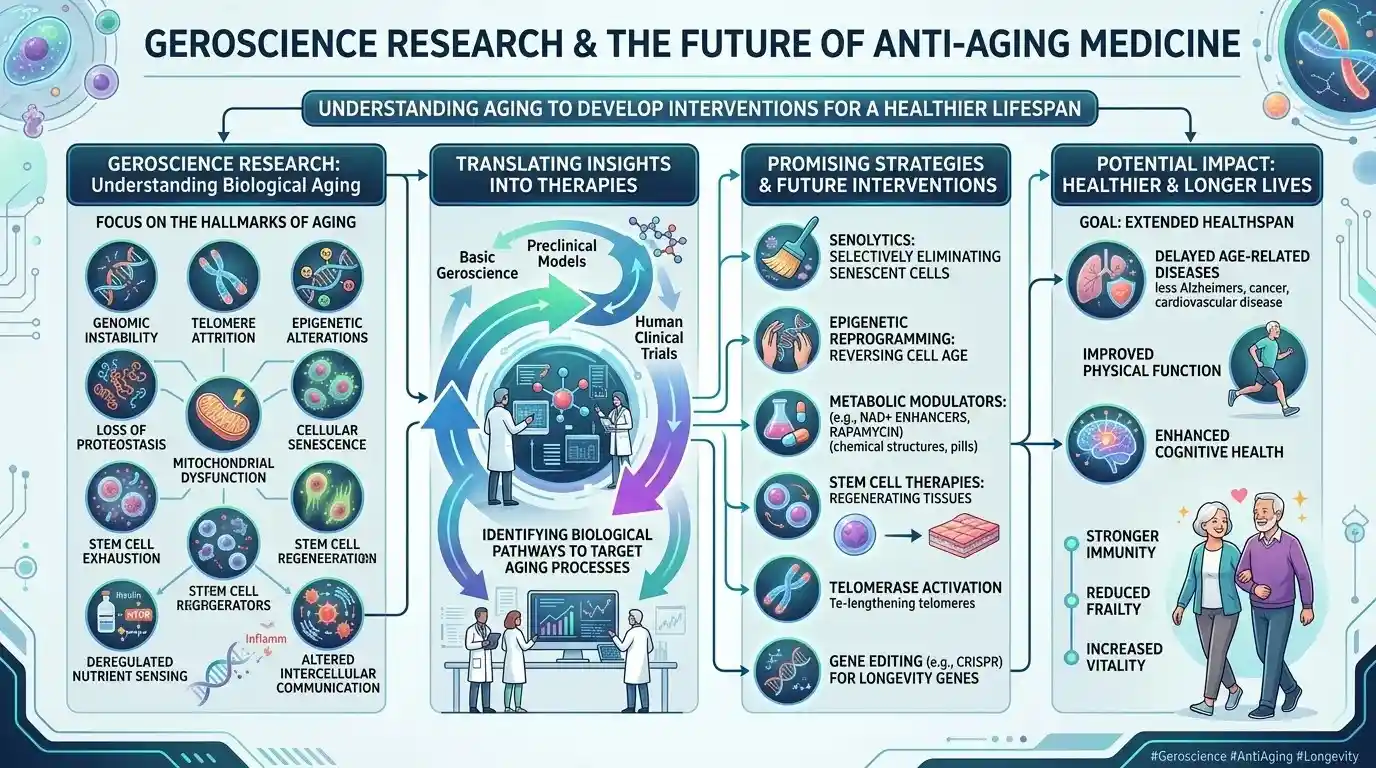
Table of Contents
Geroscience research represents a revolutionary interdisciplinary field poised to redefine our understanding of aging and, consequently, the future of anti-aging medicine. For centuries, aging was considered an inevitable and unmodifiable process, a natural decline leading to a cascade of chronic diseases. However, geroscience challenges this long-held view by positing that aging itself is the primary risk factor for conditions such as cancer, heart disease, stroke, arthritis, and neurodegenerative diseases. By intervening in the fundamental biological mechanisms of aging, geroscience aims not merely to extend lifespan, but critically, to extend “healthspan” – the period of life spent in good health and with functional independence. This paradigm shift holds immense promise for reducing the global burden of illness and preserving the quality of life for an increasingly aging population.
Geroscience: A Paradigm Shift in Understanding Aging
The traditional medical model has historically focused on treating individual diseases as they arise. A person might receive treatment for heart disease, then diabetes, and later Alzheimer’s, often without recognizing the underlying common denominator: aging. Geroscience, however, proposes a unified approach, suggesting that by addressing the root causes of aging, it may be possible to prevent or delay the onset of multiple age-related diseases simultaneously. This approach moves beyond simply adding years to life and instead focuses on adding life to years, aiming for a longer period of robust health and vitality.
The geroscience hypothesis is grounded in the recognition that various biological processes, often termed “hallmarks of aging,” are major risk factors for numerous chronic illnesses in older adults. These hallmarks are interconnected cellular and molecular pathways that contribute to the progressive decline observed with age. Research in geroscience seeks to unravel these intricate mechanisms, identify potential therapeutic targets, and develop interventions that can modulate the aging process itself.
The Hallmarks of Aging: Unraveling the Biological Clock
A foundational aspect of geroscience is the identification and characterization of the “hallmarks of aging.” Initially, nine cellular processes were identified as key contributors to aging. These have since been expanded to include twelve or more interconnected hallmarks that involve alterations at the genomic, cellular, and systemic levels. Understanding these hallmarks provides a roadmap for developing targeted anti-aging interventions.
- Genomic Instability: Damage to DNA accumulates over time, leading to mutations and chromosomal abnormalities.
- Telomere Attrition: Telomeres, protective caps at the ends of chromosomes, shorten with each cell division. Critically short telomeres can trigger cellular senescence.
- Epigenetic Alterations: Changes in gene expression without altering the underlying DNA sequence can lead to cellular dysfunction.
- Loss of Proteostasis: The breakdown of protein quality control mechanisms results in the accumulation of damaged or misfolded proteins.
- Disabled Macroautophagy: The cellular process of recycling damaged components becomes less efficient, leading to the buildup of waste.
- Deregulated Nutrient Sensing: Pathways that sense nutrient availability become dysregulated, impacting metabolism and cellular repair.
- Mitochondrial Dysfunction: Mitochondria, the “powerhouses of the cell,” become less efficient and produce more harmful reactive oxygen species.
- Cellular Senescence: “Zombie cells” that stop dividing but remain metabolically active and secrete inflammatory molecules accumulate in tissues, contributing to chronic inflammation and tissue damage.
- Stem Cell Exhaustion: The regenerative capacity of tissues declines due to the depletion or dysfunction of stem cell populations.
- Altered Intercellular Communication: Changes in signaling between cells contribute to tissue and organ dysfunction.
- Chronic Inflammation (Inflammaging): A persistent, low-grade inflammatory state that contributes to various age-related diseases.
- Dysbiosis: Alterations in the gut microbiome can impact systemic health and accelerate aging.
These hallmarks are not isolated but interact in a complex network, meaning that targeting one hallmark may have beneficial ripple effects across others.
Promising Therapeutic Interventions in Geroscience
The understanding of the hallmarks of aging has paved the way for the development of novel therapeutic strategies aimed at slowing, halting, or even reversing aspects of the aging process. While many of these interventions are still in preclinical stages or early human trials, they represent the forefront of anti-aging medicine.
Senolytics: Targeting “Zombie” Cells
One of the most promising areas of geroscience research involves senolytics – compounds that selectively eliminate senescent cells. These “zombie cells,” which accumulate with age, secrete molecules that contribute to chronic tissue dysfunction and disease. Studies in preclinical models have shown that removing senescent cells can improve physical function, enhance cardiovascular health, and reduce frailty.
Early-phase human studies have begun to evaluate the feasibility, safety, and biological activity of senolytics. For instance, trials have investigated combinations like dasatinib and quercetin (D+Q) in older adults with conditions such as mild cognitive impairment and slow gait speed, and Alzheimer’s disease. These studies have shown promising results, including reductions in plasma inflammatory markers and early signals of cognitive benefit. Other senolytics, including the flavonoid fisetin, are also undergoing clinical trials.
Metformin: A Repurposed Drug with Anti-Aging Potential
Metformin, a widely prescribed medication for type 2 diabetes, has garnered significant attention for its potential anti-aging properties. It has been shown to retard aging in model organisms and reduce the incidence of aging-related diseases such as neurodegenerative disease and cancer in humans. While the exact mechanisms are still being elucidated, metformin appears to modulate key aging-related processes, including energy regulation, inflammation, and autophagy.
The Targeting Aging with Metformin (TAME) trial, a large double-blind, placebo-controlled multicenter trial, is currently underway to further explore metformin’s anti-aging role. It plans to enroll 3,000 individuals aged 65–79 with a primary endpoint of assessing the time until the presence of any aging-related morbidity. Observational studies have indicated that metformin use can reduce all-cause mortality associated with diseases that accelerate aging, even in non-diabetic patients.
NAD+ Precursors: Boosting Cellular Energy
Nicotinamide adenine dinucleotide (NAD+) is a crucial coenzyme involved in numerous essential cellular processes, including energy production, DNA repair, and immune function. Critically, NAD+ levels naturally decline with age, contributing to age-related functional decline and the onset of various age-associated diseases.
Supplementation with NAD+ precursors, such as nicotinamide riboside (NR) and nicotinamide mononucleotide (NMN), has emerged as a strategy to boost intracellular NAD+ levels. Preclinical studies and a growing number of clinical trials are investigating their therapeutic potential in preventing or reversing age-associated decline. These precursors have shown promise in promoting mitochondrial function, inducing autophagy, and offering cardioprotective and neuroprotective effects in model organisms. For instance, NMN supplementation has been shown to increase blood NAD+ levels and may support healthy aging at the cellular level in older adults.
Caloric Restriction Mimetics: Mimicking Longevity Diets
Caloric restriction (CR), which involves reducing calorie intake without malnutrition, is the most robust intervention known to extend lifespan and prevent age-related disorders in a wide range of species, from yeast to non-human primates. CR achieves its anti-aging effects by altering metabolic rates, reducing oxidative stress, and promoting cellular cleanup processes like autophagy.
Given the practical challenges of long-term caloric restriction in humans, a significant area of research focuses on “caloric restriction mimetics” (CRMs). These compounds aim to mimic the beneficial effects of CR by targeting the same metabolic and stress response pathways, but without requiring actual dietary restriction. Examples of CRMs under investigation include metformin (which also acts as a CRM), rapamycin, and resveratrol. Rapamycin, in particular, has been shown to increase lifespan in various organisms and is being explored for its potential effects on human aging.
| Therapeutic Approach | Mechanism of Action | Examples | Current Status (Human Trials) |
|---|---|---|---|
| Senolytics | Selectively eliminate senescent (“zombie”) cells that accumulate with age and contribute to inflammation and tissue damage. | Dasatinib + Quercetin (D+Q), Fisetin | Early-phase clinical trials for Alzheimer’s, chronic kidney disease, frailty, idiopathic pulmonary fibrosis. |
| Metformin | Modulates energy regulation, inflammation, and autophagy; enhances insulin sensitivity; inhibits gluconeogenesis. | Metformin | Widely used for type 2 diabetes; large-scale anti-aging trial (TAME) underway. |
| NAD+ Precursors | Boost intracellular levels of NAD+, a coenzyme essential for energy production, DNA repair, and immune function, which declines with age. | Nicotinamide Riboside (NR), Nicotinamide Mononucleotide (NMN) | Clinical trials investigating effects on age-related decline, mitochondrial function, and cognitive health. |
| Caloric Restriction Mimetics | Mimic the longevity-promoting effects of calorie restriction by targeting metabolic and stress response pathways. | Rapamycin, Resveratrol, Metformin | Rapamycin in preclinical and early human studies; Metformin in advanced trials for anti-aging. |
Challenges and Ethical Considerations in Anti-Aging Medicine
Despite the exciting advancements, the path from geroscience research to approved anti-aging therapies is fraught with challenges. One significant hurdle is the regulatory framework. Aging is not currently classified as a disease by regulatory bodies like the FDA, which complicates the approval process for drugs specifically targeting aging. This lack of recognition creates ambiguity regarding acceptable indications and clinical endpoints for anti-aging interventions.
Designing and conducting appropriate clinical trials for anti-aging drugs also presents unique difficulties. Unlike conventional drug trials that target specific diseases, assessing the efficacy of an intervention that slows the aging process requires long-term studies, often spanning decades, to observe significant impacts on lifespan and healthspan. This necessitates innovative trial designs and the development of validated biomarkers of aging that can serve as reliable indicators of intervention effectiveness over shorter periods.
Ethical considerations are also paramount. Questions arise regarding the equitable access to future anti-aging therapies, ensuring that these breakthroughs are not limited to those with the greatest resources. There are also broader societal implications to consider, such as the potential impact of longer lifespans on global resources and social structures. Furthermore, the debate continues on whether aging should be viewed as a “problem” to be solved by medicine, or a natural process to be embraced, challenging deeply entrenched cultural perspectives.
Funding for geroscience research, while growing, has historically been a challenge. However, recent years have seen increased investment from prominent billionaires, venture capitalists, and new foundations, signaling a shift in recognition of the field’s potential. Governments, too, are beginning to prioritize funding for basic biology of aging research to uncover the remaining mysteries of cellular decay.
The Future of Anti-Aging Medicine: Personalized Approaches and Advanced Technologies
The future of anti-aging medicine is rapidly evolving, driven by advancements in personalized approaches and cutting-edge technologies. The goal is to move beyond a one-size-fits-all model to highly individualized longevity plans.
- Personalized Longevity Protocols: This involves comprehensive diagnostic evaluations, including genetic profiling, hormone level analysis, and in-depth assessments of cellular and metabolic function. These personalized plans may incorporate customized nutrition and exercise regimens, stress management, and targeted supplementation.
- AI and Data-Driven Health Insights: Artificial intelligence (AI) is playing an increasingly critical role in interpreting vast amounts of patient data, from wearables and advanced biomarker testing, to deliver precision care. AI-powered diagnostics can help in early disease detection and in designing new molecules for anti-aging drugs, potentially accelerating drug discovery with higher success rates.
- Advanced Regenerative Therapies: Stem cell therapy, platelet-rich plasma (PRP) therapy, and exosome treatments are gaining traction for their potential to rejuvenate tissues, accelerate healing, and reduce the effects of aging on various organs. These therapies leverage the body’s own healing mechanisms to improve vitality and promote a more youthful cellular environment.
- Gene and Epigenetic Therapies: Gene editing tools like CRISPR are being explored to correct genetic defects linked to aging. Furthermore, partial epigenetic reprogramming, which aims to reactivate youthful transcription factors, holds promise for rejuvenating cells at a molecular level and reversing aging hallmarks.
- Digital Twins and Real-time Monitoring: The concept of “digital avatars” or digital twins of an individual’s biology, combined with wearable devices and AI health assistants, could enable real-time tracking of aging processes and provide dynamic, personalized recommendations to slow down biological aging.
The integration of these diverse technologies and personalized strategies aims to optimize healthspan and potentially extend overall lifespan, transforming how we approach aging and disease prevention. The vision is to empower individuals to live healthier, more productive lives for longer periods.
The scientific journal GeroScience itself serves as a key platform for disseminating research in this field, highlighting the ongoing commitment to advancing our understanding of aging and translating these discoveries into meaningful health interventions.
Conclusion
Geroscience research stands at the precipice of a medical revolution, fundamentally altering our perception of aging from an unalterable fate to a malleable biological process. By meticulously dissecting the intricate hallmarks of aging—from genomic instability and telomere attrition to cellular senescence and mitochondrial dysfunction—scientists are uncovering the core mechanisms that drive age-related decline. The therapeutic strategies emerging from this understanding, including senolytics, metformin, NAD+ precursors, and caloric restriction mimetics, offer unprecedented hope for not only extending human lifespan but, more importantly, expanding our healthspan. While significant challenges remain, particularly in regulatory recognition, clinical trial design, and ethical considerations, the burgeoning investment and rapid technological advancements, especially in personalized medicine and artificial intelligence, are propelling the field forward. The future of anti-aging medicine envisions a world where individualized interventions, grounded in robust geroscience, enable people to live healthier, more vibrant lives for significantly longer, ultimately transforming the human experience of aging.