David A. Sinclair and the Future of Anti-Aging Science-5 Powerful Insights
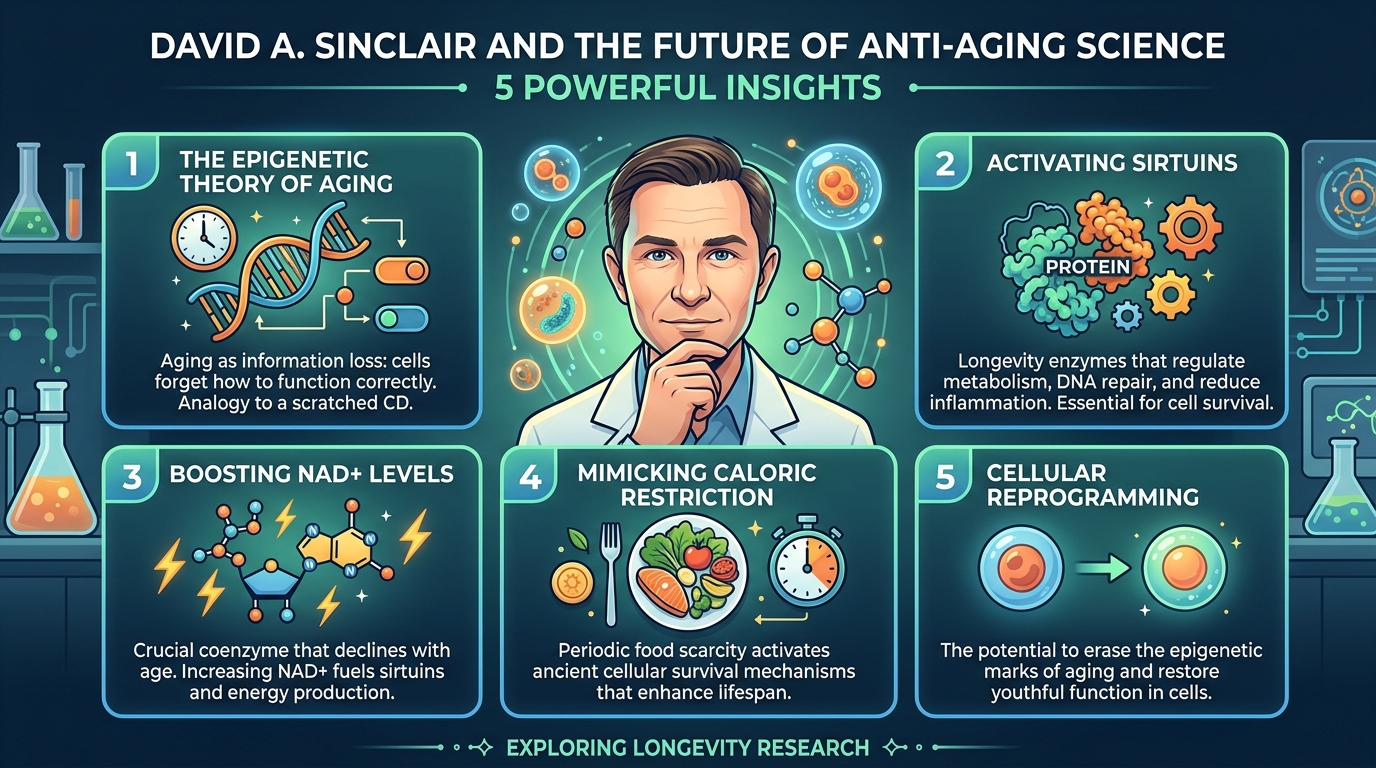
Table of Contents
- David A. Sinclair: A Pioneer in Longevity Research
- The Information Theory of Aging: A Paradigm Shift
- Sirtuins and NAD+: The Cellular Orchestrators of Longevity
- Resveratrol, NMN, and the Promise of Small Molecules
- Reprogramming the Clock: Gene Therapies and Yamanaka Factors
- The Broader Context: Lifestyle, Diet, and Ethical Considerations
- Navigating the Landscape: Criticisms and the Path Forward
- The Future Horizon of Anti-Aging Science
David A. Sinclair, an Australian-American biologist and a professor of genetics at Harvard Medical School, stands at the forefront of the burgeoning field of anti-aging science. His groundbreaking research has not only reshaped our understanding of why we age but also ignited a global pursuit for interventions that could extend human “healthspan” – the period of life spent in good health – and potentially even lifespan. Sinclair’s work, prominently featured in his bestselling book “Lifespan: Why We Age – and Why We Don’t Have To,” challenges the long-held notion that aging is an irreversible decline, positing instead that it is a treatable biological process.
For decades, humanity has grappled with the inevitability of aging, often viewing it as a natural, unassailable part of existence. However, the scientific landscape is rapidly evolving, driven by pioneering researchers like David A. Sinclair, who argue that the mechanisms of aging can be understood, modulated, and potentially even reversed. His laboratory at Harvard Medical School, the Paul F. Glenn Laboratories for the Biological Mechanisms of Aging, has been a nexus of discovery, contributing significantly to our understanding of the molecular pathways that govern longevity.
David A. Sinclair: A Pioneer in Longevity Research
Born in Australia in 1969, David Andrew Sinclair embarked on his scientific journey at the University of New South Wales, where he earned his Ph.D. in molecular genetics in 1995. His early career saw him as a postdoctoral researcher at MIT, working with Dr. Leonard Guarente, where he made a seminal discovery: identifying a cause of aging in yeast and elucidating the role of sirtuin 1 (Sir2 in yeast) in slowing this process by reducing the accumulation of extrachromosomal rDNA circles. This foundational work paved the way for his future endeavors, leading him to Harvard Medical School in 1999, where he was appointed a tenured professor in 2008.
Sinclair’s influence extends beyond his laboratory. He is a co-founder of numerous biotechnology companies, including Sirtris Pharmaceuticals (later acquired by GlaxoSmithKline), MetroBiotech, Life Biosciences, and Tally Health, all dedicated to translating his research into potential therapies for age-related diseases. He also co-founded and co-chief edits the scientific journal Aging. His ability to communicate complex scientific concepts to a broad audience, notably through his book and podcast, has cemented his status as a leading public intellectual in the longevity movement.
The Information Theory of Aging: A Paradigm Shift
At the core of David A. Sinclair’s philosophy on aging is his “Information Theory of Aging,” first proposed in 2019. This theory suggests that aging is not primarily caused by the accumulation of genetic mutations, but rather by the loss of epigenetic information within cells. Imagine the cell’s DNA as a digital compact disc (CD) containing the master blueprint (genetic information), and the epigenome as the system that reads and interprets this blueprint, determining which genes are active or dormant at any given time (epigenetic information). According to Sinclair, as we age, this “reader” gets “scratched,” leading to misinterpretations and a loss of cellular identity, even though the underlying DNA code remains largely intact.
This loss of epigenetic information, he argues, leads to cells forgetting their original function, causing them to behave incorrectly and contributing to a myriad of age-related diseases. The exciting implication of this theory is that if aging is a loss of information, then it might be reversible by resetting the epigenetic code. This hypothesis provides a unifying framework for understanding various hallmarks of aging and offers new avenues for therapeutic interventions, moving beyond simply treating the symptoms of age-related diseases to addressing the root cause of aging itself.
Sirtuins and NAD+: The Cellular Orchestrators of Longevity
A significant portion of Sinclair’s research has focused on sirtuins – a family of seven protein-modifying enzymes (SIRT1-SIRT7 in mammals) that play a crucial role in cellular health and longevity. These “longevity genes” are activated by stress signals such as caloric restriction and exercise, acting as protectors of chromosomes and stem cells, and defending against cellular senescence. Sirtuins are heavily dependent on a molecule called Nicotinamide Adenine Dinucleotide (NAD+), a coenzyme vital for numerous cellular processes, including energy production and DNA repair.
Crucially, NAD+ levels naturally decline with age, diminishing sirtuin activity and, consequently, cellular repair and protective mechanisms. This age-related decline in NAD+ is seen as a key driver of the aging process and associated physiological deterioration. Sinclair’s lab was among the first to identify the role of NAD+ biosynthesis in regulating lifespan and demonstrated that sirtuins are activated by caloric restriction in mammals. This understanding has propelled intense research into ways to boost NAD+ levels to potentially counteract the effects of aging. Boosting NAD+ levels has shown promise in improving lifespan and healthspan in various animal models.
Resveratrol, NMN, and the Promise of Small Molecules
Following the discoveries surrounding sirtuins and NAD+, Sinclair’s research naturally progressed to identifying small molecules that could activate these longevity pathways. Two compounds that have garnered considerable attention from his lab are resveratrol and nicotinamide mononucleotide (NMN).
- Resveratrol: Found in the skin of red grapes and other plants, resveratrol was identified as a sirtuin activator. Early research suggested it could mimic the beneficial effects of caloric restriction, leading to improved health markers and extended lifespan in various organisms. While initial findings were met with excitement, the precise mechanism of action and the extent of its anti-aging benefits in humans have been subject to ongoing scientific debate and scrutiny.
- NMN (Nicotinamide Mononucleotide): NMN is a direct precursor to NAD+, meaning the body converts NMN into NAD+. Sinclair himself reportedly takes NMN daily, believing it doubles NAD+ levels in the blood within weeks, thereby fueling the sirtuin defense system. Studies in mice have shown that NMN supplementation can suppress age-associated weight gain, enhance energy metabolism and physical activity, improve insulin sensitivity, and mitigate age-linked changes in gene expression. Human trials are ongoing to further validate these findings.
The pursuit of these and other small molecules represents a significant frontier in anti-aging science, aiming to provide accessible interventions that can positively influence cellular health and potentially extend healthspan.
| Key Anti-Aging Compounds & Concepts | Mechanism of Action | Associated Benefits (Primarily Animal Studies) |
|---|---|---|
| Sirtuins | Protein-modifying enzymes, “longevity genes” activated by stress, require NAD+. | Protect chromosomes, stem cells; defend against senescence; mediate effects of caloric restriction. |
| NAD+ (Nicotinamide Adenine Dinucleotide) | Coenzyme vital for energy production, DNA repair; levels decline with age. | Essential cofactor for sirtuin function; boosting levels linked to improved lifespan/healthspan. |
| NMN (Nicotinamide Mononucleotide) | NAD+ precursor; converted into NAD+ in the body. | Increases NAD+ levels; suppressed age-associated weight gain, enhanced energy metabolism, improved insulin sensitivity, improved eye function, improved mitochondrial metabolism. |
| Resveratrol | Plant polyphenol; identified as a sirtuin activator. | Mimics caloric restriction effects; potential to influence longevity pathways. |
| Yamanaka Factors | Transcription factors used in cellular reprogramming. | Can induce partial cellular reprogramming; demonstrated age reversal in mouse tissues (e.g., vision restoration). |
| Caloric Restriction | Reducing calorie intake without malnutrition. | Activates sirtuins and other longevity pathways; associated with longer lifespan in multiple species. |
Reprogramming the Clock: Gene Therapies and Yamanaka Factors
Beyond small molecules, one of the most exciting and futuristic areas of Sinclair’s research involves cellular reprogramming. Building on the work of Nobel laureate Shinya Yamanaka, who discovered that just four transcription factors (Oct4, Sox2, Klf4, and c-Myc, often referred to as Yamanaka factors) could revert adult cells to an embryonic-like pluripotent stem cell state, Sinclair’s lab has explored partial cellular reprogramming as a means to reverse aging. The idea is not to revert cells completely to a pluripotent state, which carries cancer risks, but to “reset” them just enough to regain youthful function.
In 2020, Sinclair’s group published a significant study demonstrating that three Yamanaka transcription factors (Oct4, Sox2, and Klf4), when delivered together in a virus, could safely reverse the age of human and mouse cells and restore the vision of old mice and mice with glaucoma. This breakthrough illustrated the potential of activating specific genes to rejuvenate tissues throughout the body and potentially reverse aging, rather than merely slowing it down. Sinclair has even boldly predicted that age-reversing pills, mimicking the effects of gene therapy and inducing Yamanaka factor gene expression, could become available within the next decade.
The Broader Context: Lifestyle, Diet, and Ethical Considerations

While pharmacological and genetic interventions capture headlines, David A. Sinclair consistently emphasizes that aging biology is also profoundly influenced by lifestyle choices. He advocates for several habits that research has consistently associated with improved metabolic health and longevity markers:
- Intermittent Fasting or Time-Restricted Eating: These practices can activate cellular stress responses linked to repair and longevity pathways.
- Caloric Moderation: Consuming fewer calories without malnutrition has been associated with a longer lifespan in various species and activates sirtuins.
- Regular Exercise: Particularly high-intensity intervals, exercise is a powerful tool for modulating the epigenome, raising NAD+ levels, and activating sirtuin genes. Maintaining muscle mass is also crucial for youthful hormone levels.
- Stress Reduction and Quality Sleep: These factors also contribute to maintaining NAD+ levels and overall cellular health.
As the potential for significant life extension becomes more tangible, the ethical, social, and economic implications grow. Questions arise regarding equitable access to anti-aging therapies, the impact on global resources, and the very definition of what it means to be human in an era of extended lifespans. Sinclair and other longevity researchers often address these complex issues, acknowledging that the scientific quest for longer, healthier lives must proceed hand-in-hand with thoughtful societal discourse. For more on the broader ethical implications of radical life extension, you can refer to resources like Wikipedia’s page on Life Extension.
Navigating the Landscape: Criticisms and the Path Forward
Despite the excitement surrounding David A. Sinclair’s work, it has also faced scrutiny and criticism from fellow scientists, which is a healthy and necessary part of scientific progress. Some criticisms have centered on the interpretation of results, particularly concerning early resveratrol studies, where some argued that the mechanism of action was initially misunderstood. More recently, claims related to “age reversal” in animal studies, particularly involving a dog anti-aging supplement, have drawn strong reactions from other prominent biologists, leading to debates about the exact terminology and the robustness of the evidence. Critics like Dr. Charles Brenner and Dr. Matt Kaeberlein have expressed concerns about what they perceive as overhyping scientific results, especially when these claims are linked to commercial ventures.
These discussions highlight the critical need for rigorous peer review, transparency, and cautious communication of scientific findings, especially in a field with such profound implications and public interest. While Sinclair’s proponents commend his ability to popularize complex science and attract investment, critics underscore the importance of distinguishing between promising preclinical results and proven human therapies. The scientific community continues to evaluate and build upon Sinclair’s foundational work, moving towards a more nuanced understanding of aging. The ongoing dialogue ensures that anti-aging science remains grounded in evidence, pushing for robust clinical trials and verifiable results as it progresses from the lab to potential real-world applications.
The Future Horizon of Anti-Aging Science
The future of anti-aging science, heavily influenced by the trajectory set by researchers like David A. Sinclair, appears increasingly promising and multifaceted. Beyond sirtuins, NAD+, and epigenetic reprogramming, the field is exploring other exciting avenues:
- Senolytics: Drugs designed to selectively remove senescent (“zombie”) cells, which accumulate with age and contribute to inflammation and tissue dysfunction.
- Stem Cell Therapies: Utilizing stem cells to repair damaged tissues and regenerate new cells, offering potential treatments for age-related conditions.
- Gene Editing: Technologies like CRISPR are being explored to correct genetic defects linked to aging.
- AI and Personalized Medicine: Artificial intelligence is increasingly used for drug discovery and to develop highly personalized longevity plans based on individual genetic and lifestyle data.
- Targeting the Microbiome: Research into next-generation probiotics and fecal microbiota transplantation aims to influence age-related decline by balancing the gut microbiome.
David A. Sinclair’s vision of a future where aging is treated as a disease, and human healthspan is significantly extended, is gaining traction. Advances in biotechnology, genetic science, and cellular regeneration are rapidly converging, suggesting that the goal of not just living longer, but living healthier, is within reach. Scientists are actively working to impede or reverse the hands of time, with a focus on delaying, preventing, alleviating, or treating multiple disorders at once by targeting the fundamental processes of aging. The rapid pace of discovery in labs worldwide continues to push the boundaries of what was once considered science fiction, bringing us closer to a future where age-related decline is no longer an inevitable destiny.
Conclusion
David A. Sinclair has undeniably played a pivotal role in transforming anti-aging science from a fringe topic into a mainstream scientific endeavor. His articulation of the Information Theory of Aging, coupled with extensive research into sirtuins, NAD+, and compounds like NMN and resveratrol, has provided compelling theoretical frameworks and experimental evidence suggesting that aging is a malleable process. While the field continues to navigate scientific challenges, criticisms, and ethical considerations, the momentum toward understanding and intervening in the aging process is unprecedented. The integration of advanced technologies, from gene editing to AI-driven drug discovery, alongside a growing appreciation for lifestyle interventions, paints a future where extending healthy human life is not just a dream, but a tangible scientific pursuit, largely inspired by the pioneering spirit of researchers like David A. Sinclair.