7 Daily Habits for Aging Well – Live a Healthier, Longer Life

Table of Contents
Aging Well is a universal aspiration, a journey not merely defined by the passage of time but by the quality of life we experience through the years. While genetics play a role, research consistently affirms that our daily habits significantly shape how rapidly our bodies and brains experience functional decline. The goal is not just to extend lifespan but to enhance our “healthspan”—the period of life spent in good health, clarity, strength, and resilience. This comprehensive article delves into evidence-based daily habits that can measurably slow biological aging, protect long-term health, and preserve vitality across decades.
Nourishing Your Body: The Foundation of Healthy Aging
What we eat forms the cornerstone of our health, directly influencing cellular repair, inflammation, and metabolic function. Daily nutrition is unequivocally a cornerstone of longevity. Diets high in processed foods, added sugars, and pro-inflammatory fats accelerate cellular damage and contribute to premature aging. Conversely, nutrient-dense, anti-inflammatory dietary patterns reduce oxidative stress and support immune, hormonal, and cognitive health. The Harvard T.H. Chan School of Public Health has documented that individuals adhering to anti-inflammatory dietary patterns can reduce their risk of early mortality by up to 25%.
One of the most widely praised and researched dietary approaches for healthy aging is the Mediterranean diet. This eating pattern, inspired by countries bordering the Mediterranean Sea, emphasizes whole foods, predominantly plants, including fruits, vegetables, whole grains, nuts, and legumes. It features olive oil as the primary fat source and includes moderate amounts of fish and seafood, lean protein, and limited red meat. Studies consistently show that the Mediterranean diet is associated with decreased risk of cardiovascular disease, stroke, total mortality, and major chronic diseases, while also promoting better weight management and improved metabolic health. Researchers have found that adherence to the Mediterranean diet is linked to longer telomeres, which are protective DNA caps that shorten with age, suggesting a direct impact on cellular aging. Even small shifts towards this healthier diet can make a significant difference.
Beyond specific diets, general principles apply. Aim for a colorful variety of fruits and vegetables, ensuring at least five servings daily to provide essential nutrients, fiber, and antioxidants. Whole grains, lean meats, eggs, nuts, and dairy also contribute crucial fats, proteins, and carbohydrates to fuel the body. Hydration is equally vital; consistent water intake supports all bodily functions, including nutrient transport and waste elimination.
- Prioritize plant-based foods: Fruits, vegetables, legumes, nuts, and whole grains are rich in antioxidants and fiber.
- Choose healthy fats: Opt for olive oil, avocados, and omega-3 rich fish to reduce inflammation and protect cell membranes.
- Limit processed foods and sugars: These can accelerate cellular damage and contribute to premature aging.
- Stay hydrated: Water is crucial for metabolic processes and overall health.
Embrace Movement: Physical Activity for Lifelong Vitality
Consistent physical activity is among the strongest predictors of a longer, healthier life. As we age, muscle mass naturally declines, accelerating frailty, insulin resistance, and cognitive impairment. Daily movement helps slow this progression by preserving lean tissue, improving mitochondrial efficiency, and enhancing metabolic flexibility. It’s never too late to start, and even moderate physical activity offers significant benefits.
Adults should aim for at least 150 minutes of moderate-intensity aerobic exercise or 75 minutes of vigorous-intensity activity per week, coupled with strength training twice a week. Moderate exercises include brisk walking, swimming, or cycling, which strengthen the heart, improve circulation, and help regulate blood pressure. Strength training, using resistance or weights, is crucial for maintaining and building muscle mass, which in turn helps preserve mobility, independence, and bone quality, reducing the risk of fractures. For older adults, balance and flexibility exercises like Tai Chi and yoga are also highly recommended to aid in fall prevention and improve overall physical function.
The benefits of regular exercise extend beyond physical prowess. It boosts endorphins, reduces stress and anxiety, and promotes better sleep. Moreover, physical activity improves cognitive function and memory, helping to lower the risk of dementia. Finding enjoyable activities, whether it’s joining a walking group or dancing, can make exercise a sustainable and fulfilling part of your routine.
Cultivating a Sharp Mind: Mental Wellness and Cognitive Health
A healthy mind is as crucial as a healthy body for aging well. Persistent psychological stress is associated with faster biological aging and an increased risk for age-related diseases. Chronic stress keeps stress hormones like cortisol elevated, which can raise blood pressure, strain the heart, weaken the immune system, and contribute to cognitive impairment and a higher risk of dementia. Fortunately, even short, consistent interventions can create lasting shifts in nervous system tone and stress hormone regulation.
Mindfulness practices, breathwork, and meditation are powerful tools for reducing stress, promoting relaxation, and potentially influencing cellular aging by supporting telomere health. These techniques help calm the mind and body, bringing awareness to the present moment and reducing worry. Engaging in stimulating hobbies and creative expression also significantly reduces stress, provides a sense of accomplishment, and keeps the mind engaged, which is essential for healthy aging.
Building resilience to stress also involves fostering a positive outlook and practicing gratitude, which can significantly reduce stress levels. When stress becomes overwhelming, seeking support from a therapist or trusted friend can provide crucial relief. Creating a tranquil home environment that acts as a sanctuary of peace and comfort also contributes to stress-free living.
The Power of Rest: Prioritizing Quality Sleep
Consistent, high-quality sleep is one of the strongest predictors of mental health, physical performance, overall well-being, and longevity. Sleep needs don’t decrease with age; older adults still require about 7-8 hours of sleep per night, though sleep patterns may change. Poor sleep is linked to a higher risk of memory decline, depression, falls, chronic disease, and can even accelerate biological aging at a cellular level, including telomere shortening.
Establishing good sleep hygiene is paramount. This includes maintaining a consistent sleep schedule, going to bed and waking up at the same time every day, even on weekends. Creating a sleep-friendly bedroom environment that is cool, dark, and quiet can significantly improve rest. It is advisable to reserve the bed for sleep and intimacy, avoiding work, watching TV, or other stimulating activities in bed. Limiting caffeine intake, especially after 2 p.m., and avoiding alcohol before bedtime are also crucial, as both can disrupt sleep quality. Developing a calming bedtime routine, such as reading a book, listening to soothing music, or taking a warm bath, helps signal to the body that it’s time to wind down. Regular physical activity during the day, while avoiding intense exercise too close to bedtime, also contributes to better sleep.
| Healthy Aging Dimension | Key Daily Habits | Associated Benefits |
|---|---|---|
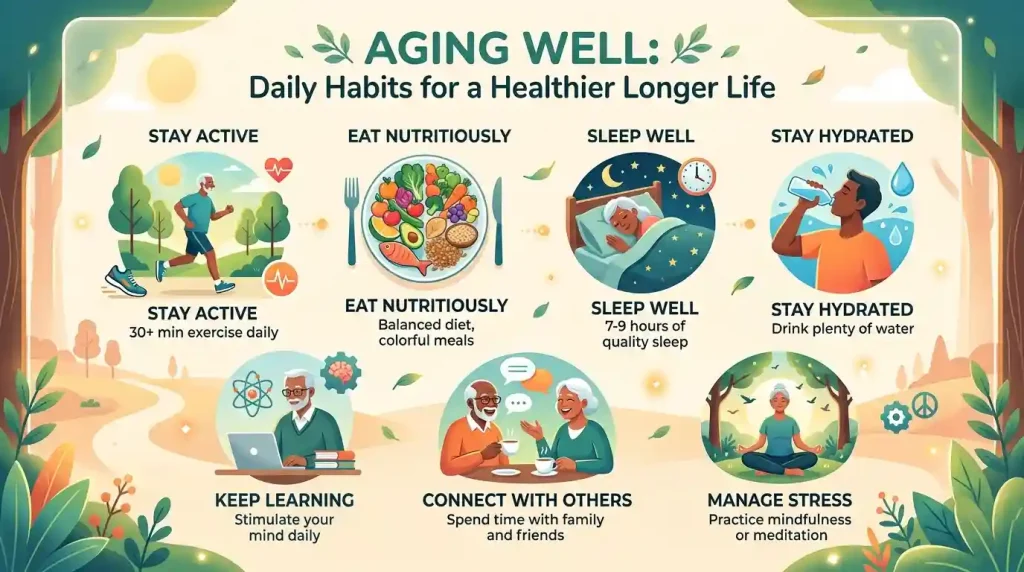
| Nutrition | Mediterranean diet, plant-based foods, healthy fats, adequate hydration. | Reduced risk of chronic diseases, increased longevity, improved metabolic health, longer telomeres. |
| Physical Activity | Aerobic exercise (150 mins/week), strength training (2x/week), balance/flexibility exercises. | Maintained mobility and independence, stronger heart and bones, improved mood and cognition, fall prevention. |
| Mental Well-being | Mindfulness, meditation, stress management techniques, engaging hobbies. | Lowered stress hormones, reduced risk of age-related diseases, enhanced cognitive function, improved emotional balance. |
| Quality Sleep | Consistent sleep schedule, sleep-friendly environment, avoiding stimulants. | Better cognitive function, reduced disease risk, improved mood, slower biological aging. |
| Social Connection | Maintaining close relationships, community involvement, engaging with others. | Reduced risk of chronic disease and dementia, improved mood, lower stress, increased life expectancy. |
| Preventative Care | Annual check-ups, regular screenings (blood pressure, cholesterol, cancer), vaccinations. | Early detection and treatment of diseases, improved outcomes, better quality of life. |
| Purpose & Passion | Lifelong learning, new skills, creative activities, volunteering. | Enhanced brain health, improved memory, increased cognitive reserve, sense of purpose, reduced cognitive decline. |
Fostering Connections: The Role of Social Bonds in Longevity
Humans are inherently social creatures, and strong social connections are as essential to our health as good nutrition or exercise. The research is clear: loneliness and social isolation can have severe health consequences, increasing the risk of heart disease, stroke, dementia, and early death. In fact, chronic loneliness can significantly reduce life expectancy, comparable to smoking 15 cigarettes a day. An analysis of 148 studies found that people with strong social bonds had a 50% greater chance of survival than those with poor social relationships. The World Health Organization (WHO) has highlighted loneliness and social isolation as a significant global challenge, affecting one in six people worldwide and impacting health and well-being.
Positive, fulfilling relationships act like armor, reducing stress, improving mood, and giving us a reason to move forward. Strong social connections trigger a cascade of physiological responses that benefit health, releasing hormones like oxytocin, dopamine, and serotonin, which boost the immune system and reduce the stress hormone cortisol. People with robust social support networks are less likely to develop chronic health conditions like heart disease, diabetes, and certain types of cancer. Even small, simple connections, such as a weekly friendly chat, have been shown to reduce blood pressure, improve sleep, and level out stress hormones.
Prioritize maintaining close friendships and family ties, participate in community groups, volunteer work, or other social activities. These engagements not only provide emotional support but also keep us mentally engaged, contributing significantly to a longer, healthier, and more fulfilling life. Connecting with others creates feelings of belonging and being valued, which are crucial for mental and physical well-being.
For further insights into the profound impact of social interactions on health, a comprehensive overview can be found on The World Health Organization (WHO) website, which emphasizes social connection as a critical determinant of health and longevity.
Proactive Health Management: Regular Check-ups and Prevention
Preventive healthcare is vital to promote wellness and longevity, especially as we age. With increasing age, the risk for various chronic conditions rises, making regular check-ups and screenings a cornerstone of healthy aging. Preventive screenings help detect diseases in their early stages, often before symptoms develop, leading to more effective treatments, improved outcomes, and a better quality of life. This proactive approach also helps reduce healthcare costs by avoiding more extensive treatments later on.
Key preventive services include annual wellness exams, where physicians assess overall health, medications, diet, and activity levels, and address any concerns. Regular screenings are crucial for conditions such as high blood pressure, cholesterol, and diabetes, which are major risk factors for heart disease, stroke, and other chronic illnesses. Cancer screenings, including those for breast, colorectal, and prostate cancers, are also essential. Bone density tests are important, particularly for women over 65, to screen for osteoporosis and reduce fracture risk.
Staying up-to-date on vaccinations is another critical aspect of preventive care. Recommended vaccinations for seniors include the annual influenza vaccine, pneumococcal vaccine (for pneumonia), and shingles vaccine. These vaccinations significantly reduce the risk of severe complications from common infections. Engaging seniors in their healthcare journey and providing personalized care ensures healthier, more independent lives. Regular visits with a healthcare provider allow for the development of a personalized preventive care plan that can include physical and mental health screenings, nutrition counseling, and exercise programs.
Finding Purpose: Engaging in Lifelong Learning and Passion
Beyond physical and social well-being, maintaining cognitive vitality and a sense of purpose is integral to aging well. Lifelong learning, the ongoing pursuit of knowledge and interests, plays a vital role in maintaining cognitive health throughout life. Continued engagement in learning activities promotes brain function, builds cognitive reserve, and can effectively counteract the challenges associated with aging, potentially delaying the onset of cognitive decline and dementia.
Think of your brain like a muscle; challenging it with new information and activities gives it a good workout, stimulating brain cells and encouraging new neural connections. Activities such as reading regularly, learning a new language or skill, playing board games, creating art, or participating in community events all contribute to mental stimulation. Research indicates that such activities can lead to improved brain health, enhanced vocabulary, better comprehension, improved coordination, and stronger problem-solving skills.
Lifelong learning also offers significant emotional and social benefits. It fosters a sense of accomplishment, boosts self-confidence, and can provide a renewed sense of purpose. It encourages open-mindedness, broadens perspectives, and can lead to increased feelings of optimism and satisfaction. Moreover, engaging in learning activities often involves social interaction, further reducing isolation and strengthening community ties. Ultimately, staying curious, engaged, and open to new experiences is a powerful way to enrich life at any stage, contributing meaningfully to a healthier, longer life.
Conclusion
Aging Well is not a passive process but an active journey shaped by intentional daily choices. While the journey is unique for everyone, the principles remain constant. From nourishing our bodies with wholesome foods, particularly following patterns like the Mediterranean diet, to embracing consistent physical activity that strengthens both body and mind, these habits form the bedrock of a vibrant later life. Cultivating mental well-being through stress management and lifelong learning ensures cognitive sharpness and emotional resilience. Prioritizing quality sleep allows our bodies to repair and rejuvenate, while fostering strong social connections provides invaluable support and purpose. Finally, proactive engagement with preventative healthcare ensures early detection and management of potential health issues. By integrating these daily habits, we can not only add years to our lives but also significantly enhance the quality, independence, and joy within those years. The power to age well lies within our daily decisions, offering a pathway to a healthier, longer, and more fulfilling existence.