7 Bold Predictions from Aubrey de Grey – The Future of Longevity Science
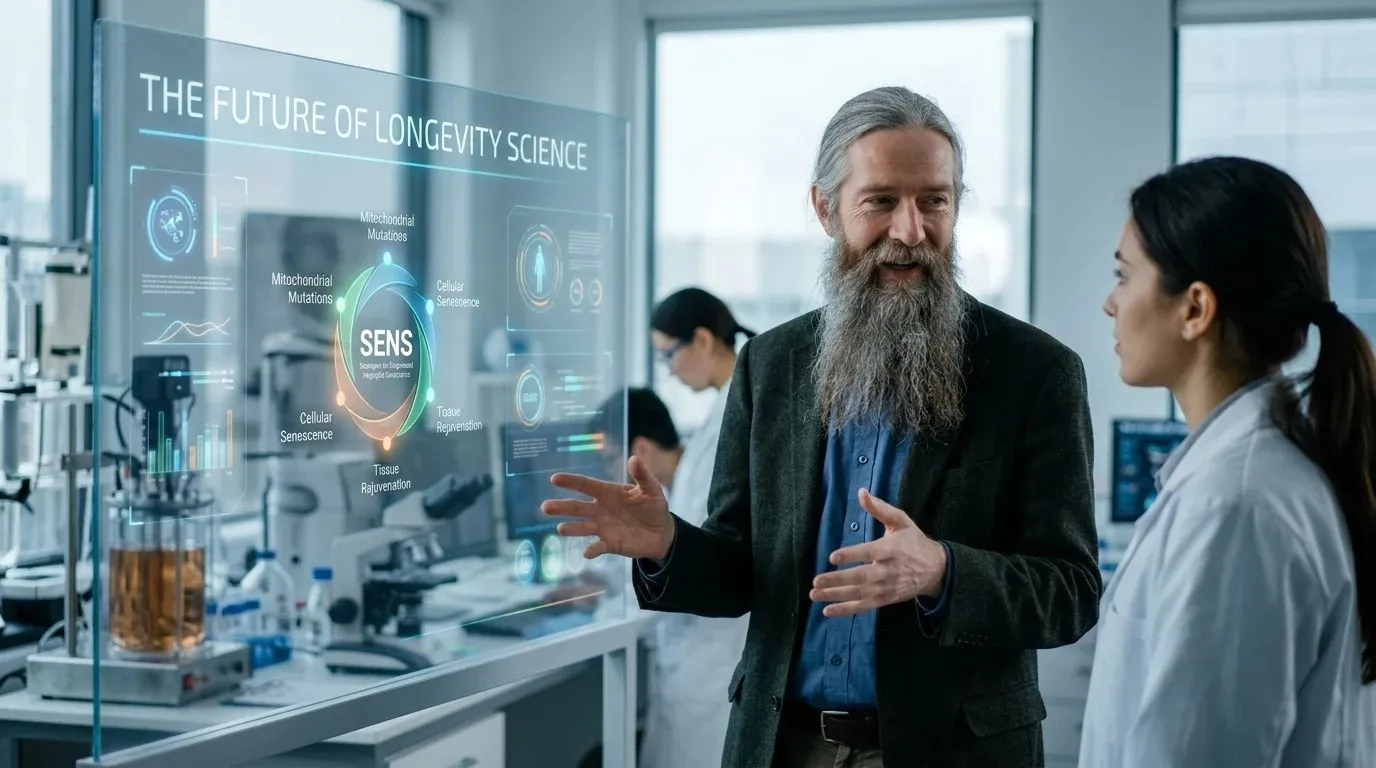
Table of Contents
Aubrey de Grey stands as one of the most prominent and provocative figures in the field of longevity science, advocating for a future where age-related diseases are not just managed but comprehensively reversed. His unconventional background, transitioning from computer science to biomedical gerontology, has uniquely shaped his engineering-driven approach to tackling aging. De Grey champions the idea that aging is a solvable problem, not an inevitable fate, and has dedicated his career to developing and promoting the scientific strategies he believes will lead to “engineered negligible senescence.” His work has not only inspired a generation of researchers and enthusiasts but has also sparked vigorous debate within the scientific community and among the public about the feasibility and ethical implications of dramatically extended human lifespans.
Who is Aubrey de Grey? A Pioneer’s Journey into Biogerontology
Aubrey David Nicholas Jasper de Grey, born in London on April 20, 1963, embarked on an academic path that initially diverged from biology, earning a BA in computer science from Trinity Hall, Cambridge, in 1985. His early career involved work in artificial intelligence and software engineering, co-founding Man-Made Minions Ltd. in 1986. However, a pivotal shift occurred in the early 1990s when de Grey transitioned his focus to biomedical gerontology. This change was influenced by conversations with his then-wife, fruit fly geneticist Adelaide Carpenter, and a growing conviction that biologists were not sufficiently addressing the problem of aging as a medical challenge.
Self-taught in biology through extensive reading of journals and textbooks, attending conferences, and tutelage from Professor Carpenter, de Grey quickly became a formidable voice in the field. His dedication led him to a software development role at the University of Cambridge’s Genetics Department, managing the FlyBase genetic database from 1992 to 2006. In 2000, Cambridge awarded him a Ph.D. in biology based on his 1999 book, The Mitochondrial Free Radical Theory of Aging. This work explored the concept that damage to mitochondrial DNA significantly contributes to senescence, though not as the sole dominant cause. De Grey’s unique perspective, informed by an engineering mindset, views the human body as a complex machine that, despite its remarkable self-repair mechanisms, ultimately succumbs to accumulated damage. This belief underpins his unwavering commitment to finding solutions for age-related decline.
SENS Research Foundation: A Blueprint for Rejuvenation
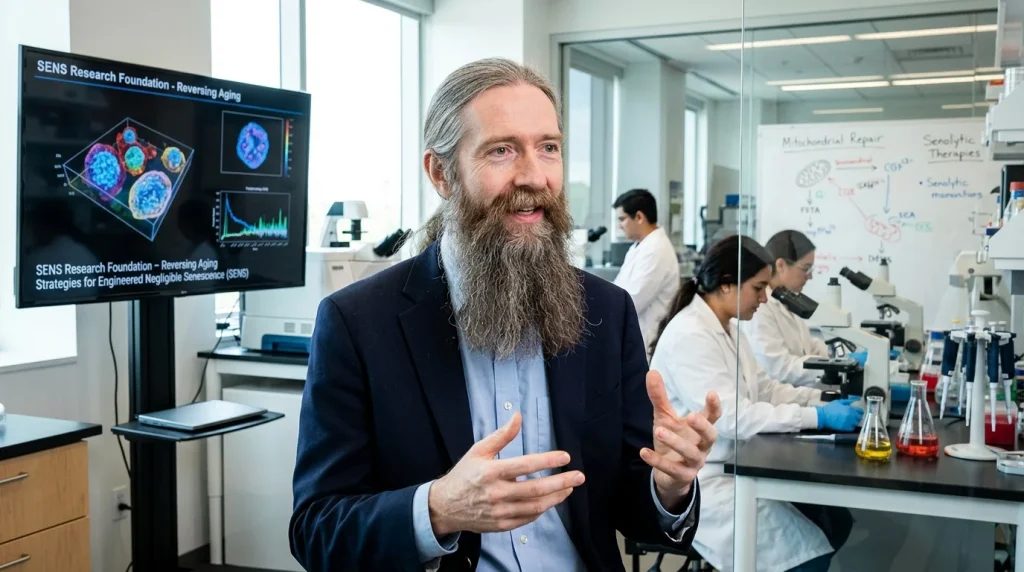
A cornerstone of Aubrey de Grey’s efforts to combat aging is the Strategies for Engineered Negligible Senescence (SENS) framework. This detailed plan, developed around 2005, aims to prevent age-related physical and cognitive decline by systematically repairing the damage that accrues in the body over time. In March 2009, de Grey co-founded the SENS Research Foundation, a non-profit organization based in California, with the mission to “develop, promote and ensure widespread access to regenerative medicine solutions to the disabilities and diseases of aging.”
The SENS Research Foundation’s approach is revolutionary in that it seeks to address the underlying causes of age-related diseases rather than merely treating their symptoms. The foundation believes that aging is a set of biological processes that can be understood and ultimately controlled. Their research is guided by a strategic agenda to demonstrate the feasibility of rejuvenation biotechnologies as a natural extension of regenerative medicine. This involves a multidisciplinary approach combining science and technology to tackle age-related diseases head-on, with the ultimate vision of a world where age-related diseases are no longer a societal burden.
The foundation’s work includes funding innovative gerontology research globally and conducting its own research programs focused on the seven categories of cellular damage due to aging. Notably, in October 2024, the SENS Research Foundation merged with Lifespan.io, forming the Lifespan Research Institute, further consolidating efforts in the longevity field. De Grey served as Chief Science Officer of SENS Research Foundation until 2021, later becoming the President and Chief Science Officer of the Longevity Escape Velocity (LEV) Foundation.
The Seven Deadly Types of Aging Damage
Central to the SENS paradigm is the identification of seven distinct categories of molecular and cellular damage that accumulate over time, leading to the pathologies we associate with aging. De Grey asserts that by addressing each of these damage types, humanity can achieve “engineered negligible senescence.” These seven categories, which he has described for many years, are:
- Cell Loss and Cell Atrophy: As we age, cells die and are not adequately replaced, leading to a decline in tissue and organ function. This can result in conditions like sarcopenia (muscle loss) and neurodegeneration.
- Division-Obsessed Cells (Cancer): Certain cells accumulate mutations that cause them to divide uncontrollably, leading to tumor formation. OncoSENS, a SENS research program, focuses on making it impossible for cells to become immortal by removing telomerase genes and periodically replacing stem cells.
- Death-Resistant Cells (Senescent Cells): Cells that are damaged or dysfunctional often enter a state called senescence, where they stop dividing but do not die. These “zombie” cells accumulate, releasing inflammatory molecules that harm surrounding tissues. Senolytic drugs, designed to selectively eliminate these cells, are a key therapeutic target.
- Mitochondrial Mutations: Mitochondria, the powerhouses of our cells, possess their own DNA, which is particularly susceptible to damage. Accumulation of these mutations can lead to energy deficits and increased production of harmful reactive oxygen species. MitoSENS proposes moving critical mitochondrial genes into the cell nucleus for better protection.
- Intracellular Junk (Lysosomal Aggregates): Cells produce waste products through their metabolic processes. Over time, some of this waste, such as lipofuscin, cannot be broken down and accumulates inside cells, impairing their function. LysoSENS aims to introduce new enzymes to digest this accumulated debris.
- Extracellular Junk (Amyloid Plaques): Similar to intracellular waste, protein aggregates can also accumulate outside cells, disrupting tissue structure and function. Amyloid plaques in the brain, associated with Alzheimer’s disease, are a prime example.
- Extracellular Matrix Stiffening (Cross-links): The extracellular matrix, which provides structural support to tissues, can become stiff due to the formation of unwanted cross-links between proteins. This stiffening contributes to conditions like arteriosclerosis and skin aging.
De Grey’s emphasis is not on merely slowing these processes but on developing regenerative therapies that remove, repair, replace, or render harmless the accumulated damage. This engineering-based approach views aging as a repairable problem, analogous to maintaining a complex machine.
Longevity Escape Velocity: Outrunning Aging
One of Aubrey de Grey’s most compelling and widely discussed concepts is “Longevity Escape Velocity” (LEV). Coined by de Grey, LEV describes a hypothetical scenario where medical advancements extend a person’s remaining healthy life expectancy at a faster rate than the time that is passing. In essence, for every year that passes, medical science would add more than a year to one’s healthy lifespan, effectively allowing individuals to outrun aging indefinitely.
The concept is analogous to escape velocity in physics, where an object achieves sufficient speed to overcome a gravitational pull. In the context of longevity, it means achieving a rate of therapeutic improvement that keeps pace with, and eventually surpasses, the rate of aging. De Grey believes that once LEV is achieved, people would continue to live healthily until the next generation of rejuvenation biotechnology becomes available, creating a continuous cycle of life extension. He has stated that there is a 50% chance that this breakthrough could be within 15 years.
However, the feasibility of achieving LEV is a subject of considerable debate among experts. Some researchers are optimistic about reaching this milestone within decades, while others remain skeptical, citing the immense complexity of aging. De Grey argues that this concept shifts the focus from treating individual diseases to comprehensive aging interventions, targeting the biological processes that lead to these diseases rather than addressing them separately. His LEV Foundation, which he currently leads, conducts large-scale mouse studies combining multiple interventions to demonstrate synergistic effects in lifespan extension, hoping to accelerate progress toward this goal.
Current Scientific Advancements in Anti-Aging Research
The field of longevity science is experiencing rapid advancements, with researchers exploring numerous avenues to slow, halt, or even reverse the aging process. These efforts often align with the damage repair strategies championed by Aubrey de Grey, even if not directly under the SENS umbrella. Key areas of breakthrough include:
| Area of Research | Description of Advancement | Potential Impact on Aging |
|---|---|---|
| Senolytics | Drugs that selectively eliminate senescent (“zombie”) cells, which accumulate with age and contribute to inflammation and tissue dysfunction. | Can rejuvenate tissues, improve organ function, and extend healthspan by removing harmful senescent cells. |
| Gene Therapy & Gene Editing | Techniques like CRISPR are used to correct genetic defects, introduce new genes, or modify gene expression to combat age-related decline. | Extended mouse lifespans by 20%, improved muscle, bone, and brain function in animal models. Potential for reversing specific types of cellular damage. |
| Stem Cell Therapies | Utilizing stem cells to replace damaged cells, regenerate tissues, and restore organ function. | Can repair damaged tissues, regenerate new cells, and potentially treat neurodegenerative diseases and muscle degeneration. |
| Rapamycin and NAD+ Boosters | Drugs and supplements targeting cellular pathways involved in aging, such as mTOR (rapamycin) and NAD+ metabolism (boosters). | Rapamycin extended animal lifespans by 28%. NAD+ boosters improve cell function, heart, and kidney health. |
| Mitochondrial Transfer | Strategies to address mitochondrial dysfunction, including transferring healthy mitochondria or genes to protect mitochondrial DNA. | Aims to restore cellular energy production and reduce oxidative stress, directly targeting one of de Grey’s seven types of damage. |
| Cross-Link Breakers | Developing compounds to break down unwanted cross-links in the extracellular matrix, which cause tissue stiffening. | Could restore elasticity to tissues and organs, combating cardiovascular disease and other age-related conditions. |
These advancements highlight a growing recognition within mainstream science of aging as a malleable biological process. For instance, the “Hallmarks of Aging” framework, now widely accepted in academia, significantly overlaps with SENS, validating de Grey’s systematic approach to aging damage. Researchers are increasingly focusing on combination therapies, as studies have shown that targeting multiple aspects of age-related damage simultaneously can lead to greater lifespan extension than single interventions. This collaborative and multi-pronged strategy reflects a maturing field that is moving closer to realizing the ambitious goals set forth by longevity advocates like Aubrey de Grey.
Criticisms, Challenges, and Ethical Considerations
Despite the enthusiasm surrounding Aubrey de Grey’s vision and the progress in longevity science, his radical propositions have faced significant criticism and sparked numerous controversies. One primary area of skepticism revolves around the ambitious timelines he often suggests for achieving longevity escape velocity. While de Grey asserts a 50% chance of reaching LEV within 15 years, many mainstream gerontologists view such predictions as overly optimistic and lacking sufficient empirical evidence from human trials. A 2005 article in EMBO Reports, co-signed by 28 scientists, concluded that none of de Grey’s hypotheses had been shown to extend the lifespan of any organism, let alone humans. Critics argue that the complexity of aging, involving multiple interconnected biological processes, makes a complete “cure” within such short timescales highly improbable without major breakthroughs that may or may not occur.
Beyond scientific feasibility, the ethical and societal implications of radical life extension raise profound questions. If such technologies become available, concerns about equitable access and social justice are paramount. Critics worry that these expensive therapies could exacerbate existing inequalities, creating a “longevity gap” where only the wealthy can afford to significantly extend their lives. This could lead to a two-tiered society, potentially eroding civic virtues and fostering a sense of biological distinction between the rich and the poor.
Other ethical concerns include the potential for global overpopulation and its strain on environmental resources, though de Grey and his supporters argue that technological innovation could address such challenges. There are also philosophical debates about the desirability of extreme longevity, with some arguing that mortality provides meaning and that an indefinitely extended life could lead to boredom, stagnation, or a loss of what it means to be human. De Grey counters these arguments by emphasizing that his goal is to prevent age-related suffering and disease, effectively extending “healthspan” rather than merely lifespan, and that people will still die from traumatic events. He views the fatalistic attitude towards aging as a societal hurdle, terming it a “pro-aging trance.”
The Future Outlook: A World Without Age-Related Disease?
Aubrey de Grey’s persistent advocacy and the ongoing advancements in longevity science paint a compelling, albeit controversial, picture of the future. The vision of a world where age-related diseases are largely a thing of the past continues to motivate a growing number of researchers, philanthropists, and individuals. The shift in scientific discourse, from viewing aging as an unassailable force to a series of treatable biological processes, is a testament to the influence of de Grey’s work.
The increasing investment in longevity research, from dedicated foundations like the LEV Foundation and the newly merged Lifespan Research Institute (formerly SENS Research Foundation) to venture capital funds, signifies a growing belief in the translational potential of these scientific endeavors. Breakthroughs in areas such as gene therapy, senolytics, and stem cell applications are no longer purely theoretical but are progressing into preclinical and clinical trials, offering tangible hope for future interventions.
The challenge remains in accelerating the pace of discovery and ensuring that these potentially transformative therapies are developed and distributed ethically and equitably. As our understanding of the intricate mechanisms of aging deepens, and as technologies like artificial intelligence further aid in simulating biological processes and identifying new targets, the prospects for significantly extending healthy human lifespan appear more realistic than ever before. While the precise timeline for achieving “longevity escape velocity” is uncertain and highly debated, the conversation initiated by Aubrey de Grey has undeniably propelled longevity science into the mainstream, forcing a re-evaluation of what is possible in the quest for extended health and vitality. To learn more about ongoing discussions and initiatives in this rapidly evolving field, one can explore resources like Wikipedia’s extensive coverage of life extension, which provides a broad overview of the scientific, ethical, and societal aspects.
Conclusion: Redefining the Human Lifespan
Aubrey de Grey has undeniably carved out a unique and influential niche in the landscape of biomedical gerontology. His resolute belief that aging is an engineering problem, amenable to repair and reversal through specific biotechnological interventions, has ignited a passionate movement. From his foundational work on the seven types of aging damage to his coining of “longevity escape velocity,” de Grey has provided a provocative roadmap for a future where humanity might drastically extend its healthy lifespan. While the scientific community remains divided on the timelines and ultimate feasibility of his most ambitious predictions, the impact of his advocacy is undeniable. He has helped shift the paradigm, encouraging a proactive and interventionist approach to aging that goes beyond merely treating symptoms. As research continues to advance in areas like senolytics, gene therapy, and regenerative medicine, the dialogue around human longevity will only intensify. The future, as envisioned by Aubrey de Grey, promises not just more years, but more years lived in vibrant health, fundamentally redefining the human experience and challenging our deepest assumptions about life, death, and what it means to be human.