Late Adulthood: 7 Essential Insights for Healthy and Positive Aging
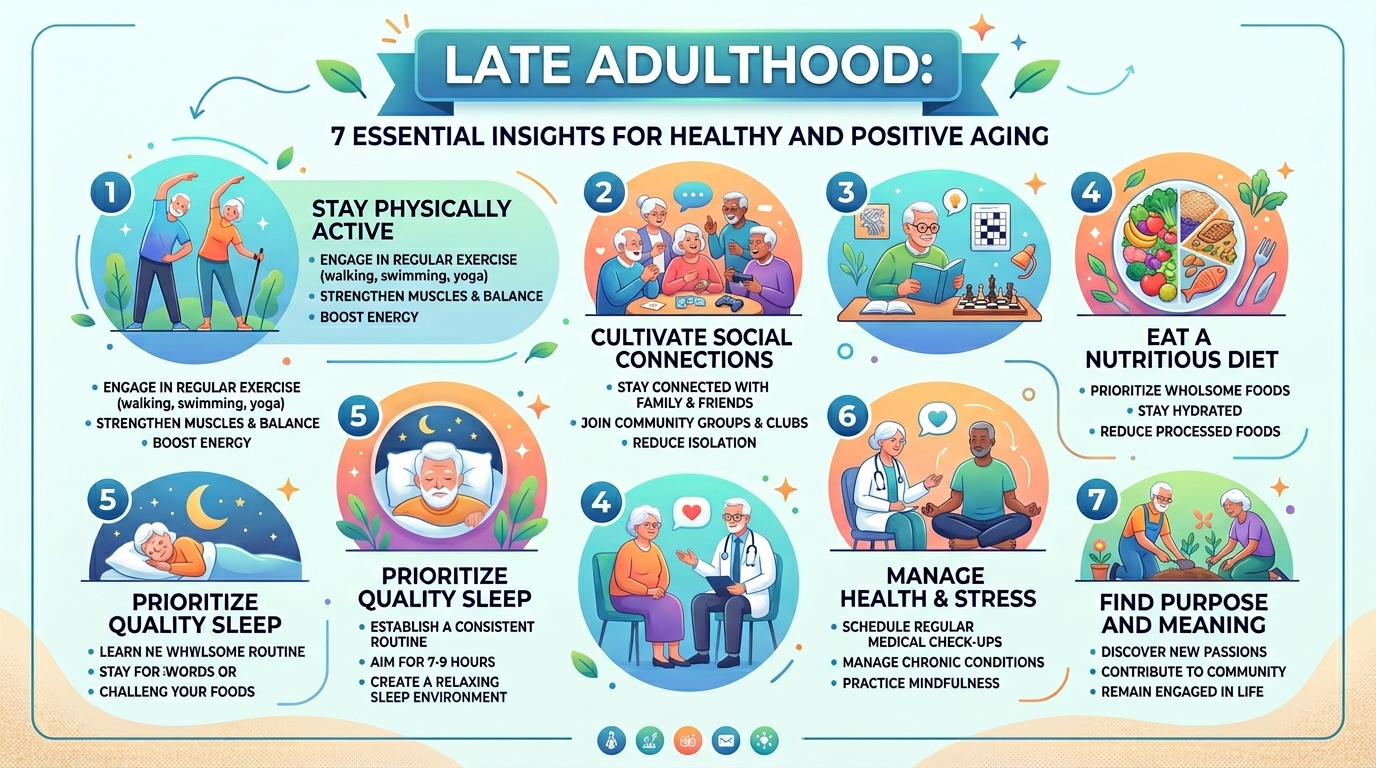
Table of Contents
- Defining Late Adulthood: Age Ranges and Perspectives
- Physical Transformations and Health Challenges
- Cognitive Shifts and Mental Acuity
- Emotional and Psychological Landscapes
- Social Dynamics and Relationship Evolution
- Navigating Financial and Practical Realities
- Strategies for a Fulfilling Late Adulthood
- Conclusion
Late adulthood, a significant and increasingly longer phase of the human lifespan, generally encompasses individuals aged 65 and older, extending to the end of life. This period is characterized by a unique blend of physical, cognitive, emotional, and social changes that can present both profound challenges and remarkable opportunities for growth and fulfillment. As global life expectancies continue to rise, understanding the nuances of late adulthood becomes ever more critical, enabling individuals, families, and societies to better prepare for and support this diverse demographic. This comprehensive article delves into the age ranges that define late adulthood and explores the common life challenges encountered during this stage, while also highlighting the inherent resilience and adaptive capacities that can lead to a rich and meaningful later life.
Defining Late Adulthood: Age Ranges and Perspectives
Defining late adulthood isn’t as straightforward as assigning a single chronological age, as individual experiences of aging vary greatly. While 65 years old is often considered the conventional starting point, demographers and developmentalists frequently subdivide this broad category to account for the diverse health, lifestyle, and functional abilities among older adults. The American Psychological Association, for instance, categorizes late adulthood into the “young-old” (65 to 74 years), “old-old” (75 to 84 years), and “oldest old” (85 years and beyond), with the latter being the fastest-growing segment of the population in many developed countries. Similarly, other classifications include “young-old” (65-84), “oldest-old” (85-99), and “centenarians” (100+).
The “young-old” group (65-74) often reports greater health and social well-being, with many still productive, active, and living independently. A significant portion of men and women in this age bracket continue to work, often for pleasure rather than income. This period, sometimes referred to as the “third age,” is frequently seen as a “golden age” of adulthood, characterized by positive aspects and post-employment years until approximately 80-85, when age-related limitations may become more apparent.
In contrast, the “old-old” (75-84) and “oldest-old” (85+) groups are more likely to experience limitations in physical activity due to chronic diseases, as well as sensory impairments like hearing or visual problems. The “oldest-old” are often those who have more serious chronic ailments. These distinctions highlight that late adulthood is not a monolithic stage but a dynamic period with varying degrees of independence and health, influenced by a combination of biological, psychological, social, and chronological factors. Developmentalists emphasize focusing on the quality of life, understanding that chronological age alone does not dictate an individual’s capabilities or experiences.
Physical Transformations and Health Challenges
As individuals progress through late adulthood, the body undergoes a series of physical transformations that can present significant health challenges. While some changes are a normal part of aging, others can lead to chronic conditions and impact daily functioning. Approximately 92% of older adults have at least one chronic condition, and 77% have two or more.
- Chronic Diseases: Chronic diseases are a primary health concern in late adulthood. Conditions such as high blood pressure, arthritis, heart disease, diabetes, chronic kidney disease, and respiratory issues like COPD are highly prevalent. Heart disease, cancer, and stroke are among the leading causes of death for Americans aged 65 or older. Managing multiple chronic conditions simultaneously can be complex, as these diseases often interact and exacerbate one another.
- Mobility and Balance: Issues with mobility and balance are common due to joint stiffness, muscle loss (sarcopenia), osteoporosis, and nerve damage. These factors increase the risk of falls, which can lead to fractures, prolonged recovery periods, and a decline in independence. Regular exercise, including strength and balance training, is crucial to mitigate these risks.
- Sensory Declines: Vision and hearing impairments are widespread. The lens of the eye becomes less transparent, pupils shrink, and the optic nerve may be affected, leading to problems such as difficulty reading small print, seeing in dim light, and driving at night. Common age-related vision problems include cataracts, glaucoma, and macular degeneration. Hearing loss, often mild or moderate, affects a significant portion of older adults and can lead to communication challenges, social withdrawal, and even cognitive decline.
- Digestive and Urinary System Changes: The digestive system slows down, particularly in the large intestine, which can lead to increased instances of constipation. Changes in bladder elasticity and weakened pelvic floor muscles can result in a more frequent urge to urinate and difficulty emptying the bladder completely.
- Medication Management: Older adults often take multiple medications, increasing the risk of side effects and adverse drug interactions. Side effects like nausea, dizziness, and confusion can sometimes mimic symptoms of mental illness. Regular medication reviews with a healthcare provider are essential.
Despite these challenges, proactive measures such as maintaining a healthy diet, engaging in regular physical activity, prioritizing sleep, and attending regular medical check-ups can significantly contribute to better physical health and an improved quality of life in late adulthood.
Cognitive Shifts and Mental Acuity
Cognitive changes are a natural part of aging, but their impact varies significantly among individuals. While certain cognitive abilities may experience a decline, others remain stable or even improve.
- Memory: Memory changes are among the most common cognitive complaints in older adults. Short-term memory may show noticeable changes, and older adults may not perform as well as younger adults on certain learning and memory tests. However, long-term memory generally declines less with age. Memory changes can be linked to slower processing speed and a reduced ability to ignore irrelevant information.
- Processing Speed and Attention: The speed at which information is processed, encoded, stored, and retrieved tends to slow with age. Older adults may find it harder to selectively focus on information while ignoring distractors and may have more difficulty shifting attention between tasks. This general slowing can explain age differences in many cognitive tasks. However, when given sufficient time, healthy older adults can perform as competently as younger adults.
- Cognitive Reserve and Plasticity: While some cognitive decline is normal, older adults are capable of learning new skills, though it may take longer. Engaging in mentally stimulating activities such as learning a new language, taking music lessons, or doing puzzles can help maintain brain health and may compensate for some changes that could lead to dementia and memory loss. Maintaining an active social life also contributes to better cognitive function and memory.
- Dementia and Mild Cognitive Impairment: It is crucial to distinguish normal age-related cognitive changes from more serious conditions like dementia. Dementia, including Alzheimer’s disease, is not a normal part of aging. Mild cognitive impairment (MCI) can involve noticeable changes in memory or thinking beyond what’s expected for age, which may or may not progress to dementia. Symptoms of significant cognitive decline include forgetting important appointments, losing a train of thought, and feeling overwhelmed by decision-making. Risk factors for cognitive decline include diabetes, smoking, high blood pressure, and depression.
Many older adults excel in intelligence tests that draw on accumulated knowledge and experience, with wisdom and creativity often continuing throughout life. The brain, like muscles, benefits from being worked to stay strong.
Emotional and Psychological Landscapes
The emotional and psychological well-being of individuals in late adulthood is shaped by a complex interplay of life experiences, current circumstances, and inherent coping mechanisms. This stage often involves reflecting on one’s life, a process Erik Erikson termed “integrity versus despair”.
| Psychological Challenge | Description in Late Adulthood | Potential Impact |
|---|---|---|
| Integrity vs. Despair | Reflecting on life’s accomplishments and choices. A sense of satisfaction leads to integrity and wisdom; regrets lead to despair and hopelessness. | Affects overall life satisfaction, emotional well-being, and perception of self-worth. |
| Depression | Prevalent mental health problem, often under-diagnosed. Symptoms can include sadness, hopelessness, fatigue, sleep disturbances, and loss of interest in activities. | Impairs physical, mental, and social functioning; can complicate chronic disease treatment and increase suicide risk. |
| Anxiety | Common, often linked to health issues, loss of loved ones, social isolation, and significant life changes like retirement. | Can lead to persistent worry, restlessness, and physical symptoms, impacting quality of life. |
| Grief and Loss | Experiencing the death of a spouse, friends, and family members. | Can lead to intense sadness, loneliness, isolation, and may contribute to depression. |
| Identity Shifts | Changes in roles (e.g., retirement, becoming a recipient of care) can challenge a person’s sense of self and purpose. | May lead to feelings of stagnation or a loss of identity if not positively navigated. |
| Resilience | The ability to adapt effectively to adversity, trauma, or significant stress. Older adults often demonstrate high levels of resilience. | Enhances capacity to find new meaning, thrive despite challenges, and improves quality of life and mental health. |
- Integrity vs. Despair: According to Erikson, individuals in late adulthood reflect on their lives to assess whether they have lived with purpose and fulfillment. If they feel they have made meaningful contributions and lived according to their values, they experience a sense of integrity, leading to satisfaction and wisdom. Conversely, regrets over missed opportunities or unresolved mistakes can lead to despair, bitterness, and a sense of hopelessness.
- Depression and Anxiety: Depression is the most prevalent mental health problem among older adults, with approximately one in four experiencing it. Symptoms may differ from those in younger adults and can include persistent sadness, hopelessness, guilt, fatigue, and an inability to enjoy activities. Anxiety is also common, often stemming from concerns about health, loss of loved ones, social isolation, and major life changes. Untreated mental health disorders can lead to diminished functioning, increased disability, and cognitive decline. It’s crucial to remember that depression is not an inevitable part of aging and is treatable.
- Grief and Loss: The natural progression of life means that older adults often face the loss of spouses, siblings, friends, and even adult children. This accumulation of grief can be profoundly impactful, leading to intense sadness, loneliness, and contributing to feelings of isolation.
- Resilience: Despite these challenges, older adults often exhibit remarkable psychological resilience, demonstrating a high capacity to cope and recover from crises, sustain a sense of purpose, and emerge stronger from stressful experiences. This resilience is dynamic and can be strengthened at any age, drawing on a lifetime of perspective, wisdom, and coping strategies. Cultivating resilience significantly contributes to an older adult’s ability to navigate stressors and adversity, leading to better quality of life and overall well-being.
Social Dynamics and Relationship Evolution
Social connections and relationships undergo significant transformations in late adulthood, presenting both opportunities for deeper bonds and risks of isolation.
- Social Isolation and Loneliness: Older adults are particularly vulnerable to social isolation and loneliness, often due to factors like retirement, health issues, mobility limitations, loss of loved ones, and lack of transportation. Social isolation refers to an objective lack of social contact, while loneliness is the subjective, distressing feeling of being alone. Both have serious health consequences, including increased risks for high blood pressure, heart disease, obesity, a weakened immune system, anxiety, depression, cognitive decline, Alzheimer’s disease, and even premature death. Research indicates that social isolation increases the risk of early mortality by 29%, comparable to the risks associated with smoking and obesity. Many older adults report feeling lonely regularly, with isolation rates higher among those living alone.
- Changes in Family Structure and Roles: Relationships with adult children, siblings, and partners often change. Older adults may take on new roles as grandparents or great-grandparents, or become caregivers for even older parents or spouses. Conversely, they may become recipients of care, which can sometimes challenge their sense of independence within the family. The death of a spouse or close family member can lead to intense feelings of isolation.
- Friendships: Friendships remain crucial in late adulthood, often providing emotional and physical support. Older adults tend to become more selective in their friendships, valuing connections based on genuine enjoyment and shared interests rather than status or career advancement. Maintaining strong social ties is linked to better health outcomes, while persistent conflicts within social networks can negatively impact well-being.
- Impact of Retirement: Retirement, while offering opportunities for new interests and relationships, can also lead to a loss of identity and a sense of uncertainty for some. The workplace often provides a significant source of social interaction, and its absence can contribute to social isolation if not actively managed.
Strategies to counteract social isolation include staying connected with family and friends, cultivating new relationships through volunteering or community groups, and participating in shared interest activities.
Navigating Financial and Practical Realities
Financial security and practical considerations become paramount in late adulthood, often presenting a unique set of challenges as individuals transition into retirement and face increasing healthcare costs.
- Income Security and Retirement Planning: Many seniors face financial insecurity, with a significant portion unable to afford basic living needs. Reliance on fixed incomes from Social Security, pensions, and retirement accounts can be strained by unexpected expenses and rising costs. Studies show that many older adults lack adequate pensions or savings, sometimes due to past planning gaps or unforeseen investment outcomes.
- Rising Healthcare Costs: Healthcare expenses tend to increase significantly with age, particularly for those managing chronic conditions. Frequent doctor visits, prescription medications, and specialized care can create substantial financial strain for retirees on a fixed income. Medicare does not cover all long-term care services, leaving many older adults and their families to bear considerable financial risk.
- Housing Costs: Housing expenses often constitute a large portion of an older adult’s budget, whether through mortgages, property taxes, maintenance, or rent. Low-income older households, especially those with mortgages, can spend a staggering amount of their income on housing, sometimes forcing them to seek financial help from family. Downsizing or moving to a retirement community can be effective strategies to lower housing costs and free up funds.
- Financial Scams and Elder Abuse: Older adults can be vulnerable to financial scams, which can severely deplete their savings. Additionally, elder abuse, including financial exploitation, is a concerning issue that can have devastating financial and emotional consequences.
- Long-Term Care Planning: Planning for potential long-term care needs is a critical, yet often daunting, aspect of financial reality. The costs of in-home care aides or nursing home facilities are substantial, and many older adults cannot afford two years of such services. This necessitates proactive discussions with family and financial advisors about long-term care insurance, asset management, and communicating care goals.
Navigating these financial complexities requires careful planning, budgeting, and seeking out available resources and support systems to ensure stability and peace of mind in later life. The National Council on Aging (NCOA) highlights the widespread financial insecurity among older adults, underscoring the need for comprehensive support.
Strategies for a Fulfilling Late Adulthood
Despite the challenges, late adulthood can be a period of immense personal fulfillment, continued learning, and meaningful engagement. Proactive strategies can significantly enhance the quality of life during this stage.
- Maintain Physical Activity: Regular physical exercise is one of the most effective ways to maintain physical fitness, independence, and overall health. This includes a combination of weight-bearing exercises, aerobic activity, and balance training to strengthen muscles, prevent atrophy, and reduce the risk of falls. The American College of Sports Medicine recommends at least 150 minutes of moderate weekly physical activity.
- Engage Your Brain: Lifelong learning and mentally stimulating activities are vital for cognitive health. Hobbies, new skills, brain-training games, reading, and puzzles can help ward off mental decline and keep the mind alert. The National Institute on Aging emphasizes that an engaged brain may compensate for some changes leading to dementia.
- Prioritize Social Connections: Actively combatting social isolation and loneliness is paramount. Reaching out to family and friends, cultivating new relationships through volunteering or community groups, and participating in social activities are crucial. Social engagement contributes not only to emotional well-being but also to better cognitive function and memory.
- Adopt a Healthy Lifestyle: A healthy diet, rich in fruits, vegetables, whole grains, lean protein, and healthy fats, supports both physical and cognitive health. Limiting processed foods, sugar, salt, and alcohol, alongside adequate sleep (7-9 hours per night), are fundamental for well-being.
- Manage Stress and Practice Prevention: Identifying and managing sources of stress is vital, as stress can complicate illnesses. Regular medical check-ups and preventative care, including appropriate vaccinations, help in early detection and management of health issues. Communicating healthcare wishes through advance directives is also a crucial step.
- Cultivate Purpose and Meaning: Finding activities that are personally meaningful and pursuing passions can provide a strong sense of purpose, which is linked to healthier immune cells and greater subjective well-being. Volunteering or contributing to social causes can help individuals feel less lonely and more connected to their community. Erikson’s concept of “integrity” underscores the importance of looking back on a life well-lived, and fostering a positive outlook contributes to resilience.
- Seek Support: It is important for older adults to be aware of and utilize resources available to them, including financial assistance programs, community support networks, and mental health services when needed. Professional guidance from geriatricians and financial advisors can be invaluable in navigating the complexities of this life stage.
The ability to adapt to changes, maintain perspective, and seek help when needed are key aspects of resilience throughout adulthood. As research by the National Institute on Aging and others suggests, staying connected and engaged can significantly mitigate the negative impacts of aging.
Conclusion
Late adulthood, spanning from approximately 65 years onward, is a period of remarkable diversity and individual experience, segmented into various stages like the young-old, old-old, and oldest-old, each with its distinct characteristics and challenges. While physical transformations, cognitive shifts, and the evolving nature of social relationships present common hurdles, they do not define the entirety of this life stage. Issues such as chronic diseases, mobility limitations, sensory declines, and the complexities of financial management require careful attention and proactive strategies.
However, late adulthood is also a testament to human resilience, wisdom, and the enduring capacity for growth. By actively engaging in physical activity, stimulating cognitive functions, nurturing social connections, adopting healthy lifestyle habits, and cultivating a sense of purpose, individuals can navigate these challenges with grace and strength. The importance of addressing potential psychological distress, such as depression and anxiety, and combating social isolation cannot be overstated, as these factors profoundly impact overall well-being. Ultimately, a fulfilling late adulthood is characterized not by the absence of challenges, but by the ability to adapt, connect, and find continued meaning in life’s rich tapestry, contributing wisdom and experience to future generations.