7 Essential Insights into Late Adulthood – Physical & Emotional Changes
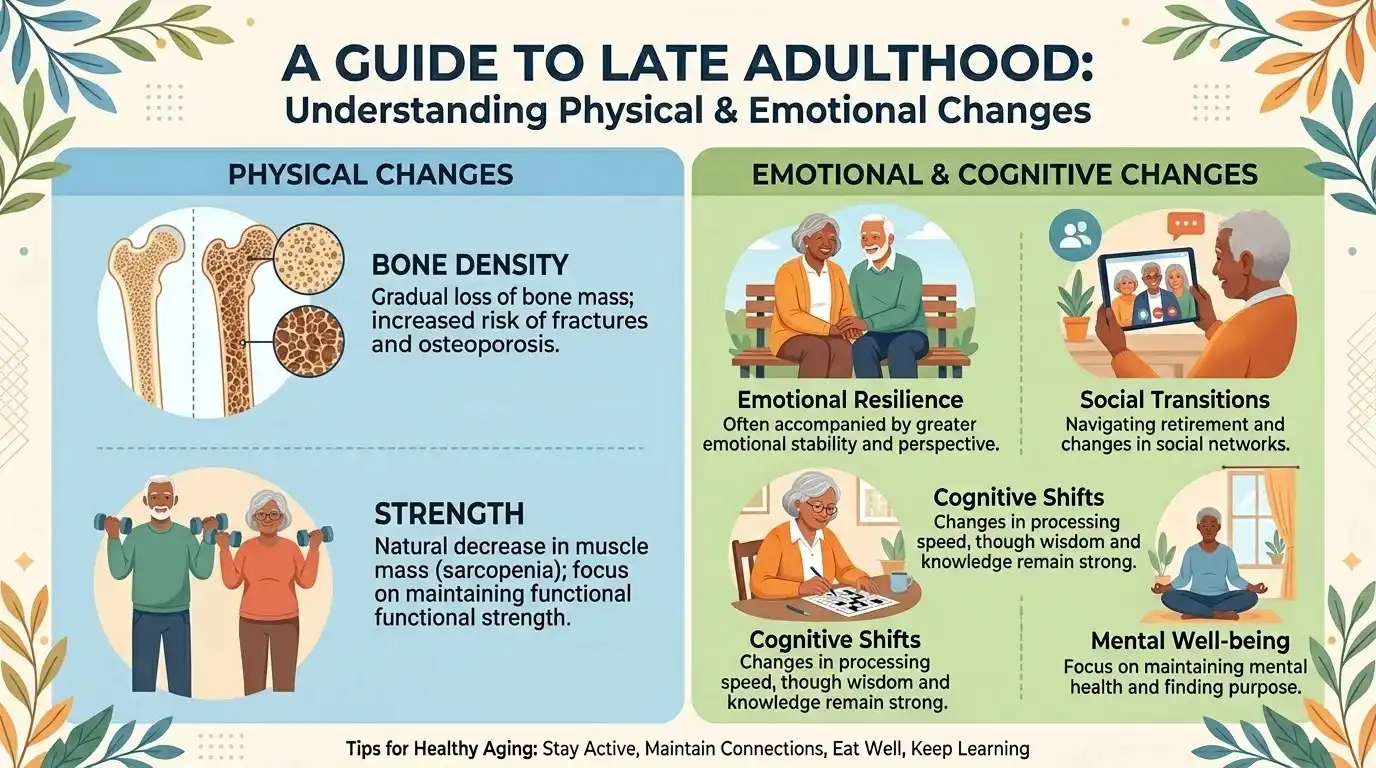
Table of Contents
Late adulthood, typically defined as the period of life from the mid-60s onward, marks a profound stage of human development characterized by a complex interplay of physical, emotional, and cognitive changes. While often associated with decline, this phase also brings unique opportunities for growth, reflection, and new forms of fulfillment. Understanding these transformations is crucial not only for individuals experiencing them but also for families and caregivers who support them. This comprehensive guide aims to illuminate the multifaceted aspects of aging, offering insights into what to expect and strategies to foster well-being during these golden years.
Understanding Late Adulthood: A Journey of Transformation
Late adulthood is a period of diverse experiences, with individual variations in health, lifestyle, and social circumstances playing a significant role in how one ages. It’s a time when individuals may navigate retirement, grandparenting, the loss of loved ones, and new health considerations. The term “aging” itself often carries negative connotations, yet research increasingly points to the potential for positive development and a deepening sense of self in later life. Embracing a positive attitude towards aging has been linked to improved overall health outcomes.
Navigating the Physical Landscape of Aging
The physical changes experienced in late adulthood are perhaps the most visible and widely discussed. These changes are a result of primary aging, which refers to the inevitable biological processes, and secondary aging, which is influenced by lifestyle, genetics, and disease.
Musculoskeletal System: Bones, Muscles, and Joints
One of the most impactful physical changes is the loss of muscle mass and strength, a condition known as sarcopenia. Muscle fibers decrease in both number and size, a process that typically accelerates around age 75, though the timeline varies based on activity level and overall health. This decline directly affects balance, mobility, and independence. Bone density also decreases, making bones more brittle and increasing the risk of conditions like osteoporosis, particularly in women. Weight-bearing exercise can help increase bone density even in later adulthood.
Joints also undergo significant changes. The cartilage that cushions joints thins over time, and ligaments and tendons lose elasticity, leading to stiffness and reduced mobility. These changes contribute to osteoarthritis, a common condition in late adulthood, causing joint pain, swelling, and a reduced range of motion. Regular physical activity, including exercises like yoga and tai chi, can improve joint range of motion and reduce stiffness.
- Muscle mass and strength decline (sarcopenia).
- Bone density decreases, increasing osteoporosis risk.
- Joint cartilage thins, leading to stiffness and reduced mobility.
- Increased risk of falls due to decreased balance.
Sensory Changes: Vision, Hearing, Taste, Smell, and Touch
The senses experience natural declines with age. Vision changes are common, with many individuals needing reading glasses by their 40s due to less flexible eye lenses (presbyopia). Night vision and visual sharpness can also decline, and glare may increasingly interfere with clear vision, affecting activities like night driving. Regular eye check-ups and wearing sunglasses are recommended.
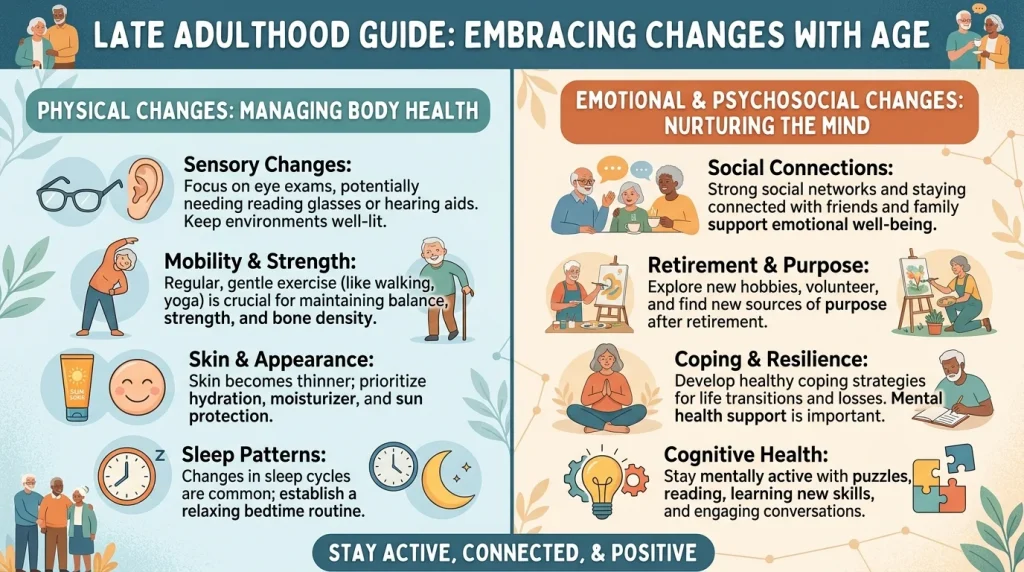
Hearing loss is also widespread, often mild or moderate, and can make it difficult to follow conversations in crowded rooms or hear high-frequency sounds. Untreated hearing loss can lead to social isolation and depression. Regular hearing checks and protective measures against loud noises are important.
Taste and smell sensitivities can diminish, impacting appetite and enjoyment of food. Skin becomes thinner, less elastic, and drier, with scars and imperfections becoming more noticeable. The ability to regulate body temperature also becomes impaired, making older adults more sensitive to heat and cold. Additionally, touch and pain sensitivity can change, and older adults may become less sensitive to pressure, increasing the risk of bedsores.
Internal Organ Systems: Heart, Lungs, Kidneys, and Bladder
Various internal organ systems also undergo changes. The heart muscles may thicken, and arteries can become less flexible, making the heart work harder to pump blood and potentially leading to high blood pressure and other heart problems. Lung capacity diminishes. Kidneys become less efficient at removing waste from the blood, and the bladder may lose some of its ability to store urine. Regular physical activity and a heart-healthy diet are vital for maintaining cardiovascular health.
Skin and Hair: External Indicators of Time
Skin becomes drier, thinner, and less elastic, leading to wrinkles, age spots, and increased fragility. It may also take longer for cuts and bruises to heal. Hair typically grays and thins across the body. While these changes are normal, using moisturizer, sunscreen, and avoiding smoking can help mitigate some effects.
The Shifting Emotional Terrain of Later Life
Emotional well-being in late adulthood is a complex area, with individuals experiencing a range of emotions, from increased satisfaction and emotional stability to challenges like grief and loneliness.
| Physical Change | Impact | Coping Strategy |
|---|---|---|
| Muscle Loss (Sarcopenia) | Reduced strength, balance, and mobility | Strength training, regular physical activity |
| Decreased Bone Density | Increased risk of fractures and osteoporosis | Weight-bearing exercise, adequate calcium and Vitamin D |
| Joint Stiffness | Pain, reduced range of motion (osteoarthritis) | Flexibility exercises (yoga, tai chi), gentle movement |
| Vision Impairment | Difficulty reading, night vision, glare sensitivity | Regular eye exams, appropriate lighting, sunglasses |
| Hearing Loss | Difficulty following conversations, social isolation | Regular hearing checks, hearing aids, communication strategies |
| Reduced Organ Function | Less efficient heart, lungs, kidneys, bladder | Healthy diet, regular exercise, managing chronic conditions |
| Skin Changes | Dryness, wrinkles, fragility | Moisturizers, sunscreen, adequate hydration, avoid smoking |
Grief, Loss, and Adaptation
Late adulthood often involves experiencing various forms of loss, including the death of spouses, friends, and family members. These losses can lead to profound grief, sadness, and social withdrawal. Changes in physical health, loss of independence, and shifts in social roles (e.g., retirement) can also be perceived as losses, triggering feelings of frustration or sadness. However, individuals demonstrate remarkable resilience, often finding ways to adapt and integrate these experiences into their life narrative. Seeking support, allowing oneself to grieve, and honoring the memory of loved ones are crucial strategies.
Social Connections and the Risk of Isolation
Social networks may narrow in late adulthood, and the risk of loneliness and social isolation increases due to factors like retirement, loss of loved ones, reduced mobility, and changes in social environments. Loneliness and isolation are distinct but related concepts; one can be alone without feeling lonely, and vice versa. These conditions can significantly impact mental and physical health, increasing the risk of depression, anxiety, heart disease, and cognitive decline.
Maintaining strong social connections is vital for emotional well-being. Strategies include regular family gatherings, using technology for long-distance communication, joining community groups, volunteering, and pursuing hobbies with others. Older adults often report higher satisfaction when interacting with family members.
Mental Health Concerns: Depression and Anxiety
While many older adults report increased emotional stability and well-being, mental health conditions such as depression and anxiety are not uncommon. Up to 25% of adults aged 65 and older may experience a mental health condition. Symptoms of depression in older adults can differ from younger adults, sometimes appearing as irritability, fatigue, changes in appetite, or social isolation. Factors like chronic pain, medication side effects, unresolved grief, and social isolation can contribute to these conditions.
Prioritizing mental health involves seeking professional help when needed, engaging in healthy activities, maintaining routines, limiting negative media consumption, and practicing mindfulness. A positive outlook on aging is associated with better mental health outcomes.
Cognitive Aspects: Memory, Learning, and Wisdom
Cognitive functions also evolve in late adulthood. While some aspects may decline, others remain stable or even improve. Processing speed is often affected, meaning older adults may take longer to process information and respond. Working memory, the ability to hold and manipulate information, may also decline slightly, making multitasking more challenging. Occasional “tip-of-the-tongue” experiences for word retrieval can become more frequent.
However, long-term memory tends to decline less, especially for information that was well-learned. Semantic memory, the ability to remember vocabulary, often remains intact or even grows. Furthermore, crystallized intelligence, which encompasses accumulated knowledge, experience, and skills, tends to remain stable or improve. This can lead to increased wisdom, better problem-solving skills, richer creativity, and greater insight derived from decades of experience. The brain is now seen as continuously changing, with some functions improving even as others weaken.
To maintain cognitive health, strategies include physical exercise, ensuring adequate sleep, social engagement, and continuous cognitive engagement through learning new skills, reading, puzzles, and games.
Strategies for Healthy Aging: Embracing Well-being in Late Adulthood
Navigating the physical and emotional changes of late adulthood requires proactive strategies and a positive mindset. The focus should be on maintaining independence, quality of life, and a sense of purpose.
- Maintain Physical Activity: Regular exercise, tailored to individual abilities, is paramount. The CDC recommends 150 minutes of moderate-intensity aerobic activity per week, along with muscle-strengthening activities at least two days a week. Activities like brisk walking, swimming, yoga, tai chi, and gardening can improve cardiovascular health, strength, balance, and mood. Even light exercise can significantly improve mental health and reduce cognitive decline.
- Prioritize Nutrition and Hydration: A healthy, well-balanced diet rich in fruits, vegetables, whole grains, lean proteins, and healthy fats is crucial. Adequate hydration is also essential, as the sense of thirst may diminish with age.
- Foster Social Connections: Actively combat loneliness and isolation by staying connected with family and friends, participating in community activities, joining clubs, or volunteering. Social engagement boosts mood and reduces the risk of cognitive decline.
- Engage in Cognitive Stimulation: Keep the brain active by reading, learning new skills or languages, doing puzzles, playing games, or pursuing creative hobbies. This helps improve memory, sharpen thinking, and may prevent cognitive decline.
- Manage Stress and Prioritize Sleep: Stress can negatively impact both physical and mental health. Practices like mindfulness, meditation, deep breathing, and maintaining a regular sleep schedule can help manage stress and improve sleep quality. Aim for 7-8 hours of quality sleep per night.
- Seek Professional Support: Do not hesitate to consult healthcare providers for physical health concerns, mental health issues like depression or anxiety, or cognitive changes. Early intervention can significantly improve outcomes.
- Embrace a Sense of Purpose: Finding new purpose through volunteering, mentoring, pursuing long-held dreams, or engaging in meaningful activities can enhance emotional well-being and life satisfaction.
- Adopt a Positive Mindset: Viewing aging as an opportunity for growth, wisdom, and fulfillment rather than solely a period of decline can significantly impact overall health and happiness. Challenging ageist beliefs and focusing on what one can control are powerful tools. More information on positive aging can be found on reputable health portals like The National Institute on Aging.
Conclusion: Embracing the Golden Years with Resilience
Late adulthood is a transformative period marked by a multitude of physical and emotional changes. While the body undeniably undergoes various declines, it is equally a time for psychological resilience, emotional growth, and the accumulation of wisdom and experience. By understanding these changes, adopting proactive health and wellness strategies, and fostering strong social and cognitive engagement, individuals can navigate late adulthood with grace and purpose. Embracing a positive outlook and seeking support when needed are key components to not just enduring, but thriving in the golden years, transforming challenges into opportunities for continued fulfillment and a rich, meaningful life.