8 Breakthroughs in David Sinclair’s Longevity Science – Reversing Aging
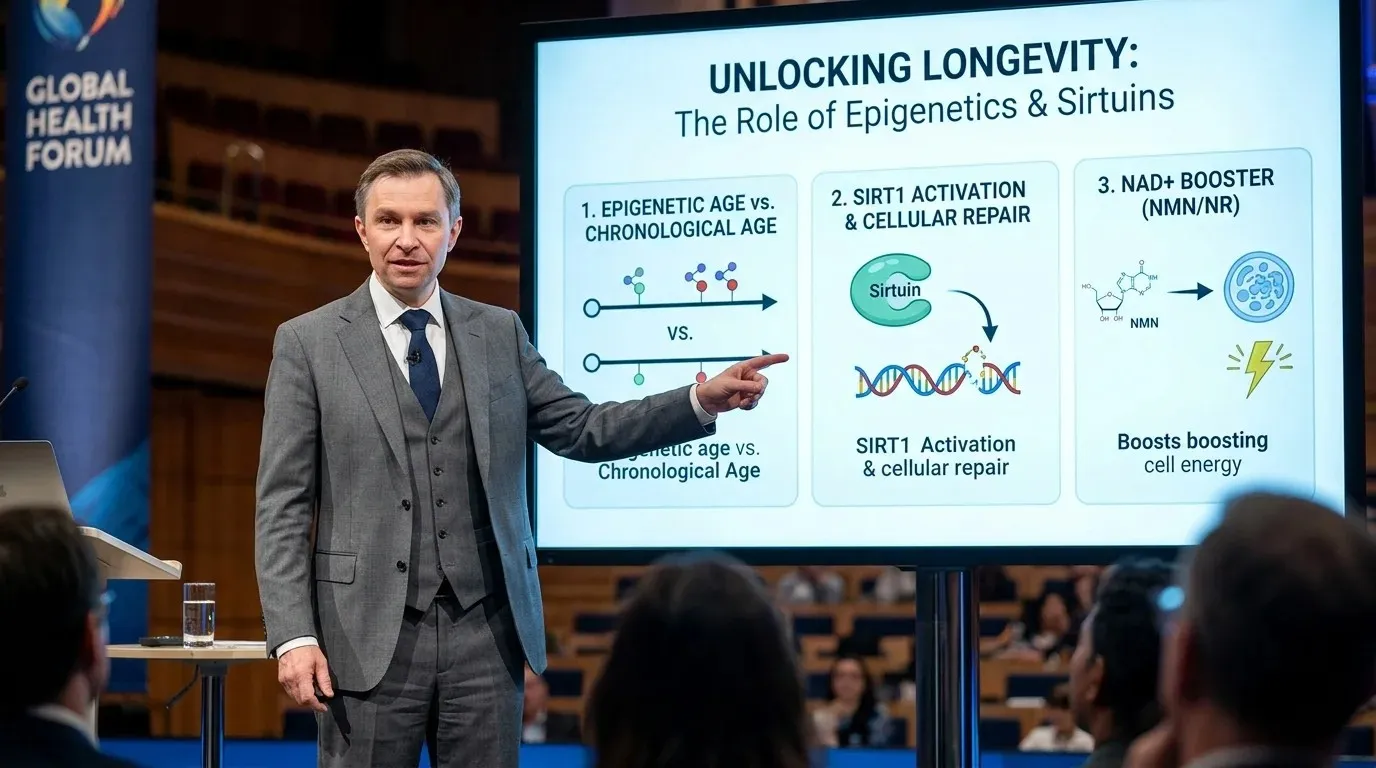
Table of Contents
Dr. David Sinclair, a renowned Australian-American biologist and Professor in the Genetics Department at Harvard Medical School, stands as a leading figure in the scientific quest to understand and potentially reverse the aging process. He is widely recognized for his groundbreaking work on human longevity and anti-aging research, challenging the long-held belief that aging is an inevitable decline. Sinclair’s research has significantly advanced our understanding of why we age and has opened new avenues for interventions aimed at extending human healthspan and lifespan.
Introduction to Dr. David Sinclair’s Vision
At the core of Dr. David Sinclair’s work is an optimistic vision: that aging is not merely an unavoidable part of life but a treatable condition, a biological process that can be controlled and even reversed. This perspective, which he has championed through his research, numerous publications, and the New York Times bestselling book “Lifespan: Why We Age – and Why We Don’t Have To,” has ignited a global conversation about the future of human health. His laboratory at Harvard Medical School has been at the forefront of discovering mechanisms that govern aging and exploring interventions that could slow or even turn back the biological clock.
Sinclair’s influence extends beyond academic circles. He is a co-founder of the scientific journal Aging and has co-founded over a dozen successful biotechnology companies, including MetroBiotech, EdenRoc Sciences, Tally Health, and Life Biosciences, all focused on translating longevity research into practical applications. His work has been featured in major media outlets and he was recognized by TIME magazine as one of the 100 most influential people and a top 50 person in healthcare. The pursuit of a longer, healthier life for humanity is the driving force behind Dr. Sinclair’s extensive contributions to the field of genetics and aging research.
The Information Theory of Aging: A Paradigm Shift
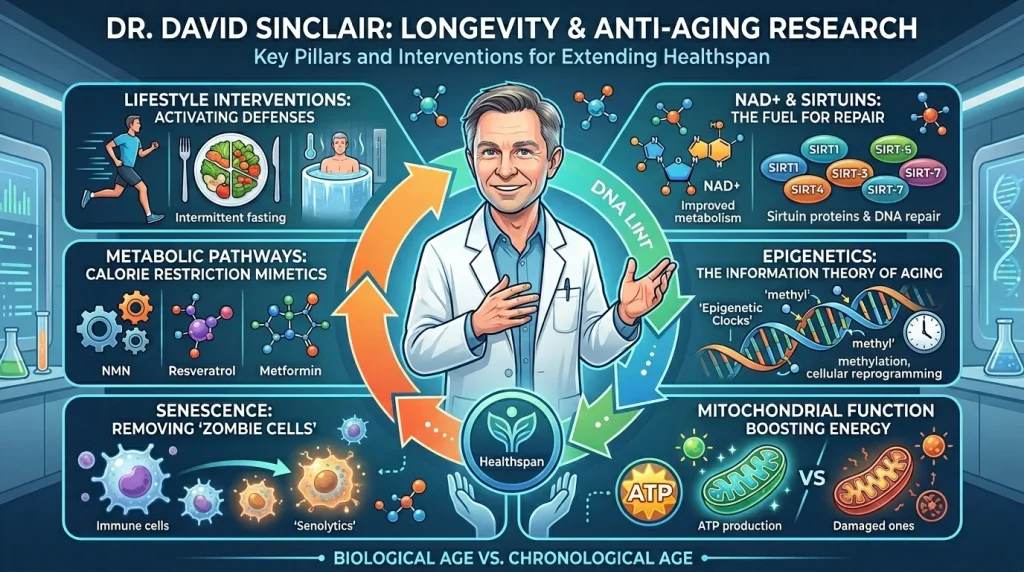
One of Dr. David Sinclair’s most substantial contributions to longevity science is his “Information Theory of Aging”. This theory posits that aging is primarily driven by the degradation of epigenetic information within cells, rather than solely by genetic mutations or accumulated damage. He likens the cell’s DNA to hardware, which remains relatively stable, while the epigenome acts as the software that dictates which genes are turned on or off. As we age, this epigenetic software degrades, leading to cellular dysfunction and a loss of cellular identity and function, even when the underlying DNA remains intact.
Sinclair argues that while the genetic code (digital information) is robust, the epigenetic information (analog information) is susceptible to noise and loss over time, similar to a scratched compact disc where the music (cellular function) becomes difficult to read. This loss of epigenetic information results in cells struggling to perform their specific roles, contributing to the hallmarks of aging such as mitochondrial dysfunction, stem cell depletion, and inflammation.
Crucially, the Information Theory suggests that because the original genetic information remains largely intact, aging could be a reversible process if the epigenetic information can be restored to a more youthful state. This hypothesis has profound implications, suggesting that aging is not an irreversible fate but a condition that can be manipulated and potentially reset. Recent studies from Sinclair’s lab, including a pioneering paper published in Cell in January 2023, have provided experimental evidence supporting this theory, demonstrating that the loss of epigenetic information causes and accelerates aging, and that these changes are indeed reversible via epigenetic reprogramming.
Sirtuins and NAD+: Key Players in Cellular Longevity
Much of Dr. Sinclair’s early research and ongoing work has focused on sirtuins, a family of protein-modifying enzymes that play a critical role in cellular health, DNA repair, and metabolic regulation. Sirtuins are often referred to as “longevity genes” because they are activated by stress, such as caloric restriction, and are associated with increased lifespan in various organisms.
A key discovery by Sinclair’s lab, building on earlier work, was identifying the role of Nicotinamide Adenine Dinucleotide (NAD+) biosynthesis in regulating lifespan. NAD+ is a coenzyme found in all living cells and is essential for various biological processes, including energy metabolism and DNA repair. Sirtuins are NAD-dependent, meaning they require adequate levels of NAD+ to function properly. As we age, cellular NAD+ levels naturally decline, which in turn impairs sirtuin activity and contributes to the aging process.
This understanding led to extensive research into compounds that can boost NAD+ levels or directly activate sirtuins. Two such compounds that Dr. Sinclair has extensively studied and personally uses are Nicotinamide Mononucleotide (NMN) and Resveratrol.
- Nicotinamide Mononucleotide (NMN): NMN is a precursor to NAD+, meaning the body converts NMN into NAD+. Studies suggest that NMN supplementation can counteract the age-related decline in cellular NAD+ levels, leading to various promising benefits such as improvements in metabolic health, aerobic capacity, physical performance, sleep quality, and insulin sensitivity. Sinclair takes 1 gram of NMN daily.
- Resveratrol: This plant-based chemical, a polyphenol found in grapes and berries, is believed to activate sirtuin enzymes, particularly SIRT1. Sinclair combines resveratrol with NMN due to their potential synergistic effects, with resveratrol activating sirtuins that then utilize the increased NAD+ provided by NMN. He typically takes 1 gram of resveratrol daily, often with yogurt or fat to improve absorption. While promising, the effectiveness of resveratrol in human lifespan extension has seen mixed results and reproducibility issues in some studies.
Epigenetic Reprogramming and Age Reversal
The concept of reversing aging, rather than just slowing it down, has become a central focus of Dr. Sinclair’s recent research. His lab’s work on epigenetic reprogramming represents a significant leap in this direction. This technique involves manipulating the epigenome to restore cells to a more youthful state, essentially “rebooting” the cellular software.
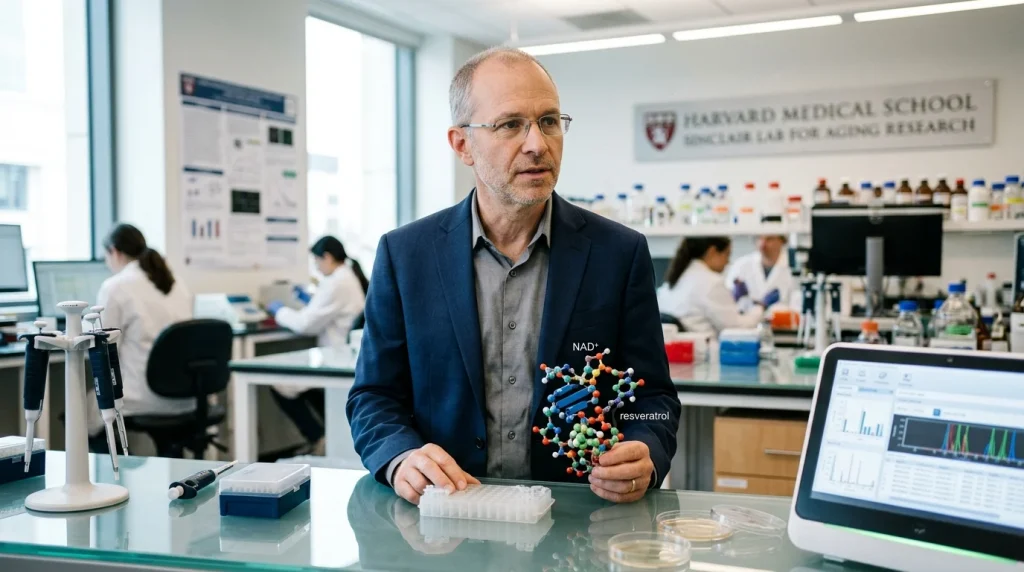
A landmark study published by Sinclair and his team in Nature in December 2020 demonstrated that aging can be safely reversed in animal tissues. They successfully used gene therapy to activate three Yamanaka factors (Oct4, Sox2, and Klf4 – often referred to as OSK) in mice, which restored youthful gene expression and reversed age-related vision loss and even glaucoma. This pioneering work showed that the optic nerve could be regenerated, a feat previously thought impossible in an aged nervous system. These three genes were found to reset biological age by about 75% without causing the cells to become cancerous, which is a risk when full reprogramming to stem cells occurs.
The success in animal models has paved the way for human clinical trials. As of early 2026, the US Food and Drug Administration (FDA) has approved the first human trials for epigenetic reprogramming therapy, initially targeting eye diseases such as glaucoma and NION (a type of eye stroke). These trials aim to test whether these therapies can restore cells to a more youthful state in humans, potentially offering treatments for diseases previously considered irreversible. Dr. Sinclair believes that if successful, this technology could eventually lead to a “whole body reset”.
Dr. Sinclair’s Personal Regimen and Lifestyle Choices
Beyond his laboratory research, Dr. David Sinclair is well-known for sharing his personal longevity regimen, which includes a combination of supplements and lifestyle practices. While he emphasizes that his choices reflect a higher risk tolerance and are not medical advice, his routine offers insights into how he applies his scientific understanding to his own life.
| Supplement/Intervention | Description & Sinclair’s Use (as of early 2025/2026) | Primary Rationale |
|---|---|---|
| Nicotinamide Mononucleotide (NMN) | 1 gram daily, often in the morning. | NAD+ precursor, boosts NAD+ levels essential for sirtuin function and cellular repair. |
| Resveratrol | 1 gram daily, taken with yogurt or fat for absorption. | Sirtuin activator (especially SIRT1), works synergistically with NMN. |
| Metformin | Previously 800-1,000 mg in the evening; now approached cautiously, not a consistent daily regimen. | Diabetes drug with observed anti-aging effects in animals; may blunt exercise benefits in non-diabetics. |
| Spermidine | 1-2 mg daily. | Promotes autophagy (cellular recycling). |
| Fisetin | 500 mg daily; senolytic (targets senescent cells), not consistently daily. | Antioxidant and senolytic compound. |
| Vitamin D3 | 4,000-5,000 IU daily. | Supports bone health, immune function, and may activate sirtuins. |
| Vitamin K2 | 180-360 mcg daily. | Works with Vitamin D3 for bone and cardiovascular health. |
| Trimethylglycine (TMG/Betaine) | 500-1,000 mg daily, often with NMN. | Methyl donor, supports various body processes and may prevent methyl group depletion from NMN. |
| Low-Dose Aspirin | Previously 83 mg daily; no longer emphasized as a consistent daily regimen. | Anti-inflammatory, though benefits and risks for general longevity are debated. |
| Intermittent Fasting / Caloric Restriction | Practices intermittent fasting. | Activates longevity pathways, a highly supported intervention for living longer. |
| Exercise | Considers it “non-negotiable.” | Boosts overall health, cardiovascular function, and is strongly linked to reduced mortality and increased lifespan. |
| Plant-rich diet | Emphasizes eating a lot of plants. | Provides beneficial polyphenols and supports metabolic health. |
While many of these supplements show promise in animal studies, clinical trials in humans are ongoing, and evidence for direct human lifespan extension from supplements remains under active investigation. Dr. Sinclair himself advises caution, noting that some historically associated supplements like metformin and aspirin are no longer part of his consistent daily regimen, or he approaches them with more selectivity.
Challenges and Criticisms in Longevity Research
Despite the excitement surrounding Dr. Sinclair’s work, the field of longevity research, and Sinclair himself, have faced considerable scrutiny and criticism. One of the primary areas of debate revolves around the interpretation of research findings and the translation of animal study results to humans.
Critics, including prominent biologists like Dr. Charles Brenner and Dr. Paul Knoepfler, have raised concerns about what they perceive as overhyping scientific results, particularly regarding the claims of “age reversal”. Some have pointed out issues with the reproducibility of early resveratrol studies, especially in non-yeast models, and have questioned whether specific compounds like resveratrol truly activate sirtuins in the manner initially suggested. There have also been concerns about potential conflicts of interest, given Sinclair’s involvement with companies developing NAD+ precursors and other longevity-focused products.
For instance, the claim that certain supplements could reverse aging in dogs was met with skepticism from the scientific community. Critics argue that while Sinclair’s research is undoubtedly groundbreaking, the enthusiastic pronouncements about immediate human applications may sometimes outpace the definitive scientific evidence. Additionally, the use of certain interventions, such as metformin in individuals without type 2 diabetes, has been critiqued for potentially blunting the beneficial effects of exercise.
However, proponents argue that such critical discourse is a natural and necessary part of scientific advancement, especially in a rapidly evolving field like longevity research. Dr. Sinclair maintains that many of the qualms are semantic, and his fundamental theories, such as the Information Theory of Aging, continue to be supported by ongoing experimental evidence. His lab’s rigorous work on epigenetic reprogramming in mice has garnered significant attention and offers a more direct pathway toward therapeutic applications, even as the scientific community continues to debate the exact mechanisms and implications.
The Future of Longevity: Promises and Predictions
Dr. David Sinclair remains highly optimistic about the future of longevity and anti-aging medicine. He envisions a future where aging is treated as a medical condition, much like any other disease, rather than an inevitable process. His predictions are bold, suggesting that age-reversing pills may become available within the next 10 years or so, potentially allowing scientists to significantly extend, or even double, the human lifespan.
The ongoing human clinical trials for epigenetic reprogramming therapy, initially focusing on eye diseases, represent a crucial step towards realizing this future. Sinclair believes these gene therapies, which aim for a “near-total reset” of cells rather than just slowing aging, hold immense potential for treating a wide range of age-related diseases beyond just the eye, including Alzheimer’s, multiple sclerosis, ALS, kidney disease, and liver disease.
Economically, Sinclair highlights the massive implications of extending healthy lifespans, estimating that even a modest increase could generate trillions in economic value by improving productivity. This shift in focus from treating individual age-related diseases to addressing aging itself as the root cause could fundamentally transform healthcare systems.
While the prospect of dramatically extended lifespans still faces scientific and ethical hurdles, Dr. Sinclair’s work and predictions continue to push the boundaries of what is considered possible. He firmly believes that the biology of aging is increasingly understood, and with advancements in biotechnology, humanity is on the verge of significant breakthroughs that could redefine the human experience. His research inspires a new generation of scientists and a global audience to consider aging not as a fixed biological timeline, but as a dynamic process open to intervention and control. For further exploration of the ethical and societal implications of radical life extension, Wikipedia’s article on Life Extension provides a comprehensive overview.
Conclusion
Dr. David Sinclair’s pioneering research has irrevocably altered the landscape of longevity and anti-aging science. Through his articulation of the Information Theory of Aging, his extensive work on sirtuins and NAD+, and the development of epigenetic reprogramming techniques, he has provided compelling evidence that aging might not be an immutable fate but a treatable, and potentially reversible, condition. While his bold claims and personal regimen have generated both fervent support and considerable scientific debate, his contributions have undeniably catalyzed significant advancements in our understanding of the biological mechanisms of aging. As human clinical trials for age-reversal therapies commence, the scientific community watches with anticipation, poised at the precipice of a future where extended healthspan and a redefinition of the human aging process may become a reality, thanks in large part to the relentless pursuit of Dr. Sinclair and his colleagues.