6 Powerful Scientific Reasons Aging Why the Human Body Changes with Age

Table of Contents
Aging is a universal and multifaceted biological process characterized by a gradual decline in physiological functions, leading to increased vulnerability to various diseases and ultimately, death. It is a complex phenomenon, not driven by a single cause, but rather an accumulation of interconnected biological mechanisms that manifest as the familiar signs of getting older. From the first fine lines that appear around our eyes to the subtle changes in our cognitive abilities, the human body is in a constant state of flux, continuously adapting and responding to the passage of time. Understanding ‘Aging Explained: Why the Human Body Changes Over Time’ delves into the intricate molecular, cellular, and systemic transformations that occur throughout a lifespan, revealing the underlying science behind this inevitable journey.
Cellular Mechanisms of Aging: The Microscopic Story
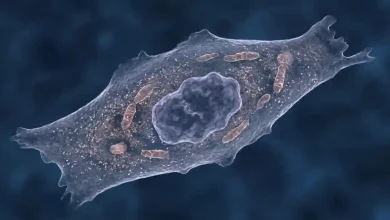
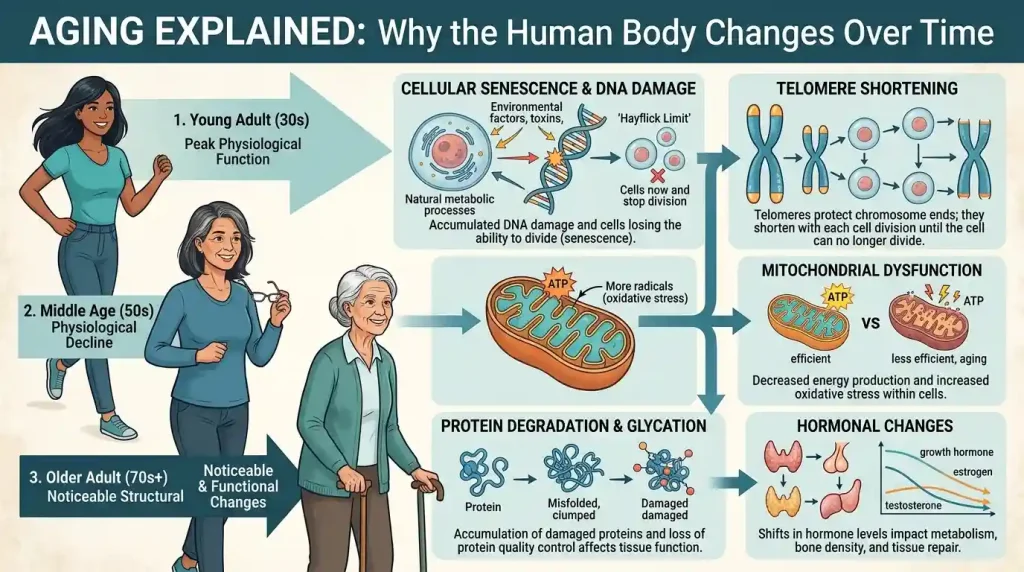
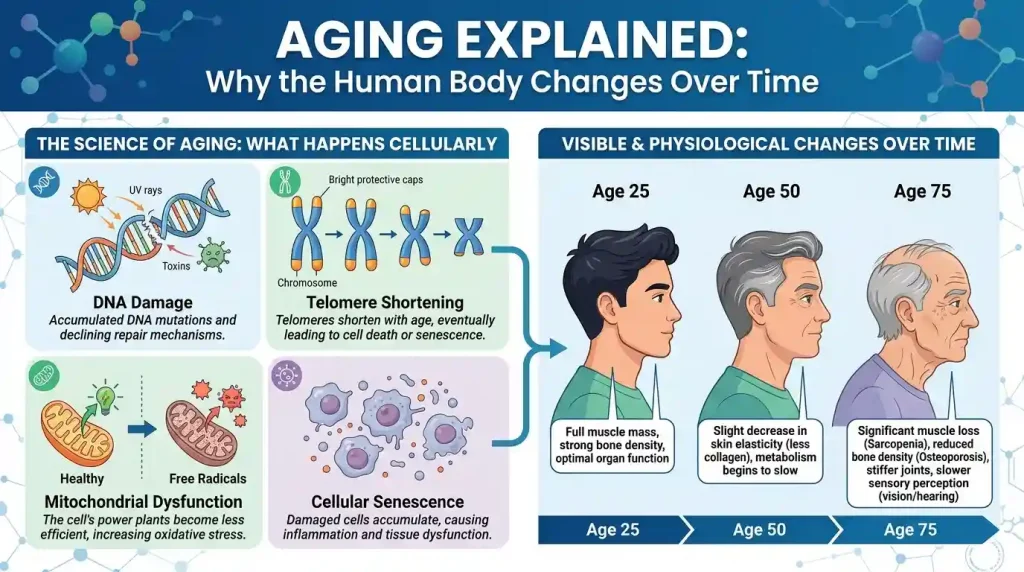
At the most fundamental level, aging begins within our cells. Cellular senescence, a state where cells permanently lose the ability to divide but remain metabolically active, is a key contributor to the aging process. As we age, more cells reach senescence, accumulating in tissues and secreting substances that can damage healthy surrounding cells, leading to inflammation and tissue dysfunction. This accumulation is linked to various age-related conditions, including wrinkles, decreased eyesight, cognitive decline, and chronic diseases like cancer, diabetes, and heart disease.
Telomere Shortening
One primary mechanism driving cellular senescence is telomere shortening. Telomeres are protective caps at the ends of our chromosomes, acting as a biological clock for each cell. Every time a cell divides, its telomeres shorten. Eventually, telomeres become too short, signaling the cell to enter a senescent state or undergo apoptosis (programmed cell death). The gradual attrition of telomeres is implicated in many age-related phenotypes and has even been correlated with protein diseases such as Alzheimer’s disease.
DNA Damage and Repair Efficiency
The accumulation of DNA damage is another critical molecular mechanism underlying aging. Our DNA is constantly exposed to damaging agents, both internal (like reactive oxygen species from metabolism) and external (like UV radiation and pollutants). While our bodies possess repair mechanisms, their efficiency declines with age, leading to an increased accumulation of genetic mutations and instability within cells. This genomic instability contributes to cellular dysfunction, impaired stem cell function, and a higher risk of diseases like cancer.
Mitochondrial Dysfunction
Mitochondria, often called the “powerhouses of the cell,” are crucial for energy production. With age, mitochondria can become dysfunctional, leading to reduced energy output and increased production of harmful free radicals. This mitochondrial dysfunction is a significant contributor to the aging process and is linked to various age-related declines in organ function. Efforts to boost mitochondrial function, such as through high-intensity interval training (HIIT), have shown promising results in improving cellular regeneration. Supplements like Urolithin A have also been explored for their potential to preserve cardiac function by targeting mitochondrial quality control.
Unraveling the ‘Why’: Prominent Theories of Aging
Scientists have long sought to explain why we age, leading to the development of various theories. These theories often fall into two broad categories: programmed theories, which suggest aging is an active, genetically controlled process, and damage theories, which posit that aging results from an accumulation of molecular and cellular damage.
Genetic Programming Theories
The genetic programming theory suggests that aging is encoded within our genes, with specific genes triggering biological changes at predetermined stages of life, including cellular aging and eventual death. This idea is supported by the observation that maximum lifespan varies widely across species, suggesting a species-specific genetic determinant. Some viewpoints within this theory propose that cells are programmed to die after a certain number of divisions, or that specific “aging-related genes” switch on and off over time.
Damage Accumulation Theories
Damage theories propose that aging results from a lifelong accumulation of damage to cells and tissues from various sources. The free radical theory of aging is a prominent example, positing that aging results from damage caused by reactive oxygen molecules (free radicals), which can lead to cellular dysfunction and death over time. Our bodies are constantly producing free radicals as a byproduct of normal metabolism, and exposure to environmental mutagens further contributes to this damage. While antioxidants have been explored to counteract this, a significant increase in lifespan hasn’t been consistently observed, though a reduction in cancer incidence may occur. Other damage theories include the cross-link theory, which suggests that with age, proteins become increasingly cross-linked, impeding metabolic processes.
Systemic Changes: How Aging Affects Body Systems
The cellular and molecular changes of aging ripple outwards, impacting the function of entire organ systems. While each person ages at a unique rate, many common effects are experienced across the body.
| Body System | Common Age-Related Changes | Physiological Impact |
|---|---|---|
| Skin | Loss of elasticity, collagen, and fat; thinning epidermis; slower healing | Wrinkles, dryness, fragility, increased susceptibility to scrapes and bruises |
| Musculoskeletal | Decrease in muscle mass (sarcopenia), loss of bone density (osteoporosis), stiffening of joints and ligaments | Reduced strength and endurance, increased risk of fractures, decreased mobility, aches and pains |
| Cardiovascular | Thickening and stiffening of heart walls and blood vessels, narrowed blood vessels | Reduced blood flow, decreased heart efficiency, increased blood pressure, higher risk of heart disease and stroke |
| Respiratory | Weakening diaphragm, loss of lung tissue elasticity, shrinking rib bones | Decreased lung capacity, impaired gas exchange, slower expiratory flow rates |
| Nervous System | Cognitive decline, changes in memory, slower nerve impulse transmission | Memory issues, slower processing speed, increased risk of neurodegenerative diseases |
| Endocrine System | Changes in hormone levels (e.g., decline in growth hormone, testosterone/estrogen) | Decreased metabolic rate, accumulation of fat, impaired tissue repair, reduced bone density, loss of libido |
| Immune System | Decline in efficiency, increased inflammation (inflammaging) | Increased susceptibility to infections, slower recovery, higher risk of chronic inflammatory diseases and cancer |
Genetics and Aging: The Blueprint of Longevity
While environmental and lifestyle factors exert strong effects on aging, genetic components also play a substantial role, with heritability estimates for lifespan ranging from approximately 10% to 30%. Individuals born with robust cellular repair mechanisms, for example, may physically age at a slower rate. Twin studies have also shown the impact of hereditary factors in lifespan variation.
Longevity Genes and Variants
Research into centenarians (individuals living to 100 or more) has highlighted the influence of specific genetic factors on exceptional longevity. These individuals often exhibit increased resistance to diseases that typically lead to early death. Genome-wide association studies (GWAS) have identified genetic variants linked to age-related diseases and longevity, converging on key biological processes such as lipid metabolism, inflammation, insulin/IGF signaling, and DNA repair. For instance, certain variants in the APOE gene are associated with Alzheimer’s disease and can influence lifespan.
Epigenetics and Gene Expression
Beyond the direct sequence of our DNA, epigenetics—changes in gene expression without altering the underlying DNA sequence—also significantly influences aging. As aging progresses, epigenetic alterations can play a more important role than genetics in determining which genes are expressed, affecting susceptibility to disease. Environmental factors can interact with these genetic and epigenetic factors to determine the rate of aging and health outcomes. For example, studies have shown that social isolation can lead to changes in gene expression and DNA methylation patterns, with negative health consequences.
Environmental and Lifestyle Factors: External Influences on Aging
While genetics provide a blueprint, external factors significantly modify how we age. In fact, lifestyle and environmental factors are estimated to account for about 80% of aging, with genetics contributing the remaining 20%.
Pollution and Toxins
Increasingly poor environmental conditions, such as air pollution and UV radiation, play a significant role in accelerating the aging processes of various organs and pose substantial health risks. Air pollution, particularly particulate matter, can accelerate lung aging, contribute to cognitive decline, and increase the risk of neurodegenerative diseases. Exposure to pollutants and toxins is linked to DNA damage, oxidative stress, mitochondrial dysfunction, telomere shortening, inflammation, and epigenetic alterations, all of which can trigger cellular senescence and accelerate aging.
Diet and Nutrition
What we eat profoundly impacts our aging process. A diet rich in whole foods, emphasizing lightly processed and nutrient-dense options, is crucial for healthy aging. Conversely, a diet high in processed foods, unhealthy fats, and sugar can accelerate internal cellular damage, increasing the likelihood of developing diseases like diabetes, obesity, and cardiovascular disease that speed up aging. Anti-inflammatory diets, rich in omega-3 fatty acids, are particularly beneficial for cellular health. Some research also highlights the benefits of calorie restriction or fasting-mimicking diets in reducing risk factors for age-related diseases.
Physical Activity
Regular physical activity is one of the most powerful tools against aging. Exercise can reduce senescent cells, improve sleep, boost mental health, and has been shown to slow the aging process. Both aerobic activities and strength training are vital. Endurance training can maintain healthy cholesterol levels and immune function, while resistance training prevents muscle wastage, reduces oxidative stress, and boosts growth hormone. Even moderate exercise, such as 40 minutes, five days a week, has been linked to a significant reduction in biological age.
Stress and Social Connection
Chronic psychological stress contributes to the dysregulation of cardiovascular, metabolic, and immune systems. Conversely, strong social connections are linked to a longer life and a greater sense of well-being, helping individuals rebound faster from stress and boosting brain power. Social isolation, on the other hand, can negatively impact genomic instability and epigenetic alterations.
Strategies for Healthy Aging: Can We Slow the Clock?
While aging is inevitable, extensive research suggests that its effects can be significantly reduced and even, in some aspects, potentially reversed or slowed. The focus is shifting from merely extending lifespan to enhancing “healthspan”—the number of years lived in good health.
Lifestyle Interventions
Adopting healthy habits consistently correlates with a longer, healthier life. These include:
- Balanced Diet: Prioritizing whole foods, fruits, vegetables, and lean proteins while limiting sugar and saturated fats can reduce cellular damage and inflammation.
- Regular Exercise: Combining aerobic activity and strength training helps maintain muscle mass, bone density, cardiovascular health, and reduces senescent cells.
- Quality Sleep: Ample, good-quality sleep is essential for the body to repair cells and maintain overall health.
- Stress Management: Practices like meditation and yoga can reduce stress, which negatively impacts various physiological systems involved in aging.
- Sun Protection and Avoiding Toxins: Limiting exposure to UV radiation and air pollution protects skin and cells from damage. Quitting smoking is also crucial for reducing health risks associated with aging.
Emerging Therapies and Research
Significant breakthroughs in aging research are exploring new avenues to extend human healthspan. Some promising areas include:
- Senolytics: These are drugs designed to selectively eliminate senescent cells from the body, which have shown potential in animal studies to reduce inflammation, improve cognitive and metabolic function, and even reverse some age-related conditions.
- Anti-Aging Drugs: Medications like Metformin (a diabetes drug) and Rapamycin (an immunosuppressant) are being studied for their potential to reduce age-related diseases and slow aging by targeting metabolic resilience, stress response, and inflammation. Rapamycin, in particular, has shown consistent lifespan extension in mouse models.
- Stem Cell Therapy and Gene Editing: Stem cells can repair damaged tissues and regenerate new cells, and gene editing tools like CRISPR are being investigated to correct genetic defects linked to aging. However, cellular reprogramming, while promising for restoring youthful function, carries risks such as cancer formation.
- NAD+ Boosters: Supplements that enhance nicotinamide adenine dinucleotide (NAD+) levels are being explored for their ability to improve cell function and potentially slow aging.
The National Institute of Aging’s Interventions Testing Program (ITP) has been a gold standard in aging research, testing numerous molecules for lifespan extension benefits. This ongoing research continues to provide valuable insights into potential interventions. For further exploration into the scientific advancements and current understanding of aging, one can refer to authoritative sources such as The National Institute on Aging (NIA), which conducts extensive research on the biology of aging.
Conclusion: Embracing and Understanding the Aging Journey
Aging, an intricate dance of molecular, cellular, and systemic transformations, is a fundamental aspect of the human experience. While the visible signs—wrinkles, gray hair, and a slower gait—are universally recognized, the underlying biological mechanisms are far more complex. From the shortening of telomeres and the accumulation of DNA damage to the decline of mitochondrial function, our bodies undergo a continuous process of change. Understanding these processes, whether through programmed genetic pathways or the relentless accumulation of damage, provides invaluable insight into why our bodies change over time. Critically, environmental and lifestyle factors emerge as powerful modifiers of this journey, offering substantial opportunities to influence our healthspan. By embracing healthy habits, staying informed about scientific advancements, and proactively managing our well-being, we can navigate the aging process with greater resilience, vitality, and a deeper appreciation for the remarkable complexity of the human body.